The global economy is entering a new phase, one that is reshaping long-held assumptions about trade, investment and economic cooperation. For decades, globalisation was driven by open markets, unrestricted capital flows and increasingly integrated supply chains.
Today, however, that order is giving way to a more fragmented system influenced by geopolitical tensions, strategic competition, technological disruption and changing investment priorities.
For Africa, this changing landscape presents both a challenge and an opportunity. Rather than remaining on the sidelines while global economic decisions are made elsewhere, experts believe the continent has a unique opportunity to reposition itself as a stronger participant in the emerging global economic order.
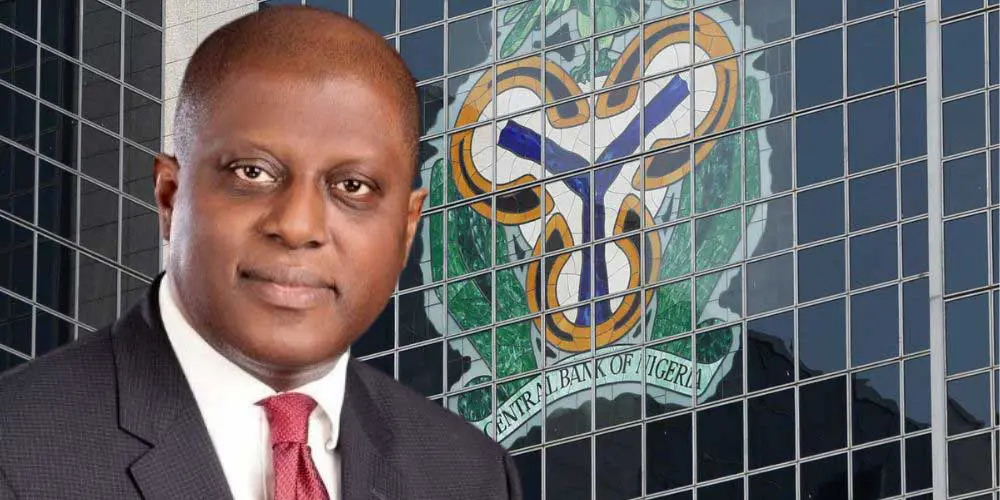
This was the central focus of discussions at the 7th Africa Emerging Markets Forum hosted by the Central Bank of Nigeria (CBN) in Abuja, where policymakers, economists and development experts examined how African economies can position themselves in an increasingly uncertain global environment.
Rather than viewing the changing global order as a threat, participants at the forum say African countries should see it as an opportunity to strengthen economic resilience, deepen regional integration and build more competitive economies capable of attracting investment and creating sustainable growth.
Leading the conversation were the Governor of the Central Bank of Nigeria, Olayemi Cardoso, and the Director-General of the World Trade Organisation (WTO), Dr Ngozi Okonjo-Iweala, whose interventions focused on the reforms and strategic choices required to reposition Africa in the new global economic landscape.
Opening the forum, Cardoso said Africa could no longer respond to global economic developments using outdated assumptions, noting that the international system, which has shaped economic relations for decades, is undergoing profound changes.
“The global system that has long shaped relations among nations is changing before our eyes. Trade is becoming more fragmented; capital is becoming more selective and impatient; and the long-standing rules-based international system is being stretched and tested.” He stated
According to Cardoso, the challenge before African economies is no longer whether the global order is changing, but how to convert those changes into opportunities for growth. “The question is no longer whether the global order is changing, but how we turn that change from a source of vulnerability into a source of growth, and shared prosperity.”
This reflects the growing recognition that unrestricted globalisation has entered a different era. Across the world, governments are increasingly balancing economic efficiency with national security considerations. Supply chains are being redesigned around trusted partners, strategic industries are being restored or nearshored, while global investors are becoming more selective in allocating capital.
Rather than rewarding high returns alone, capital is increasingly flowing to economies with credible institutions, stable policies and predictable regulatory environments. For commodity-dependent economies such as Nigeria, these developments present both risks and opportunities. While external shocks remain a concern, countries that undertake structural reforms stand to benefit from changing global investment patterns.
One issue that received considerable attention during the forum was the need to expand intra-African trade. Speakers agreed that regional integration must move beyond political declarations to practical implementation capable of reducing barriers to commerce across the continent.
Despite decades of integration efforts, intra-African trade still accounts for only about 16 per cent of Africa’s total trade, far below the levels recorded in Europe and Asia. Cardoso described the figure as a reminder of the work that remains to be done.
“With intra-African trade still accounting for only about 16 per cent of our total trade, we must build stronger regional value chains, produce more of what we consume and trade more with one another” he said.
He identified the African Continental Free Trade Area (AfCFTA) as the continent’s most important economic integration platform, but stressed that agreements alone would not deliver the desired transformation.
“We must go beyond the agreements and remove the practical barriers to trade by improving transport networks, harmonising customs standards and making cross-border payments faster and more affordable.”
The CBN Governor’s position reflects one of Africa’s enduring economic challenges. Many countries on the continent continue to trade more with Europe and Asia than with neighbouring African countries because inadequate transport infrastructure, cumbersome customs procedures and fragmented payment systems continue to raise the cost of cross-border trade.
Until those constraints are addressed, many believe the full benefits of the AfCFTA will remain difficult to realise. On her part, the Director-General of the World Trade Organisation (WTO), Dr Ngozi Okonjo-Iweala, challenged Africa’s long-standing dependence on exporting raw commodities, arguing that the model has limited industrial development and weakened economic resilience.
“For Africa in particular, instead of the extract-and-export model that has been the source of so much volatility, economic underperformance and, let me be blunt, corruption, the goal should be higher value, higher productivity growth driven by the development of sub-regional value chains and integration into global supply networks.”
Her remarks come as the global transition towards electric vehicles, renewable energy and advanced manufacturing continues to increase demand for critical minerals, including lithium, cobalt, graphite and rare earth elements.
Although Africa possesses approximately 30 per cent of the world’s critical mineral reserves, much of those resources continue to leave the continent in raw form with limited value addition. Okonjo-Iweala argued that Africa should take advantage of the changing global landscape by processing more of its natural resources locally.
“The time to seize this opportunity is now. As geopolitics exerts demand pressure for critical mineral supply chain diversification, African countries must move quickly to add value to their critical minerals.”
She also urged African countries to adopt coordinated regional approaches to strengthen their negotiating position in global markets, rather than pursuing fragmented national strategies. “The continent can also seize green comparative advantages by harnessing its abundant renewable energy potential to power mineral processing.”
Another major issue highlighted at the forum was the growing importance of institutional credibility in attracting investment. Cardoso noted that investors have become far more cautious following recent global economic shocks, making transparency, policy consistency and macroeconomic stability more important than ever.
“The era of abundant liquidity chasing returns regardless of risk is over. Investors now have more choices and less tolerance for uncertainty,” he stated. According to him, countries that build strong institutions and maintain credible policies will enjoy greater investor confidence. “Credibility is not only a central-bank concern. It is a national economic asset.”
Using Nigeria as an example, Cardoso pointed to reforms undertaken by the Central Bank over the past three years, including exchange-rate unification, restoring price discovery, ending monetary financing of fiscal deficits, improving transparency in the foreign exchange market and tightening monetary policy when necessary.
He noted that the reforms had been accompanied by consistent communication to build public confidence. “We tightened monetary policy when necessary and communicated our decisions clearly, including when the message was difficult.”
According to him, difficult reforms often require patience before their benefits become evident. “Credibility is built intentionally, one right decision after another, and strengthened through consistent action.”
The forum also stressed the importance of financing Africa’s development from within. Cardoso advocated stronger mobilisation of domestic savings, pension funds, insurance assets and diaspora capital, arguing that these resources should support productive investments that create jobs, expand industrial capacity and strengthen local enterprises.
With global borrowing costs rising and international financing conditions tightening, participants agreed that domestic capital mobilisation will become increasingly important to the continent’s long-term development strategy.
Artificial intelligence also featured prominently in the discussions. Unlike previous conversations that focused largely on infrastructure and industrialisation, the forum recognised technology and innovation as essential drivers of future competitiveness.
Cardoso maintained that Africa must move beyond consuming imported technologies and begin creating solutions tailored to its own development challenges. “We must become creators, developing African solutions to African challenges and building businesses capable of taking those solutions to the world.”
To him, achieving that objective would require sustained investment in reliable electricity, affordable broadband, digital infrastructure and human capital.
We’ve got the edge. Get real-time reports, breaking scoops, and exclusive angles delivered straight to your phone. Don’t settle for stale news. Join LEADERSHIP NEWS on WhatsApp for 24/7 updates →
Join Our WhatsApp Channel