For an economy that only a few years ago was being pushed out of major global investment benchmarks because foreign investors could not reliably access dollars or repatriate their funds, Nigeria’s latest appearance in a major international bond index offers a striking measure of how far the country’s foreign exchange market has travelled.
On Monday, September 14, 2026, J.P. Morgan unveiled its new Government Bond Index Emerging Markets Edge, a benchmark that covers about $328 billion in local-currency government debt across 26 frontier markets. Nigeria secured a 7.4 per cent weighting, representing about $17.47 billion of eligible Nigerian government bonds across 16 instruments.
The development is significant because the index is designed around the very issues that previously worked against Nigeria: market access, liquidity, convertibility, and the ability of international investors to participate in local-currency debt markets. J.P. Morgan’s methodology specifically recognises convertibility and repatriation as critical considerations for frontier markets.
It is also a powerful contrast to Nigeria’s experience in 2015, when J.P. Morgan removed Nigerian bonds from its flagship Government Bond Index Emerging Markets following concerns about foreign exchange liquidity, transparency, and investors’ ability to transact. The bank had placed Nigeria on negative watch earlier that year after measures by the Central Bank of Nigeria had impeded foreign investors’ access to the foreign exchange market.
The episode demonstrated how quickly weaknesses in the foreign exchange market could become a problem for the wider economy. Nigeria’s exclusion from a benchmark that tracks billions of dollars in assets linked to it was not merely a technical index decision. It was a signal to global investors that the market had become difficult to access and replicate.
Eight years later, the direction has changed. Nigeria is now also set to return to FTSE Russell’s Frontier Market universe, effective September 21, 2026, after being reclassified from Unclassified status. FTSE Russell removed Nigeria from its Frontier indices in September 2023 due to significant and ongoing difficulties in executing foreign exchange transactions and repatriating capital by international institutional investors.
At the time, the problem was not simply the exchange rate itself. FTSE Russell said the lack of liquidity in the Investors’ and Exporters’ forex Window prevented international investors from reliably replicating benchmark changes. Index changes involving Nigerian equities had already been suspended since September 2022. The reversal could therefore hardly have come without changes in the forex market.
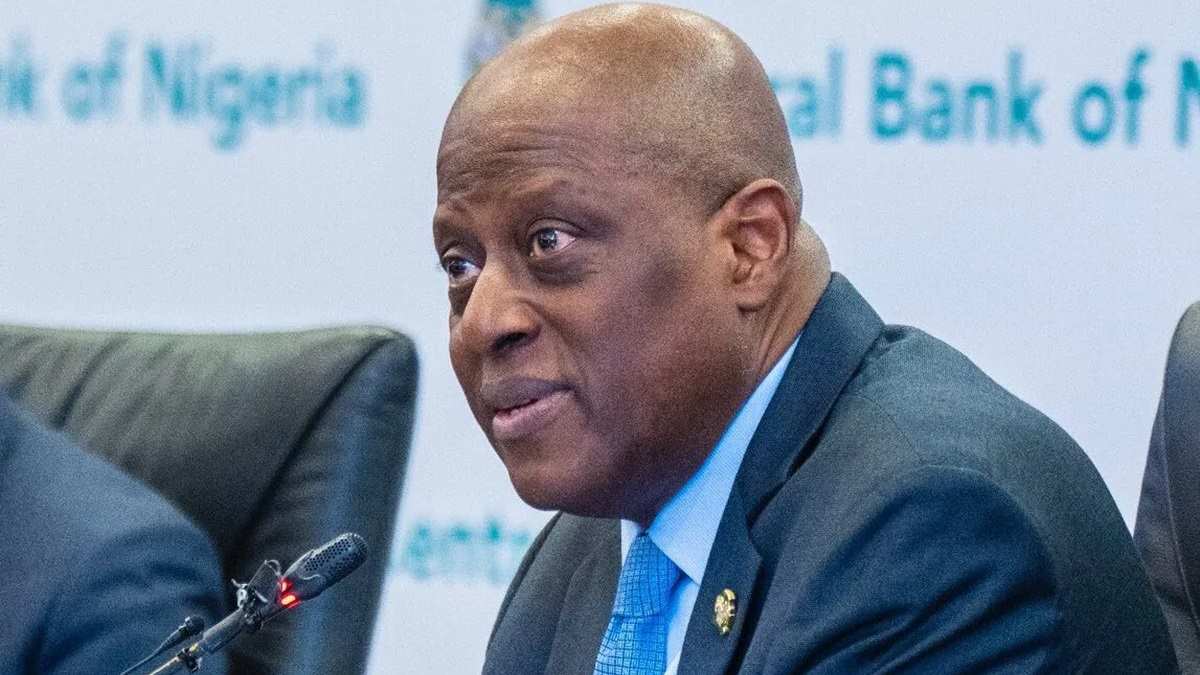
The appointment of Olayemi Cardoso as CBN governor in September 2023 came at a particularly difficult moment. The economy was facing severe dollar shortages, a widening gap between official and parallel-market exchange rates, accumulated forex obligations, and declining confidence among international investors.
The CBN responded with a fundamental restructuring of the market. One of the first major steps was the unification of the multiple exchange rate windows under a willing buyer, willing seller framework. The CBN subsequently renamed the Investors’ and Exporters’ window as the Nigerian Foreign Exchange Market.
The objective was to move away from a system in which different categories of users could access foreign exchange at different rates and towards a market driven by demand and supply. The CBN itself says the reform reduced arbitrage opportunities, improved transparency and enhanced investor confidence.
Aside from this, it cleared the verified $7 billion forex backlog, which was perhaps the most important immediate test of credibility. In March 2024, the CBN announced that it had cleared the entire verified forex backlog after disbursing $1.5 billion to commercial bank customers to settle overdue obligations. The naira subsequently strengthened, underscoring the importance investors attached to resolving the accumulated foreign exchange claims.
For Cardoso, the objective was not simply to provide dollars but to restore the market’s functioning. In March 2024, as foreign exchange inflows began to recover, he said: “All the different measures we have taken to boost reserves and create more liquidity in the markets have started to pay off.”
The reforms went beyond the immediate backlog. The CBN introduced the Electronic Foreign Exchange Matching System, EFEMS, to improve transparency, price discovery and governance in forex transactions. Under the system, authorised dealers conduct transactions electronically, with real-time visibility of orders and prices.
This was followed in January 2025 by the Nigerian Foreign Exchange Code, which established standards around ethics, governance, execution, information sharing, risk management, compliance, confirmation and settlement. Cardoso described it as “a new era of compliance and accountability” and stressed that it was an enforceable framework.
The CBN also tightened oversight of banks’ foreign currency positions, strengthened regulation of Bureau de Change operators, and introduced measures to increase formal foreign exchange inflows.
The rebuilding of Nigeria’s external buffers has provided perhaps the clearest numerical evidence of the change. Gross external reserves rose from $33.22 billion at the end of 2023 to $40.19 billion at the end of 2024. More importantly, net foreign exchange reserves increased from only $3.99 billion in 2023 to $23.11 billion at the end of 2024, according to CBN data.
By September 3, 2026, gross reserves had crossed $54 billion, the highest level since December 2008. The reserves had risen from about $45.57 billion at the beginning of the year. A stronger reserve position matters because it gives investors greater assurance that the country has a larger external buffer to meet foreign obligations and absorb external shocks.
It has also changed the assessment of Nigeria by the international rating agencies. In May 2025, Moody’s upgraded Nigeria’s sovereign rating from Caa1 to B3, citing significant improvements in the country’s external and fiscal positions. The agency specifically said the overhaul of Nigeria’s forex management framework had markedly improved the balance of payments and strengthened CBN foreign exchange reserves.
Fitch followed in April 2025 by upgrading Nigeria’s long-term foreign-currency rating from B- to B, with a stable outlook. It pointed to exchange rate liberalisation, monetary tightening and measures to improve the functioning of the forex market.
Then, in May 2026, S&P Global Ratings raised Nigeria’s sovereign rating from B minus to B, citing an improved macroeconomic profile, higher oil production, increased domestic refining capacity and the liberalisation of the exchange rate in 2023.
Moody’s provided another vote of confidence in August 2026, revising Nigeria’s outlook from stable to positive while affirming its B3 rating. The agency cited stronger external buffers, sizeable current account surpluses, improved forex market functioning and more effective monetary policy transmission.
That turnaround is now being reflected beyond government statistics. FTSE Russell’s decision to restore Nigeria to Frontier Market status, the new J.P. Morgan local-currency bond benchmark, and the sequence of positive actions by Moody’s, Fitch and S&P represent different assessments by global institutions. But they point towards a common conclusion: the perception of Nigeria’s external sector has improved.
The journey, however, is not complete. Nigeria remains exposed to oil prices, inflation, fiscal pressures and exchange rate volatility. The J.P. Morgan index itself recognises that forex and convertibility remain important risks across frontier markets.
For Nigeria, therefore, the real achievement is not simply getting back into an index. It is restoring the basic conditions that make international investment possible: a functioning forex market, transparent price discovery, accessible foreign exchange, credible settlement systems, stronger reserves and the confidence that investors can enter and, importantly, exit the market.
We’ve got the edge. Get real-time reports, breaking scoops, and exclusive angles delivered straight to your phone. Don’t settle for stale news. Join LEADERSHIP NEWS on WhatsApp for 24/7 updates →
Join Our WhatsApp Channel