Nigeria’s telecommunications sector is entering a new phase of growth as cumulative industry investment surpasses $75 billion, with rising data consumption, broadband expansion and digital services placing fresh demands on the infrastructure deployed over the past two decades.
The development comes as the sector, which has evolved from a largely voice-driven market into a critical platform for financial services, commerce, transportation, education and other economic activities, faces the challenge of converting connectivity gains into wider productivity and economic growth.
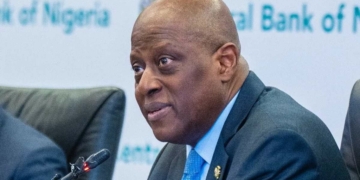
Managing Director of Financial Derivatives Company (FDC), Bismarck Rewane, recently highlighted the scale of the transformation, noting that investment in telecommunications had risen from about $500 million at the beginning of the industry’s liberalisation to more than $75 billion.
His assessment comes against a backdrop of rapidly changing usage patterns. While Nigeria’s active mobile subscriber base remains below its pre-2024 peak, data consumption has continued to rise sharply, indicating that existing connections are increasingly being used for more intensive digital activities.
Industry data showed that monthly data traffic rose from about 615,207 terabytes in July 2023 to 1.66 million terabytes in July 2026, representing an increase of about 170 per cent over the three years. During the same period, active mobile subscriptions declined by 25.75 million to 195.11 million.
Broadband subscriptions, however, increased from 89.73 million in July 2023 to 124.42 million in July 2026, while broadband penetration rose from 47.01 per cent to 57.40 per cent. The figures point to a market in which growth is increasingly being driven by the intensity of internet use rather than simply by the addition of new mobile lines.
The economic significance of the sector is also reflected in recent national output figures. Nigeria’s economy grew by 4.43 per cent in real terms in the second quarter of 2026, while information and communication was among the sectors identified by the National Bureau of Statistics (NBS) as contributing to the expansion. The information and communication sector recorded 9.62 per cent real growth during the quarter.
Telecommunications itself has therefore become increasingly intertwined with economic activity, with connectivity supporting digital payments, online commerce, cloud services, remote work, logistics, education and other technology-enabled businesses.
Meanwhile, the expansion of demand is exposing gaps in the physical infrastructure required to sustain reliable connectivity. Nigeria currently has more than 101,000 kilometres of fibre infrastructure and about 57,756 base transceiver station sites across the states and the Federal Capital Territory, but deployment remains uneven.
According to the report, Lagos accounts for more than 11,500 kilometres of deployed fibre, while some states have less than 1,000 kilometres, highlighting the disparity in digital infrastructure between commercially attractive markets and less-served locations.
Right of Way (RoW) charges remain another challenge for further investment. Although the Nigerian Governors’ Forum agreed on a benchmark of N145 per linear metre, charges remain substantially higher in some states, with Ogun, Kano, Delta, Rivers and Akwa Ibom among those recording rates above the agreed benchmark.
The cost of maintaining existing infrastructure is also rising. More than 5,000 fibre cuts were recorded in the first half of 2026, according to the Nigerian Communications Commission (NCC), with road construction, excavation and other civil works among the reported causes.
However, for operators, the repeated damage to fibre networks creates additional repair and maintenance costs while also increasing the risk of service disruptions for businesses and consumers. The challenge is becoming more significant as economic activities become increasingly dependent on uninterrupted connectivity.
The Federal Government is responding with plans to expand the country’s fibre backbone through Project BRIDGE, an initiative designed to facilitate the deployment of about 90,000 kilometres of fibre infrastructure across the 36 states and the Federal Capital Territory, connecting more than 770 local government areas.
The Ministry of Communications, Innovation and Digital Economy has described the project as part of a broader effort to address structural connectivity constraints and establish open-access infrastructure that can support further broadband expansion.
Meanwhile, fibre-to-the-x (FTTX) connectivity is also expanding, although from a relatively small base. NCC data showed 319,735 FTTX subscriptions in the second quarter of 2026, reflecting the gradual expansion of fixed broadband alongside mobile connectivity.
The emerging challenge for Nigeria, therefore, is no longer simply attracting capital into telecommunications but ensuring that investment translates into resilient infrastructure, affordable broadband and wider access to the digital economy.
Rewane’s assessment of the sector’s transformation underscores the scale of capital already deployed. The next stage will increasingly depend on how effectively that infrastructure is expanded, protected and utilised as data-intensive services become more central to economic activity.
With data traffic growing substantially faster than the mobile subscriber base, the direction of the market suggests that future telecom investment will increasingly be shaped by broadband capacity, fibre networks, data centres, cloud services and other infrastructure required to support Nigeria’s expanding digital economy.
We’ve got the edge. Get real-time reports, breaking scoops, and exclusive angles delivered straight to your phone. Don’t settle for stale news. Join LEADERSHIP NEWS on WhatsApp for 24/7 updates →
Join Our WhatsApp Channel