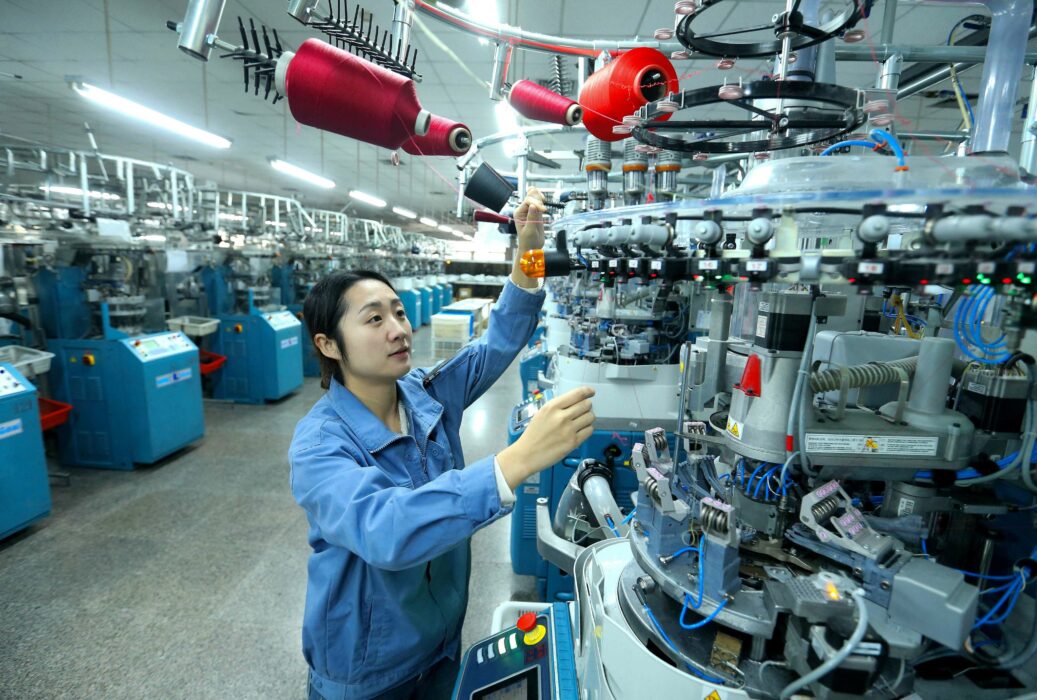
China’s manufacturing sector returned to expansion in March 2026 after a brief contraction, with the official Purchasing Managers’ Index climbing to 50.4 from 49.0 in February — its highest reading in 12 months.
It is the clearest sign yet that Beijing’s policy stimulus is beginning to filter through to the factory floor. The 50-point threshold separates expansion from contraction on the PMI scale.
March’s reading snapped a slide that had raised concerns about the durability of China’s post-pandemic industrial recovery, and came in stronger than most market watchers had anticipated.
Output rose to 51.4 while new orders advanced to 51.6, twin signals that production momentum is broadening.
New export orders edged up to 49.1 — still in contraction, but the improvement points to a tentative stabilisation in external demand, supported partly by robust global appetite for Chinese-made technology and artificial intelligence-related hardware.
“The rebound is real, but it is not without friction,” said Norrenbeeger tracking the data.
Policy support has been instrumental in driving the upturn, yet the recovery’s durability will hinge on whether Beijing can sustain that stimulus without stoking the inflation already emerging in factory costs.
Those cost pressures are the most worrying subplot in an otherwise encouraging report. Input prices surged to 63.9 — and output prices to 55.4 — the sharpest readings in four years for both gauges, driven by elevated crude oil prices and rising costs for non-ferrous metals such as copper and aluminium.
As margins compress, manufacturers face a difficult choice between absorbing higher costs and passing them to buyers, a decision that could dampen both output and order growth if sustained through the second quarter.
The labour market offers little additional comfort. The employment sub-index remained in contraction territory at 48.6, suggesting that factories are not yet hiring at a pace consistent with a broad-based recovery. Supplier delivery times also continued to lag, pointing to persistent bottlenecks in the supply chain that policy alone cannot quickly resolve.
Business confidence held relatively firm at 53.4, reflecting cautious optimism among manufacturers who expect demand conditions to improve further through the year.
The March data ultimately paints a picture of a recovery that is uneven in its distribution and expensive in its execution — a recovery, in short, that China’s policymakers will need to handle with considerable care.
We’ve got the edge. Get real-time reports, breaking scoops, and exclusive angles delivered straight to your phone. Don’t settle for stale news. Join LEADERSHIP NEWS on WhatsApp for 24/7 updates →
Join Our WhatsApp Channel