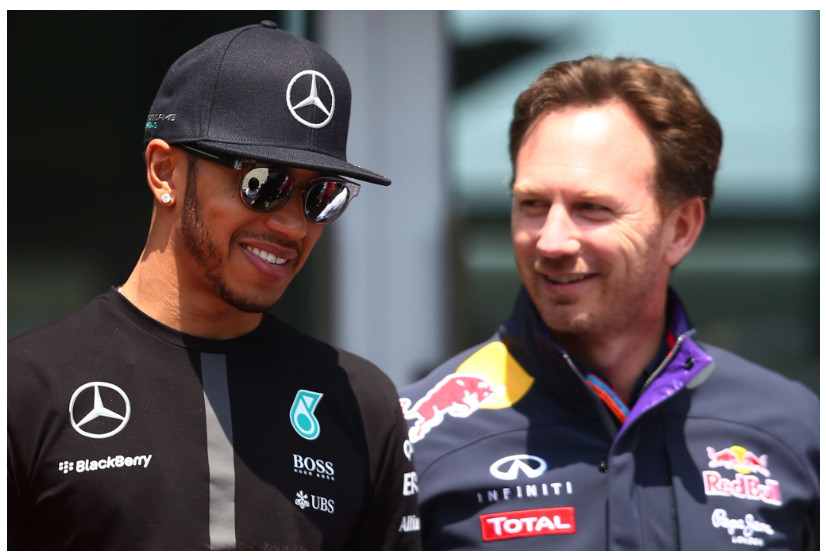
Christian Horner has revealed how Red Bull explored signing Lewis Hamilton before he joined Mercedes in 2013. The former team principal also explained why the reigning champions ultimately rejected the opportunity.
Hamilton’s departure from McLaren (6.96) marked a major turning point in his career, leading to unprecedented success with Mercedes. In his upcoming book, Drive, Horner describes the discussions that preceded the move and his recommendation to Mercedes chairman Niki Lauda.
Red Bull Considered Signing Lewis Hamilton in 2012
Horner has disclosed that Hamilton’s management approached Red Bull about a potential move before the British driver joined Mercedes. The discussions took place in 2012, when Red Bull were enjoying a dominant period in Formula 1. Sebastian Vettel had won three consecutive drivers’ championships by that stage. Consequently, the team had little incentive to make dramatic changes to its successful line-up.
Hamilton was still driving for McLaren when the discussions took place. However, his representatives were exploring opportunities elsewhere as the driver market began to take shape. Horner, who was Red Bull’s team principal, understood the importance of monitoring available talent. He explained that successful teams must always consider their options, even when their existing drivers are performing exceptionally well. Nevertheless, interest from Hamilton’s camp did not guarantee a deal.
Speaking on Sky Sports’ The F1 Show Podcast, Horner reflected on the negotiations. He explained that Red Bull had a competitive advantage that naturally attracted leading drivers. The team possessed a car capable of winning championships, making it an appealing destination. Hamilton’s management, led by Simon Fuller at the time, believed a deal could become a major commercial opportunity. However, Red Bull’s leadership was reluctant to make the necessary financial commitment.
Why Red Bull Rejected the Opportunity
Hamilton’s potential arrival would have created a significant change at Red Bull. The British driver could have replaced Mark Webber and partnered Vettel from the 2013 season. However, Vettel was already delivering outstanding results for the team. Red Bull therefore had to weigh Hamilton’s ability against the risks of disrupting an established partnership.
Horner recalled that Hamilton’s management saw considerable commercial potential in the arrangement. Fuller, who had also managed the Spice Girls, believed the deal could become an unprecedented sporting agreement. Yet Red Bull’s senior leadership did not share the same enthusiasm. Co-owner Dietrich Mateschitz was among those who were not keen on pursuing the move. Ultimately, the team decided to retain Vettel and Webber rather than make a major investment in Hamilton.
The decision proved important for the future of Formula 1. Hamilton eventually joined Mercedes, while Red Bull continued building around Vettel. Although both teams remained competitive, their respective driver choices helped shape the championship battles that followed. Furthermore, Hamilton’s move would eventually establish the foundation for one of the most successful partnerships in the sport’s history.
Red Bull’s reluctance also illustrates the difficult decisions facing team principals. Signing an elite driver can strengthen a team, but it can also create financial and management challenges. In this case, the organisation already had a proven championship-winning driver. Horner therefore had to consider whether another superstar would justify the additional expense and disruption.
Horner Recommended Hamilton to Mercedes
Although Red Bull declined to sign Hamilton, Horner did not discourage Mercedes from pursuing him. Instead, he revealed that he encouraged Lauda to consider the British driver. Mercedes had acquired the former Brawn team and was still trying to establish itself among Formula 1’s leading competitors. Its previous partnership featuring Nico Rosberg and Michael Schumacher had not delivered the expected results.
Horner believed Hamilton could provide the team with a significant boost. The McLaren driver was increasingly frustrated with circumstances at his existing team, creating an opportunity for Mercedes. Lauda, a three-time Formula 1 world champion, was involved in the negotiations and played an important role in convincing Hamilton to make the switch. According to Horner, he advised Lauda to pursue the deal after Red Bull chose to maintain its existing driver line-up.
The timing of the discussions was particularly significant. At the 2012 Singapore Grand Prix, Hamilton suffered a gearbox failure while leading the race. Vettel went on to win for Red Bull, strengthening his championship campaign. Horner recalled seeing Lauda on the podium after the race and receiving a positive gesture from the Austrian. Negotiations were already progressing, and the result helped reinforce the case for Hamilton’s departure from McLaren.
Hamilton subsequently joined Mercedes for the 2013 season. The partnership initially required patience as the team worked to improve its competitiveness. However, Mercedes emerged as the dominant force when Formula 1 introduced its hybrid power-unit regulations in 2014. Hamilton went on to win multiple world championships with the team, establishing himself among the sport’s greatest drivers.
Hamilton’s Mercedes Move Changed Formula 1
Hamilton’s decision to join Mercedes ultimately transformed his career. He won his first world championship with McLaren in 2008, but his subsequent achievements with Mercedes elevated his standing in the sport. The team secured consecutive constructors’ championships during its dominant period, while Hamilton became a central figure in that success.
Red Bull also enjoyed substantial success during the same broader era. Vettel won four consecutive drivers’ championships between 2010 and 2013, establishing the team as a leading force. Later, Max Verstappen continued that tradition by winning championships with the Milton Keynes-based outfit. These contrasting successes demonstrate how different driver strategies can produce championship-winning results.
Horner’s account offers an unusual perspective on Hamilton’s career because he was involved in discussions with both sides. Red Bull explored the possibility of signing the British driver before deciding against the move. Yet Horner subsequently encouraged Mercedes to make an offer. His recollections show how relationships and decisions behind the scenes can influence Formula 1’s competitive landscape.
Horner Also Praises Max Verstappen and Kimi Antonelli
Beyond discussing Hamilton’s career, Horner reflected on Verstappen’s extraordinary ability. The Dutchman joined Red Bull in 2016 after just over a year in Formula 1. He won his first race for the team as an 18-year-old, becoming the youngest Grand Prix winner in the sport’s history. Horner described that achievement as a remarkable moment and praised Verstappen’s natural ability.
He highlighted Verstappen’s speed, race awareness and capacity to manage demanding situations. The former Red Bull boss also noted how quickly the driver learned to handle pressure. Those qualities helped Verstappen become one of Formula 1’s leading competitors. His development remains an important part of Red Bull’s recent history.
Horner also discussed Kimi Antonelli, who has made an impressive impact in Formula 1. The young Mercedes driver has continued to develop after his rookie season, demonstrating greater consistency and confidence. Horner praised his progress and pointed to his performances against team-mate George Russell as evidence of his potential. He believes future battles between Antonelli and Verstappen could become compelling viewing.
Antonelli’s emergence represents another potential turning point for the championship. His performances will be closely watched as Mercedes continues to develop its next generation of drivers. Meanwhile, Verstappen remains an important benchmark for emerging talent. Their future rivalry could become a defining storyline in Formula 1, depending on how their teams perform.
For fans following Formula 1, these driver developments offer plenty to discuss ahead of the United States Grand Prix. Team decisions, championship calculations and emerging rivalries will all influence the sport’s next chapter. Readers following racing news, statistics and online sports betting should distinguish confirmed results from predictions about future outcomes. Horner’s revelations also serve as a reminder that the biggest moves often begin with conversations long before contracts are signed.
We’ve got the edge. Get real-time reports, breaking scoops, and exclusive angles delivered straight to your phone. Don’t settle for stale news. Join LEADERSHIP NEWS on WhatsApp for 24/7 updates →
Join Our WhatsApp Channel