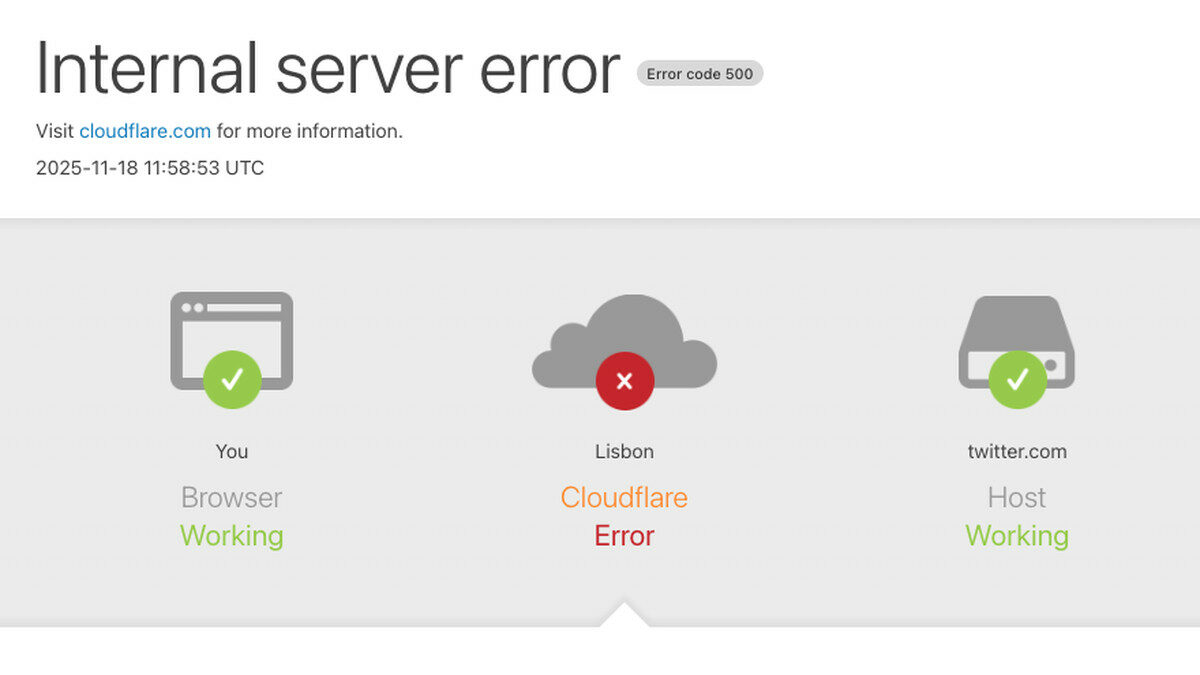
When Cloudflare’s global outage shut down major parts of the internet on November 18, many Nigerians suddenly found themselves unable to access news websites, e-commerce platforms, banking portals, and even social media. From Lagos to Nairobi, everyday users were left asking the same questions: Why did Cloudflare go down? Why is Cloudflare not working? What sites are impacted by the Cloudflare outage?
According to Cloudflare’s official post-mortem dated 18 November 2025, the outage which lasted about 2–4 hours globally started after a bug triggered failures inside Cloudflare’s Bot Management system. For many users searching online for answers like “When did the Cloudflare outage start?” or “Is the Cloudflare outage resolved?”, the explanation offered some clarity but did little to ease the frustration of being cut off from critical online services.
Beyond the temporary panic, the disruption served as a wake-up call for Africa. The continent’s fast-growing digital economy is too important, and too vulnerable, to rely solely on external infrastructure that can fail without warning. And with people also asking “When was the last Cloudflare outage?” a reminder that global internet failures are becoming more common, the message is simple: Africa must strengthen what it controls.
Reports show that 2025 recorded several major internet disruptions including Cloudflare on November 18, AWS on October 20, Google Cloud on June 12, Starlink on July 24, Optus in Australia on September 18, and multiple periods of worldwide network instability. Incidents like these fuel questions about what causes Cloudflare errors, and more importantly, how countries can protect themselves when such outages strike again.
‘What Nigeria, Africa Need To Build Cloudflare-Level Infrastructure’
A technology analyst, Ajah David, told LEADERSHIP that the first step to preventing future shocks is strengthening the foundation beneath Africa’s digital systems.
“Advanced internet infrastructure needs two non-negotiable foundations: reliable 24/7 electricity and top-tier physical and cyber security. Without those, even the best technology fails. When we talk about internet infrastructure globally, the first thing anyone must look at is the infrastructure that powers that infrastructure,” he said.
David explained that companies like Cloudflare manage critical services DNS routing, bot-attack mitigation, protection against brute-force attacks and other security layers. But Africa cannot hope to run systems of that scale without stable electricity and strong cybersecurity frameworks.
He noted: “Nigeria and South Africa host multiple Tier III and Tier IV data centres Rack Centre, Teraco, Africa Data Centres, MainOne/MDX-i. AWS runs a full region in Cape Town, and Google’s Johannesburg region launches in 2026. The foundation exists, now we must scale and harden it.”
More reactions..
Across X (formerly Twitter), users expressed how deeply the outage disrupted daily life.
User @Kishan Devani wrote: “It’s crazy how a single Cloudflare outage reminds us how much of the internet runs on systems we barely notice. Half the apps we use every day depend on a few invisible layers of infrastructure, and we don’t even think about it until everything stops at once.”
Another user, @Sir David Onyemaizu, added: “A lot of businesses & individuals have come to depend on the Internet for their daily survival. I can’t imagine a Cloudflare outage like what happened today lasting for a year.”
How Nigeria, Africa Can Stay Ahead Of The Next Disruption
- Accelerate Local and Regional Infrastructure
Expand data centres, Internet Exchange Points (IXPs) like IXPN, and build African-owned cloud/CDN platforms so more traffic stays within the continent and fewer services collapse when external networks fail. - Mandate Multi-Provider Redundancy
Businesses must stop relying on a single CDN or DNS provider. Multi-CDN, backup DNS, and secondary hosting can prevent total shutdowns the next time a Cloudflare outage or any global outage happens. - Run Regular “Digital Fire Drills”
Organisations should test their failover systems, simulate global outages, and rehearse crisis communication before the next disruption hits. - Communicate Fast and Transparently
A quick acknowledgement even a short tweet reduces panic and protects public trust more than hours of silence during outages. - Government’s Real Role
Government must create incentives for local hosting, fund research into digital resilience, and enforce redundancy standards for sensitive sectors like banking, healthcare, and public services. - Invest Heavily in Home-Grown Talent
Training more African network engineers, cybersecurity specialists, and cloud architects is key. The continent’s biggest asset is its young, tech-driven population. - Treat Internet Resilience as National Security
A prolonged outage today could freeze payments, disrupt elections, or cripple emergency services. Planning for digital resilience must be treated with the same seriousness as power or defence.
The Big Lesson
The 18 November Cloudflare outage was not a catastrophe but it was a warning shot. Africa has the land, cables, data centres, and talent to build the kind of resilient internet infrastructure that keeps countries online even when global giants stumble.
The next time the world’s internet blinks, Africa should stay connected.
We’ve got the edge. Get real-time reports, breaking scoops, and exclusive angles delivered straight to your phone. Don’t settle for stale news. Join LEADERSHIP NEWS on WhatsApp for 24/7 updates →
Join Our WhatsApp Channel