The federal government has said Compressed Natural Gas (CNG) will be deployed to power irrigation pumps as part of efforts to reduce farmers’ energy costs and make agricultural production more affordable.
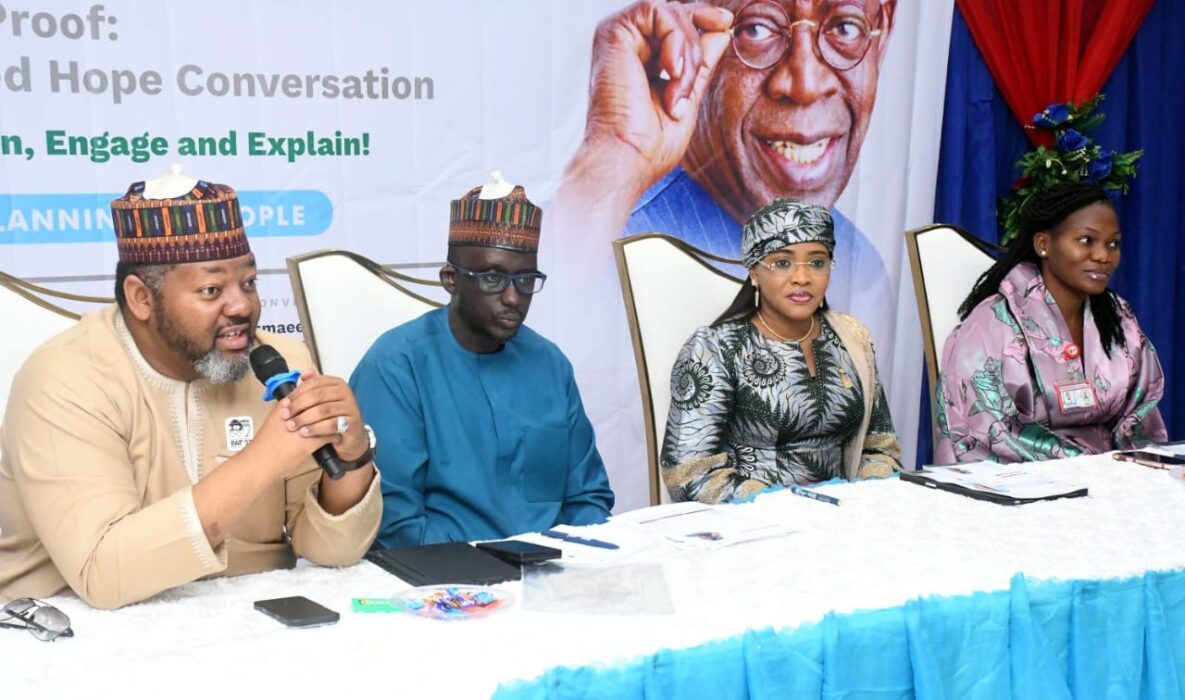
The chairman/ CEO of the Presidential CNG Initiative and Electric Vehicles (Pi-CNG & EV) Ismaeel Ahmed disclosed this at the Abuja roundtable on Promise to Proof: The Renewed Hope Conversation, organised by the All Progressives Congress (APC) and the Progressive Strategy Roundtable.
Speaking during a session titled “Fuel That Works: Reliable Energy, Affordable Transport and Fair Prices for Every Household and Business,” the representative of Pi-CNG & EV, Ahmed said the government was working to extend CNG adoption beyond transportation to agricultural activities, particularly irrigation.
Ahmed who is also the Convener of the Roundtable said consultations with state governments, especially in northern Nigeria, had shown that farmers were increasingly interested in switching from expensive diesel and petrol to CNG-powered irrigation pumps.
He cited Jigawa State as an example, saying the governor had informed the initiative that the state had more than two million farmers who could benefit from cheaper energy for agricultural activities.
According to him, mechanical irrigation pumps can cover about three hectares of farmland, compared with solar-powered pumps, which typically cover about one hectare.
He explained that although solar-powered irrigation had been introduced as an alternative, some farmers preferred mechanical pumps because of their wider coverage and capacity to support larger farming operations.
“Most of the states I visited in the North, the discussion has not been about even cars. It has been for CNG for irrigation pumps. That is the most important thing for local farmers,” Ahmed said.
He added that farmers were particularly concerned about the high cost of diesel and petrol used to operate irrigation equipment.
“The mechanical irrigation pump does more work because one irrigation pump can take care of three hectares of farmland, as opposed to a solar pump, because we introduced the issue of a solar pump, and he said the solar pump takes time. At most, it does one hectare,” he said.
Ahmed said the Federal Government had given the initiative the go-ahead to pursue the programme aggressively, noting that the next major challenge would be ensuring adequate gas supply in rural communities.
He also called on the Nigerian Midstream and Downstream Petroleum Regulatory Authority (NMDPRA) to help accelerate the licensing process for CNG refuelling stations.
According to him, delays in obtaining licences have been among the complaints from investors seeking to establish CNG facilities.
While acknowledging the importance of safety regulations in the gas sector, he urged the regulator to consider ways of expediting the process to support the expansion of the programme.
Ahmed also proposed the deployment of mobile CNG stations to serve farmers in remote communities where private investors might not find it commercially viable to establish permanent refuelling facilities.
He said mobile stations could help bridge the infrastructure gap and ensure that farmers in rural areas have access to gas for their irrigation equipment.
The Pi-CNG & EV representative further disclosed that the programme had recorded about 143,000 vehicle conversions, with investments estimated at $2.6 billion.
He said expanding CNG infrastructure would support the government’s broader efforts to reduce dependence on expensive conventional fuels and promote the use of cleaner and more affordable energy alternatives.
The roundtable also featured presentations by the Managing Director of the Rural Electrification Agency, Dr. Abba Abubakar Aliyu; Mr. Abdullahi Kassim of the Niger Delta Power Holding Company; the Chairman of the Nigerian Electricity Regulatory Commission, Dr. Musiliu Oseni; and Dr. Mustapha Lamorde of the Nigerian Midstream and Downstream Petroleum Regulatory Authority.
Discussions covered rural electrification, power generation, electricity tariffs, domestic refining, fuel availability and energy security.
Aliyu highlighted the country’s electricity-access gaps and rural electrification plans, including the deployment of 1,350 mini-grids under a $750 million project.
Kassim disclosed that the Niger Delta Power Holding Company operates 10 power plants with a combined generation capacity of 4,000 megawatts, while also outlining its transmission, distribution, industrial power and solar energy initiatives.
Oseni discussed electricity tariffs and service delivery, reporting an increase of approximately 780 megawatts in installed generation capacity. He also explained measures being pursued by NERC to improve electricity supply and address consumer complaints.
Lamorde’s presentation addressed domestic refining, petroleum product quality, fuel availability and strategic reserves, including plans to build up fuel reserves towards a 90-day target.
We’ve got the edge. Get real-time reports, breaking scoops, and exclusive angles delivered straight to your phone. Don’t settle for stale news. Join LEADERSHIP NEWS on WhatsApp for 24/7 updates →
Join Our WhatsApp Channel