Nigeria’s commercial diving industry is seeking to strengthen local training and certification capacity in collaboration with the International Marine Contractors Association (IMCA), a move expected to reduce the dependence of Nigerian divers on overseas institutions for qualifications required for international offshore operations.
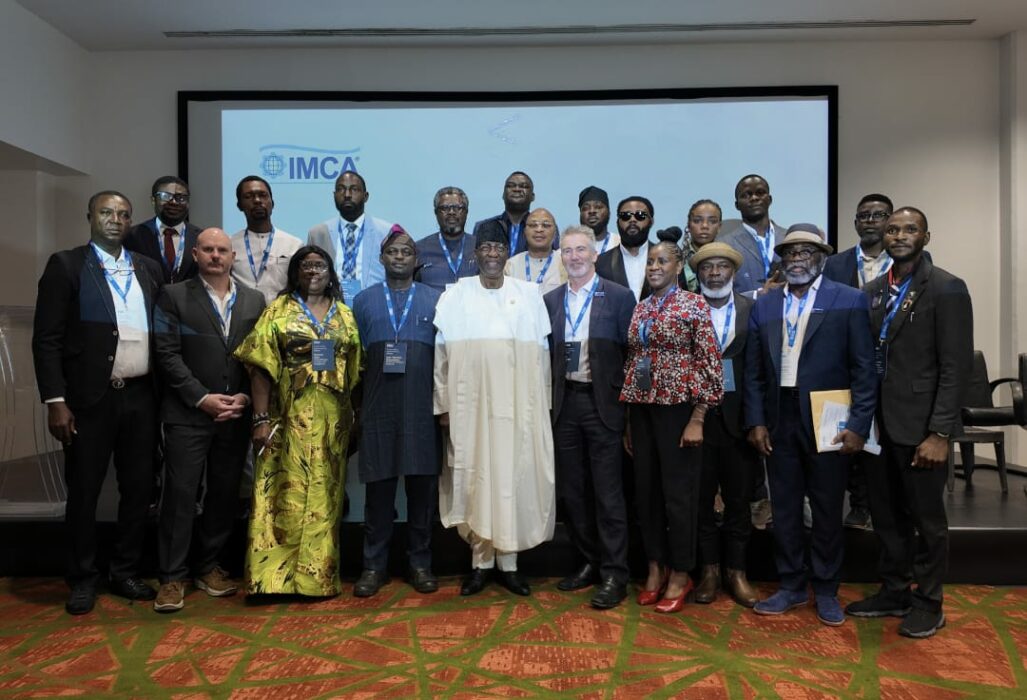
The development followed an engagement in Lagos between IMCA officials, commercial diving professionals, training institutions, regulators and other industry stakeholders, who examined challenges affecting the development, certification and international recognition of Nigeria’s diving capacity.
At the centre of the discussions was the need to establish a clearer pathway through which Nigerian diving schools can demonstrate compliance with internationally accepted training, competence and safety requirements.
Stakeholders said Nigeria already possesses considerable commercial diving expertise and training capacity, but requires stronger engagement with international industry institutions to close gaps in certification, standardisation and recognition.
Fielding questions from the media, IMCA Chief Executive Officer, Iain Grainger, acknowledged training as one of the major challenges confronting the industry and said closer engagement with Nigerian professional bodies, trade associations and training institutions would form an important part of the association’s next steps.
“Yesterday, we spent time talking to the next generation of talent, to make them aware and interested in joining the industry. I think the next step is about starting to work together with the local members and local trade associations to identify exactly what the challenges are. We know that one of the challenges for the future of this industry is in the training of divers.
“So, we want to work together with the local trade associations and the local training establishments, and understand how we can fix this problem. That is really where I think the next stage of the engagement has to go – understanding the challenges and working together to address them.”
The engagement is expected to provide an opportunity for Nigerian diving schools to strengthen their capacity and potentially reduce the need for local divers to travel abroad for specialised training and certification.
Nigeria’s Chief Inspector of Diving, Julius Ugwala, said Nigerian diving schools were capable of meeting IMCA-prescribed requirements and should be given the opportunity to undergo the necessary assessment rather than allowing Nigerian divers to perpetually depend on foreign institutions for qualifications required for some international offshore operations.
He said greater cooperation between IMCA and Nigerian institutions could raise industry standards without compromising internationally accepted benchmarks.
Discussions consequently focused on training requirements and systems, facilities, instructors, equipment, safety procedures, quality assurance and competence assessment.
Stakeholders said internationally credible local training would not only reduce the cost and logistical burden associated with overseas training but would also expand indigenous participation in the commercial diving industry and position Nigeria as a stronger centre for subsea expertise in Africa.
Senator Gbenga Daniel, who represented the Senate President at the meeting, pledged legislative support for measures capable of attracting investment and advancing the professional development of Nigeria’s diving industry.
Daniel said the National Assembly was interested in creating conditions that would enable investors to succeed, describing diving as “a noble profession” with economic potential.
Representing the Federal Ministry of Labour and Employment, Director of Occupational Health, Florence Owie, said government’s priority was to ensure that commercial diving operations were carried out under conditions that protected divers and other personnel working in the hazardous underwater environment.
She stressed the importance of proper training, competent personnel, appropriate equipment and compliance with occupational safety requirements, adding that standards would only be effective when properly implemented, monitored and enforced.
Lending his voice, retired Rear Admiral Joseph Ake said Nigeria already possessed significant commercial diving capacity and should build on that advantage by strengthening indigenous training, competence and professional standards.
He said developing local capability would enable more Nigerians to participate in the sector and reduce dependence on foreign expertise and training, while insisting that such capacity must be developed within recognised safety and operational frameworks.
IMCA’s Africa Lead, Mary Ntamark, broadened the discussions to the continental level, saying the association was seeking deeper engagement with African stakeholders to better understand the challenges confronting the offshore and commercial diving industry.
She stressed the importance of collaboration among operators, professional bodies and training institutions in building sustainable African capacity and improving the ability of practitioners to compete in the global offshore industry.
The stakeholders’ engagement comes as Nigeria seeks to deepen local participation in its offshore oil and gas industry, where commercial diving services are required for underwater inspection, construction, maintenance and repair.
With stronger local training, certification and competence assessment systems, stakeholders believe Nigeria can reduce reliance on foreign institutions, lower training costs for local practitioners and develop a globally competitive indigenous commercial diving workforce.
We’ve got the edge. Get real-time reports, breaking scoops, and exclusive angles delivered straight to your phone. Don’t settle for stale news. Join LEADERSHIP NEWS on WhatsApp for 24/7 updates →
Join Our WhatsApp Channel