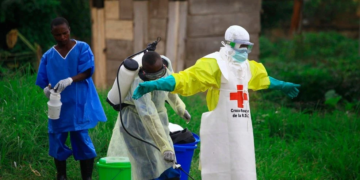
The alarming statistics from the Nigeria Centre for Disease Control and Prevention (NCDC) that 80 people have died from 413 confirmed Lassa fever cases across 11 states within a single week in February 2025 should jolt the authorities out of complacency.
More troubling is the rising case fatality rate at 19.4 percent, up from 17.5 percent in the same period last year. This deadly hemorrhagic disease, first identified in 1969 in Borno State, has stubbornly remained endemic in many parts of the country for decades, with the current high mortality rate highlighting the glaring inadequacies in our healthcare system and public health response capabilities.
That 73 percent of confirmed cases come from just three states – Ondo, Edo, and Bauchi – with 63 local government areas affected, suggests a pattern of persistent hotspots where preventive interventions have clearly fallen short.
The concentration of cases in these areas year after year points to a failure in addressing root causes rather than just managing outbreaks.
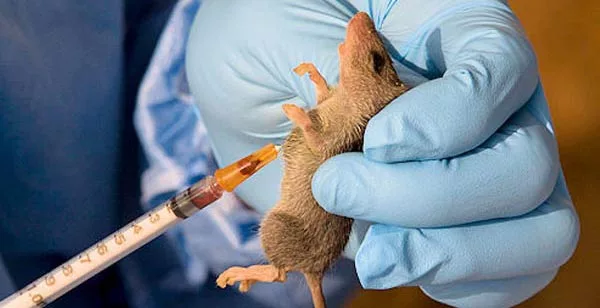
It is instructive to note that Lassa fever is an acute viral hemorrhagic illness caused by the Lassa virus. Lassa fever is primarily transmitted through food or household items contaminated by the urine and feces of infected Mastomys rats. Human-to-human transmission is also common, especially in healthcare settings lacking adequate infection control measures.
We find it particularly disturbing that young adults between 21 and 30 years – the most productive segment of our population – constitute the primary affected age group. This demographic impact adds an economic dimension to what is already a public health crisis.
While we acknowledge the NCDC’s activation of the National Lassa Fever Multi-Sectoral Incident Management System and deployment of rapid response teams to affected states, these reactive measures, though necessary, represent a familiar pattern of crisis management rather than sustainable disease control.
The recurring nature of Lassa fever outbreaks every dry season between November and April has become so predictable that one wonders why our health authorities consistently appear caught unprepared. A disease that has been in our national consciousness for over five decades should not still be claiming lives at such an alarming rate.
The challenges identified by the NCDC – poor health-seeking behavior, high treatment costs, and limited awareness in high-burden communities – reveal deeper systemic issues. Poor health-seeking behavior does not exist in a vacuum; it is often the result of inaccessible healthcare facilities, prohibitive costs, and lack of trust in the health system.
Limited awareness in high-burden communities reflects a failure in public health education and community engagement. If after decades of battling this disease, affected communities still lack adequate understanding of prevention measures, then our risk communication strategies need a fundamental review.
We are particularly concerned about the vulnerability of healthcare workers, who remain at risk despite improvements in infection control.
The reported case of infection among frontline responders during the current outbreak highlights persistent gaps in healthcare worker protection.
No healthcare professional should lose their life while trying to save others, especially from a disease with known preventive measures.
It is instructive that the NCDC has identified delayed case presentations as a major contributor to the rising fatality rate. This points to critical gaps in our primary healthcare system, which should serve as the first point of contact and early detection for diseases like Lassa fever.
The revitalisation of primary healthcare centers across the country, particularly in rural areas, must therefore be prioritised if we are to reduce mortality from Lassa fever and other infectious diseases.
The seasonal nature of Lassa fever outbreaks provides a predictable timeframe for preventive interventions. Yet we continue to witness the same cycle of outbreaks, emergency responses, and forgotten lessons once the immediate crisis subsides. This pattern must be broken
through sustained, year-round preventive measures that address the root causes of transmission.
The primary mode of transmission – contact with food or household items contaminated by infected rodents – requires environmental health interventions that go beyond the health sector. Improved sanitation, proper waste management, and rodent control in affected communities should be ongoing efforts, not emergency responses.
While we commend the NCDC’s collaboration with international partners like the World Health Organisation, Médecins Sans Frontières, and research institutions to improve diagnosis, treatment, and outbreak response, we must also build robust local capacity for sustainable disease control.
The federal government, through the Federal Ministry of Health and Social Welfare, must increase funding for Lassa fever research, prevention, and treatment. State governments, particularly in endemic areas, must demonstrate greater political commitment by allocating adequate resources for preventive measures rather than waiting for outbreaks before acting.
Every Nigerian has a role to play in preventing Lassa fever by maintaining proper hygiene, storing food safely in sealed containers, keeping homes clean, and eliminating rodent hiding places.
However, individual actions alone cannot solve what is fundamentally a public health challenge requiring coordinated institutional responses.
As we confront yet another Lassa fever outbreak, let us remember that the recurring nature of these outbreaks is not inevitable but a reflection of our collective failure to implement sustainable control measures.
We’ve got the edge. Get real-time reports, breaking scoops, and exclusive angles delivered straight to your phone. Don’t settle for stale news. Join LEADERSHIP NEWS on WhatsApp for 24/7 updates →
Join Our WhatsApp Channel