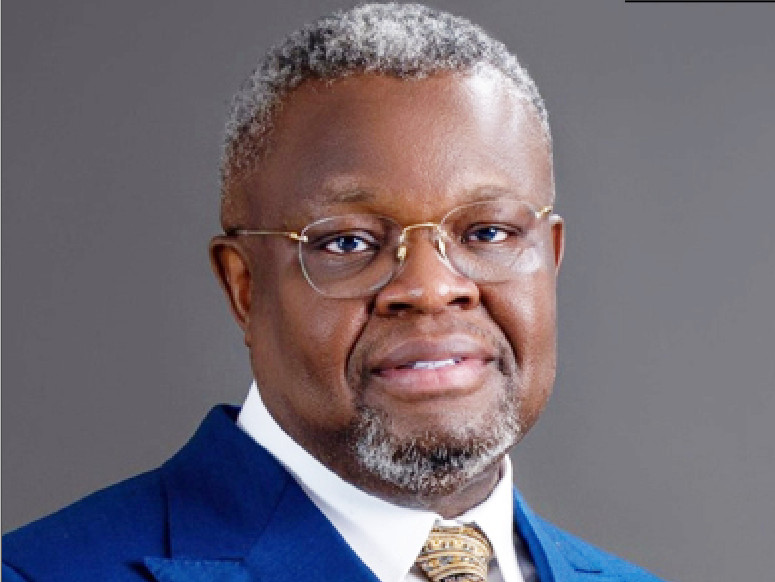
In Nigeria’s oil and gas industry—where engineering exactitude intersects with complex commercial imperatives—few professionals demonstrate the depth of expertise and strategic foresight that define the chairman of PANA Holdings, Daere Akobo.
With more than twenty years of experience across engineering operations, procurement systems, industrial automation, and executive leadership, Akobo has transitioned from a highly skilled technical specialist into a formidable force in shaping indigenous capacity and enterprise resilience within Africa’s evolving energy landscape.
His journey began not in boardrooms but on the demanding frontlines of industrial operations. Trained in Applied Physics at Rivers State University, Akobo entered the oil and gas sector with a rare blend of analytical rigour and practical curiosity. At the International Petroleum Company of Nigeria, he served as an Electrical Instrumentation Superintendent, honing his expertise in systems that form the nervous system of modern energy infrastructure. His early career continued at Total E&P, where he worked as a Technical Stock Controller, gaining deep exposure to procurement systems and operational logistics—an experience that would later shape his entrepreneurial instincts.
But it was at General Electric Nigeria that Akobo’s multidimensional talents came fully into view. Moving beyond technical roles into commercial leadership, he demonstrated an uncommon ability to connect engineering insight with market strategy. Within a short period, he was credited with quadrupling the company’s sales between 2007 and 2008—a feat that signalled not just business acumen, but an intuitive understanding of client needs in a complex, evolving industry. Equally notable was his role as a bridge-builder; colleagues recall his interventions in resolving disputes between clients and partners, reinforcing a reputation grounded as much in emotional intelligence as in technical excellence. His recognition as “Top Talent” across Africa was less an accolade than an inevitability.
Yet, for Akobo, success within established systems was never the endgame. In 2009, driven by a conviction that Nigeria’s oil and gas industry required stronger local capacity to meet global standards, he founded Plant Engineering Limited—later rebranded as PE Energy Limited. The company was born out of a simple but powerful insight: the gap between user expectations and market offerings was not just a challenge, but an opportunity.
Under his leadership, PE Energy quickly distinguished itself through an unwavering commitment to integrity, regulatory compliance, and technical excellence. At a time when local content was often discussed more than delivered, Akobo positioned the company as a model participant in Nigeria’s NCD framework, setting benchmarks that competitors would struggle to match. Central to this ambition was the creation of a state-of-the-art Centre of Excellence in Trans Amadi, Port Harcourt—a facility designed not merely as an operational hub, but as a symbol of what indigenous capability could achieve when driven by vision and discipline.
Through strategic alliances with global technology leaders, Akobo expanded PE Energy’s footprint beyond national borders, integrating international best practices into local execution. These partnerships were not acts of dependency, but of deliberate positioning—ensuring that Nigerian engineers and systems could operate at par with the best in the world. In doing so, he redefined what it meant to be a “local company” in a globalised industry.
Akobo’s influence, however, extends far beyond corporate success. As Chairman and Group Chief Executive Officer of PANA Holdings, he has championed a broader vision of industrial transformation—one that places knowledge, innovation, and collaboration at its core. Nowhere was this more evident than in his address at the combined convocation ceremony of Rivers State University, where he challenged graduates to rethink the very purpose of education.
In a country where research often gathers dust in university libraries, Akobo’s message was both urgent and provocative: ideas must move from theory to market. He lamented Nigeria’s low patent output and called for a shift from exam-based graduation to innovation-driven outcomes. “It is the patent that brings money,” he asserted, urging students and academics to embrace commercialisation as the missing link in Nigeria’s development chain.
Central to his philosophy is the “triple helix” model—an interconnected framework linking universities, industry, and government. Drawing inspiration from institutions like the Massachusetts Institute of Technology and the Indian Institute of Technology Madras, he envisions a Nigeria where academic research fuels industrial growth and corporate investment sustains intellectual discovery. His call for multinational corporations such as ExxonMobil, Shell, and Chevron to endow Nigerian universities reflects a broader demand for shared responsibility in nation-building.
Despite his global outlook, Akobo remains deeply rooted in local impact. His decision to base major operations in Port Harcourt rather than Lagos underscores a commitment to regional development, even in the face of structural disadvantages. It is a choice that reflects both principle and pragmatism: growth, for Akobo, must be inclusive to be meaningful.
A distinguished alumnus of Harvard Business School, INSEAD, and Alliance Manchester Business School, and a recipient of numerous international awards—including recognitions from Shell and Honeywell—Akobo has become a trusted gateway for global firms seeking to navigate Nigeria’s complex market landscape.
But his most enduring legacy lies not in awards or balance sheets, but in a philosophy captured in a simple, striking admonition: a dream without a deadline is a nightmare. It is this sense of urgency—applied to business, education, and national development—that defines Daere Akobo’s work. In bridging gaps between ideas and execution, between local potential and global standards, he is not just building companies; he is helping to engineer the future.
We’ve got the edge. Get real-time reports, breaking scoops, and exclusive angles delivered straight to your phone. Don’t settle for stale news. Join LEADERSHIP NEWS on WhatsApp for 24/7 updates →
Join Our WhatsApp Channel