Emerging dynamics in global gas pricing are giving gas-rich nations a strategic advantage. Yet, Nigeria’s capacity to fully capitalise on this moment remains constrained by persistent underinvestment across the value chain.
The immediate past Managing Director of Nigeria LNG Limited, Philip Mshelbila, has framed the evolving pricing regime as a decisive inflexion point for Africa—particularly Nigeria—to intensify investment in its gas sector.
Speaking at an Africa-focused energy forum in Paris, Mshelbila observed that geopolitical tensions in the Middle East have disrupted traditional supply flows, tightening global markets and elevating price benchmarks.
This shift, he argued, places Nigeria in a favourable position to significantly expand revenue streams through scaled gas production.
Now serving as Secretary General of the Gas Exporting Countries Forum, Mshelbila underscored Africa’s latent potential to bridge emerging supply gaps. With vast reserves spanning Algeria, Libya, Egypt, Nigeria and Mozambique, the continent holds a formidable resource base. Nigeria alone commands between 209 and 600 trillion cubic feet of proven gas reserves. Yet, this abundance belies a troubling reality: Africa is producing barely 40 per cent of its potential, leaving critical LNG facilities and pipeline networks underutilised.
“The reserves are there; the production is not,” he remarked, warning that the continent is forfeiting near-term market opportunities in both Europe and Asia. In the absence of decisive action, more agile producers in North America—principally the United States and Canada—continue to consolidate market share.
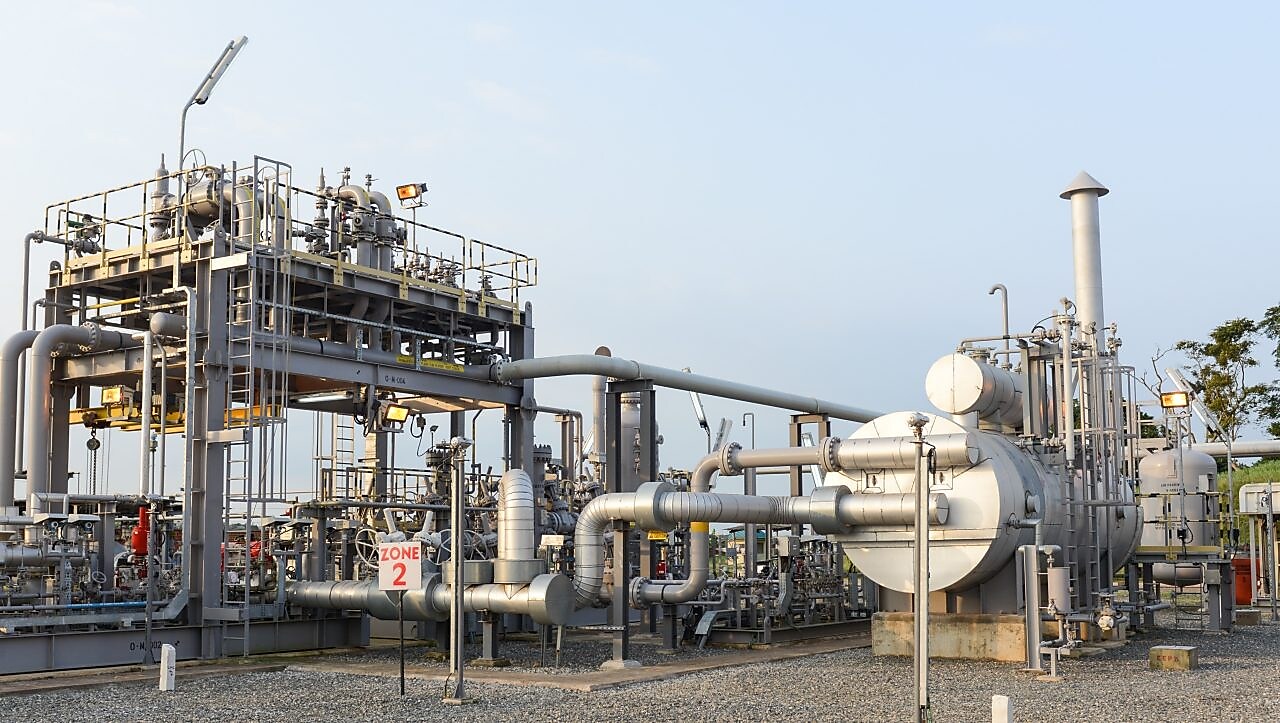
Nigeria’s flagship response lies in the Nigeria LNG Train 7 project, a $10 billion expansion designed to increase capacity from 22 million tonnes per annum to over 30 mtpa. Supported by NNPC Limited, Shell Gas BV, TotalEnergies and Eni International, the project forms a cornerstone of the federal government’s “Decade of Gas” agenda, targeting 10 billion standard cubic feet of daily gas production by 2030. Complementary initiatives, including pipeline upgrades such as the OB3 project, are also underway to strengthen supply infrastructure.
Nonetheless, investment inertia remains a critical impediment. Deferred final investment decisions, heightened capital discipline and geopolitical uncertainty are collectively slowing the pace of new developments. Mshelbila cautioned that earlier projections of a global LNG glut by 2026 are being revised, with markets instead tilting toward prolonged tightness.
Industry stakeholders echoed these concerns. While Africa’s energy future is increasingly defined by expansion—driven by industrial growth and rising demand from data infrastructure and artificial intelligence—structural gaps persist. Without sustained upstream investment, integrated infrastructure development and coherent policy alignment, Nigeria risks relinquishing a rare window of opportunity in an increasingly competitive global gas market.
We’ve got the edge. Get real-time reports, breaking scoops, and exclusive angles delivered straight to your phone. Don’t settle for stale news. Join LEADERSHIP NEWS on WhatsApp for 24/7 updates →
Join Our WhatsApp Channel