It is not a trade policy. It is not infrastructure. It is not security. If West Africa is to escape the fate of being a continent of perpetual potential, the real battleground, its most powerful lever is identity. Not in the sociocultural sense, but in the verifiable, cross-border, digital sense.
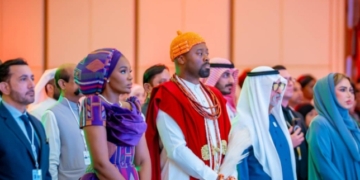
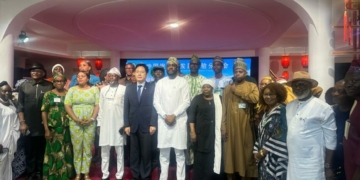
That was the radical argument laid bare during the inaugural West Africa Economic Summit (WAES), where presidents, policymakers, and private sector leaders gathered in Garki, Abuja, under the banner of “Unlocking Trade and Investment Opportunities in the Region.” But amid the usual pledges for tariff harmonisation, infrastructure investment, and youth empowerment, a less conspicuous theme emerged as the linchpin of it all: digital identity.
And it was the director-general of Nigeria’s National Identity Management Commission (NIMC), Engr. (Dr.) Abisoye Coker-Odusote, who pulled back the curtain on what many have missed for decades: West Africa cannot integrate what it cannot verify. Without a secure, interoperable digital identity system, the region’s most ambitious economic blueprints risk becoming beautifully crafted paper castles—doomed by friction, distrust, and fragmentation.
At first glance, the stakes seem ordinary. Only 10–15 per cent of ECOWAS trade is intra-regional. Compare that to the EU, which exceeds 60 per cent. Regional GDP remains low, growth fragile, and poverty persistent. But beneath the surface lies a deeper fault line: an inability to authenticate identity across borders.
In a place where over 60 per cent of economic activity remains informal, where borders are porous but regulated by arbitrary harassment, and where trust is built face-to-face, identity or the lack of it becomes the invisible wall that keeps prosperity at bay.
“Digital identity is not just infrastructure. It is the nervous system of a modern regional economy,” Coker-Odusote said during her keynote. “When citizens can move across borders with a recognised and verifiable identity, they can trade, access services, and participate meaningfully in regional growth.”
In essence, she wasn’t making a case for better ID cards. She was articulating a new economic model—where data is trust, and trust is capital.
Most trade in West Africa does not take place in seaports or formal markets. It happens in bus terminals, on dusty roads, in roadside stalls, and through human networks too resilient to be destroyed, yet too marginalised to be protected. These traders move millions of dollars’ worth of goods, from grain in Kano to textiles in Tamale , but without traceable identity, they remain ghost participants in the region’s economic narrative.
This informality is not accidental. It is systemic. Without a recognised digital identity, a cross-border trader cannot open a regional bank account, apply for credit, or register her business in a second country. Without KYC-compliant credentials, mobile money platforms shy away, lenders say no, and regulators look the other way.
The result? A shadow economy where opportunity is rationed by visibility. Where women—who make up over 70 per cent of informal cross-border tradersremain invisible to capital. Where youth entrepreneurship never scales beyond the roadside. Where regional trade ambitions die at the border post.
But imagine a region where a trader in Cotonou can verify her identity digitally, open a pan-West African wallet, apply for regional export licenses, and track payments from Abuja to Accra, without fear, friction, or bribes. That is not utopia. That is the power of a harmonised digital identity ecosystem. And that is what West Africa now has a narrow window to build.
The Garki Declaration, the official outcome of WAES 2025 does make bold commitments. It outlines a five-year plan to lift intra-regional trade to over 50%. It proposes value chain integration, investment corridors, and cross-border infrastructure. But as Dr. Coker-Odusote underscored, none of this can be sustained unless five pillars align:
Firstly, governments must stop treating identity as a bureaucratic exercise and start treating it as economic infrastructure allocating budget, reforming legal frameworks, and embedding ID policy into trade agreements.
Secondly, identity agencies like Nigeria’s NIMC and Ghana’s NIA must cooperate across borders—sharing standards, synchronising protocols, and offering technical assistance to less advanced countries like Guinea, Liberia, and Sierra Leone.
Thirdly, ECOWAS and WAEMU must establish a permanent regional Digital Identity Charter and create an institutional mechanism—a West African Digital ID Task Force—with real enforcement power and funding.
Fourthy, the Private Sector, especially banks, telcos, and fintechs, must integrate ID verification across services reducing onboarding friction, unlocking credit, and designing financial products for newly visible citizens.
Fifthly, civil society and traditional authorities must drive adoption from the grassroots, building trust in digital systems through local networks, cultural intermediaries, and gender-sensitive campaigns.
In short: digital identity must not be a top-down decree; it must be a bottom-up revolution.
The good news? The region has precedents. India’s Aadhaar project, despite its scale and controversy, enrolled over a billion citizens and is now the bedrock of digital payments, social protection, and public accountability. Estonia’s e-ID system helped it become one of Europe’s most digitised economies. There is no reason West Africa, with its youth, ingenuity, and urgency, cannot leapfrog legacy systems.
Nigeria has already enrolled over 120 million citizens in its National Identification Number (NIN) system. Ghana’s digital ID is now integral to banking and voting. Senegal is piloting biometric systems. The momentum is real. The challenge is interoperability—ensuring that ID in one country is trusted in another.
But beyond the technical hurdles lies the political question: Can West Africa think as a region, not just as a collection of states? Because digital identity is not just about systems. It’s about trust. And trust, in this case, must transcend flags.
Africa has great expectations for the African Continental Free Trade Area (AfCFTA)—the world’s largest single market by membership. But the AfCFTA cannot function if traders cannot trust one another, or if banks cannot verify the people behind transactions. Digital identity is the trust layer for that future.
As Dr. Coker-Odusote put it: “With harmonised identity, a supplier in Kano can transact confidently with a buyer in Dakar. A logistics firm in Abidjan can onboard a new partner in Accra. A startup in Lomé can scale regionally from day one.”
AfCFTA is not about borders on a map; it’s about bridges in the cloud. And digital ID is the most important bridge of all.
The Garki Summit will be remembered not just for its declarations, but for what comes next. Will WAES become a talking shop, or a turning point? Will digital identity be implemented as a tool for trade, or remain a line in a communique?
The choice is urgent, the stakes generational.
If West Africa gets this right, it will not just increase trade. It will unlock a new regional consciousness—where the barriers that once divided now become the networks that unite. Where a young girl in Niamey can one day run a fintech empire across the entire subregion—because she was recognised, documented, and empowered early.
In the end, digital identity is not about numbers in a database. It is about dignity. About recognition. About saying to every West African, “You exist. You belong. You can grow.”
The time to build that future is now and the ID is the key.
We’ve got the edge. Get real-time reports, breaking scoops, and exclusive angles delivered straight to your phone. Don’t settle for stale news. Join LEADERSHIP NEWS on WhatsApp for 24/7 updates →
Join Our WhatsApp Channel