
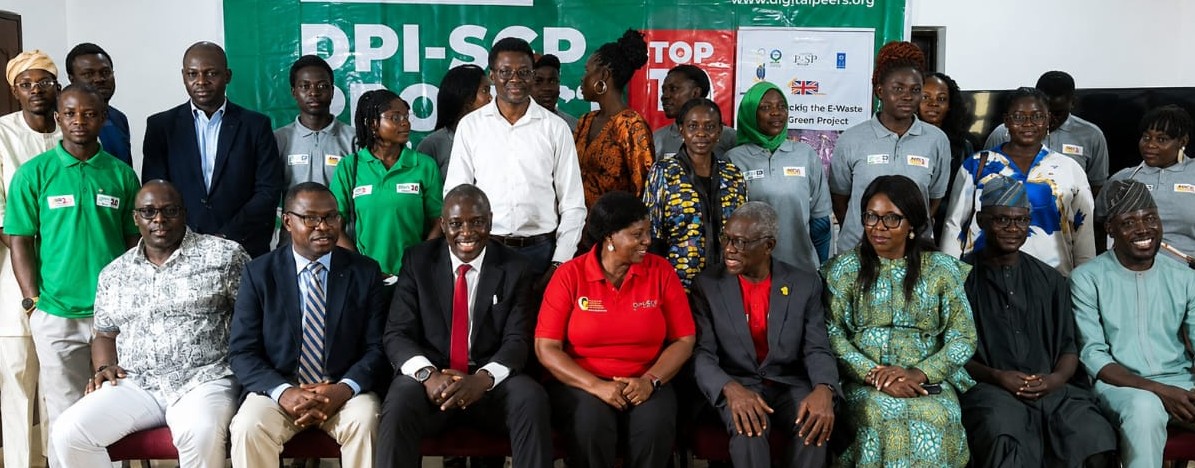
The Federal Ministry of Environment, the United Nations Development Programme (UNDP) and Digital Peers International (DPI) have called for sustained investment in youth-led innovation and digital technology to tackle plastic pollution and accelerate Nigeria’s transition to a circular economy.
The call came at the close of the Global Environment Facility Small Grants Programme (GEF-SGP)-supported Plastic Waste Solutions 2.0 Project, where stakeholders described the initiative as a model for turning environmental challenges into economic opportunities.
Speaking virtually, National Coordinator of the UNDP Global Environment Facility Small Grants Programme, Dr Ronke Olubamise, said the project had equipped hundreds of young Nigerians with practical skills to develop innovative solutions to plastic waste management.
She noted that participants created digital platforms, generated research to support future environmental interventions and developed ideas with the potential to grow into sustainable businesses.
“The innovations demonstrated by these young people can move beyond prototypes into practical projects and scalable enterprises with environmental and economic benefits,” she said, urging continued collaboration among government, development partners, the private sector and communities.
Chief Executive Officer of Digital Peers International, Dr Ibukun Odusote, described the project’s completion as the beginning of a new phase focused on transforming promising ideas into viable businesses.
According to her, the project received 46 innovation concepts from young Nigerians, with the best ideas selected after rigorous technical assessment.
“Our next priority is ensuring these innovations move beyond ideas into enterprises that create jobs, attract investment and solve environmental problems,” she said.
Odusote disclosed that DPI plans to provide mentorship, business development support, prototype refinement, investment readiness coaching and market access for participating innovators.
She added that the organisation would continue expanding digital solutions developed under the project, including the Green Genius App and Eco Trade Hub, while pursuing partnerships to commercialise products made from recycled plastic waste.
Also speaking, Senior Scientific Officer at the Federal Ministry of Environment, Murtala Umoru, said the ministry had supported the initiative from inception through technical guidance and policy alignment.
He described the project as one of the most impactful youth-focused environmental programmes, noting that participants developed technology-based solutions for plastic waste management, while some also gained international exposure through training in China.
Umoru urged young Nigerians to view waste as a valuable resource rather than a nuisance.
“There is nothing like waste. What one person considers waste is another person’s raw material. Through the circular economy, waste becomes an opportunity for wealth creation and innovation,” he said.
He added that the ministry would recommend the project’s outcomes to its leadership for possible expansion across the country.
Stakeholders agreed that stronger partnerships and continued investment in youth innovation will be critical to reducing plastic pollution and building a sustainable green economy in Nigeria.
We’ve got the edge. Get real-time reports, breaking scoops, and exclusive angles delivered straight to your phone. Don’t settle for stale news. Join LEADERSHIP NEWS on WhatsApp for 24/7 updates →
Join Our WhatsApp Channel