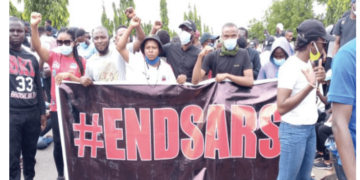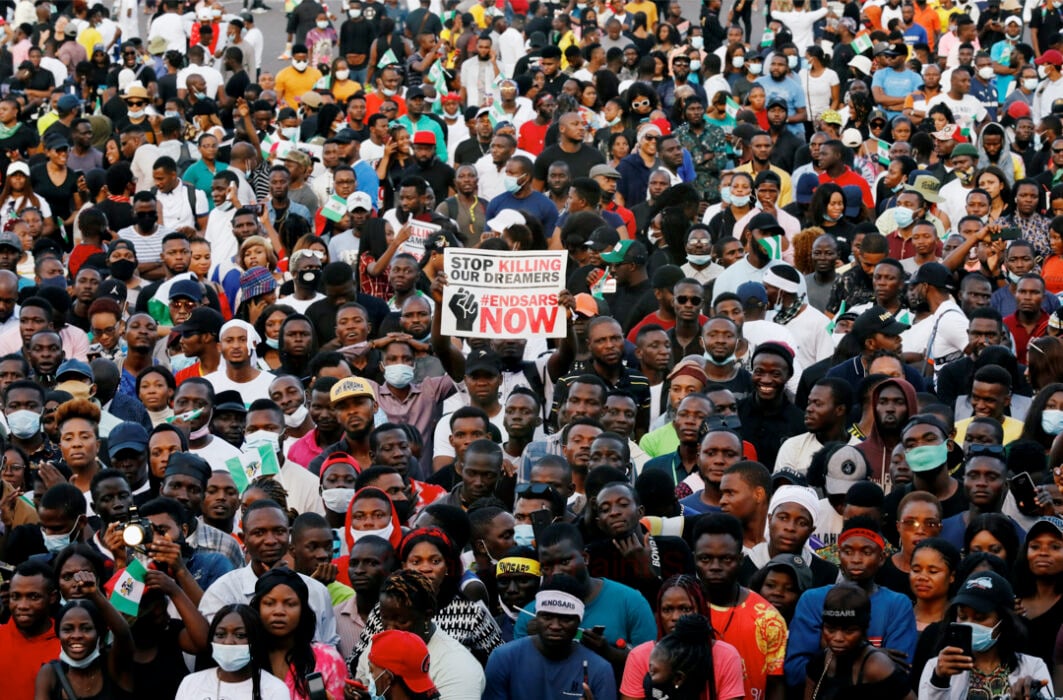
It has been five years since Nigerian youths took to the streets across the country and in foreign cities to demand an end to police brutality, in what came to be known as the EndSARS protest.
That historic movement in October 2020 was not just a spontaneous youth uprising; it was a long-boiling reaction to years of frustration, injustice, and state-sanctioned abuse. The protests captured the world’s attention, uniting Nigerians at home and abroad in a rare moment of solidarity against oppression.
The EndSARS protests of October 2020 were a spontaneous outcry against the notorious Special Anti-Robbery Squad (SARS), a police unit originally established to combat violent crimes such as armed robbery and kidnapping.
However, over time, SARS became infamous for its blatant disregard for human rights. Numerous reports and testimonies detailed its descent into a reign of terror characterised by torture, extortion, arbitrary arrests, and extrajudicial killings carried out with brazen impunity.
The scale of public outrage in 2020 was massive, with protesters flooding streets from Lagos to Abuja, from Port Harcourt to London. Young Nigerians used social media as a powerful organising tool, amplifying their voices and bypassing traditional state-controlled narratives. The protests’ energy, creativity, and discipline drew admiration globally. Faced with the mounting pressure, the authorities swiftly announced the dissolution of the SARS unit.
Yet, the protesters did not retreat. They held their ground for nearly two weeks, articulating five clear demands: justice for victims of police brutality, comprehensive reform of the police force, compensation for victims, psychological evaluation of erring officers, and better welfare for security personnel.
Tragically, what began as a hopeful civic awakening took a dark turn on the night of October 20,2020 at the Lekki Toll Gate in Lagos. Armed soldiers opened fire on peaceful demonstrators waving the Nigerian flag and singing the national anthem—a moment seared into the nation’s collective memory. The images and videos that emerged shocked the conscience of the world, sparking widespread condemnation.
Although the government initially claimed that no lives were lost at the Lekki Toll Gate, a Lagos Judicial Panel of Inquiry later contradicted that narrative. The panel found that the army had violated its own rules of engagement and deliberately obstructed medical aid to the wounded. The panel identified 48 casualties—11 confirmed dead, four missing, and many others injured. Its report was an indictment not just of the security forces but also of the government’s handling of the tragedy.
As a newspaper, we are deeply concerned that five years after that gruesome incident, justice remains elusive. The families of those affected continue to wait in vain for accountability. Not a single soldier, police officer, or government official who ordered or participated in the attack on peaceful protesters has been brought to book. Worse still, the Lagos State Government rejected the panel’s findings, and its recommendations appear to be gathering dust on official shelves. Such silence in the face of injustice is itself an act of complicity.
Meanwhile, the wide-ranging reforms demanded by Nigerian youths have yet to materialise. Police officers remain poorly paid and ill-motivated, conditions that fuel corruption and brutality. It is commonplace to see policemen openly soliciting money from motorists or resorting to intimidation. Many police stations still function as centres of bribery and extortion, while retired officers routinely stage protests over neglect of their pensions and welfare. Although reports of extrajudicial killings may have reduced somewhat, forced disappearances, arbitrary arrests, and other abuses persist. The structural problems that prompted the #EndSARS protests remain largely unaddressed.
Another worrying development since the 2020 tragedy is the government’s increasingly heavy-handed approach to public dissent. Instead of learning from the past, security forces have continued to treat peaceful protests as acts of rebellion. Authorities now rely on dubious court orders, arbitrary arrests, and the use of tear gas to disperse demonstrators. This growing intolerance for civic expression undermines the very principles of democracy.
Even symbolic acts of remembrance are not spared. This year, for example, activist Yemi Adamolekun was confronted and harassed by security operatives simply for laying flowers at the Lekki Toll Gate in honour of the dead. Such actions betray a deep fear of accountability. Equally disturbing was the arrest of dozens of minors last October who took to the streets to protest against pervasive hunger. Their alleged crime was waving a foreign country’s flag, for which they were outrageously charged with treason. It took a nationwide outcry before the president intervened and ordered their release. Similarly, peaceful demonstrators marking the fifth anniversary of the Lekki shootings and calling for the release of IPOB leader Nnamdi Kanu were tear-gassed and detained in Kuje prison under the pretext of a court order.
This chilling continuity of repression demonstrates that the culture of impunity which birthed #EndSARS remains intact. Instead of reforming the police, the state has merely replaced one form of brutality with another. Nigerian youths, who once dared to dream of a more just and accountable society, are now met with renewed hostility whenever they seek to exercise their constitutional rights.
Five years on, EndSARS stands as both a reminder of the courage of a generation and an indictment of a state and its old-fashioned intuitions unwilling to change its repressive ways, relics of its past leadership by military juntas.
Until justice is served for those who lost their lives, limbs and livelihoods, and until genuine reforms are implemented to protect citizens from abuse, every October 20 will continue to remind Nigerians about their unfulfilled desire to enjoy their constitutionally guaranteed democratic rights.
We’ve got the edge. Get real-time reports, breaking scoops, and exclusive angles delivered straight to your phone. Don’t settle for stale news. Join LEADERSHIP NEWS on WhatsApp for 24/7 updates →
Join Our WhatsApp Channel