In the 21st century, the use of clean and environmentally friendly energy is critically important. Failure to manage this transition equitably risks exacerbating inequalities and climate disruption, while success promises a more resilient, healthy, and prosperous society.
In the second quarter of 2025, Jigawa State Governor, Malam Umar Namadi, declared his government’s commitment to lead in renewable energy reforms. This initiative aims to safeguard the environment and ensure sustainable development, in alignment with President Bola Ahmed Tinubu’s Renewed Hope agenda.
The use of alternative, clean, and environmentally friendly power is a special priority within the state’s power reform programme initiated by His Excellency, Governor Malam Umar Namadi.
Under these reforms, the state has stated categorically that public-private partnerships (PPPs) will also be encouraged in power generation, distribution, and other critical aspects of investment and revenue generation.
The PPP model is an economic plan designed to foster collaboration between the government and private investors. It is particularly suited for establishing companies or industries that require strong backing due to the significant demands and risks involved.
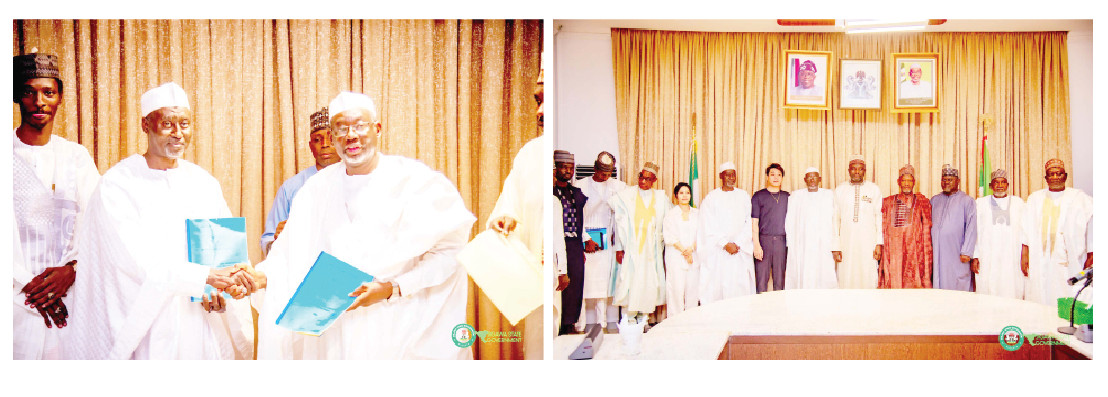
Recently, on 30th January 2026, Governor Namadi signed a Memorandum of Understanding (MoU) for the establishment of a solar power panel production and assembly plant in the state.
The agreement involves an investment of over £5.5 million, with the state owning 45 per cent and private investors holding 51 per cent initially. The project has multiple components and strong potential for future expansion.
Prior to this agreement, similar agreements were signed in 2025 with various companies to boost power generation and distribution in the state. These partners included the Kano Electricity Distribution Company (KEDCO).
Under the MoU signed with KEDCO, Jigawa State agreed to increase its shareholding from 7.5 per cent to 10 per cent, of which over 70 per cent has already been paid.
This MoU with KEDCO aimed to support the company’s recapitalisation and improve power distribution in Jigawa and beyond.
As part of this collaboration, the state government, alongside KEDCO and Future Energies, constructed and commissioned the Kafin Hausa 10 MW solar-powered mini-grid. This includes a 500 kWp solar-hybrid power plant equipped with a 3.5 km 33 kV distribution line, step-up and step-down transformers, and other supporting infrastructure.
More so, mini-grid power projects are planned for Hadejia, Gumel, Kazaure, Ringim, Dutse, and other strategic locations. These projects can generate hundreds of megawatts (MW) of clean energy across the state.
The state has also embarked on massive solarisation projects independently. These include converting diesel-powered water facilities to solar power and installing solar street lights.
The installation of solar power generation systems in hospitals, schools, and other important public places, including the State Secretariat, has also been rolled out.
The recently signed agreement establishes a joint venture between the Jigawa State Government, GreenPower Energy Engineering Company of Beijing, and Tesni Energy Nigeria Limited. This venture will establish a $5 million solar power panel production company in the state.
The company will have the capacity to produce solar panels capable of generating 100 MW annually, with significant potential for capacity expansion and product diversification.
According to the Commissioner of the State Ministry of Power and Renewable Energy, Engr. Surajo Musa, the state government will own 49 per cent of the company’s shares, while the private investors will hold 51 per cent.
He noted, however, that once the company is established, the state government’s share may be reduced to encourage Jigawa residents to participate in the investment. This move is intended to streamline operational efficiency and expand the public-private partnership model.
The Team Lead of Tesni/Leda GreenPower Company, Beijing, Engr. Bashir Ishak described the agreement as historic. He stated that the project is the first of its kind in Northern Nigeria and among the first in the country in terms of the technology to be deployed.
Engr. Ishak added that feasibility studies and Environmental Impact Assessments for the project have been completed.
He said the factory will play a key role in reducing the cost of solar power deployment by almost 50 per cent.
The plant is designed as a semi-automatic production facility. This means part of the production process will be automated, while another part will be manual. This approach is deliberate.
The manual component is intended to create employment opportunities for the teeming youth of Jigawa State, while the automated section will handle the highly sophisticated aspects of the factory’s operations.
He further stated that the company will also manufacture related components such as solar-powered water pumps and other associated products, including nitrogen-related outputs.
In his remarks shortly after signing the MoU, Governor Malam Umar Namadi stated that the project is an important step in the state’s long-term development strategy. The solar panel assembly factory would serve both commercial and strategic purposes.
Governor Namadi maintained that the company will serve not only a commercial purpose but also act as a feeder to the state’s ambitious solar power projects, designed to boost energy supply for social and economic growth.
The Governor said the project would have far-reaching economic benefits for Jigawa State, including job creation, stimulation of local industries, and attraction of further investments. He assured the investors of the government’s full commitment to meeting all its obligations under the agreement.
Electricity is no longer just an input for growth; it is the central nervous system of a sustainable society. Its sustainable generation and efficient use constitute the most significant leverage point for achieving the triple bottom line of social equity, economic prosperity, and environmental sustainability.
The MoUs signed under the Jigawa Energy Reforms represent a milestone in ensuring that all people have access to reliable electricity as a basic service that supports human dignity and economic opportunity.
The establishment of the Jigawa PPP solar power panel production company is a welcome development. There is great hope that it will come to fruition, fulfilling the dream of the Jigawa people to achieve a prosperous and great state.
We’ve got the edge. Get real-time reports, breaking scoops, and exclusive angles delivered straight to your phone. Don’t settle for stale news. Join LEADERSHIP NEWS on WhatsApp for 24/7 updates →
Join Our WhatsApp Channel