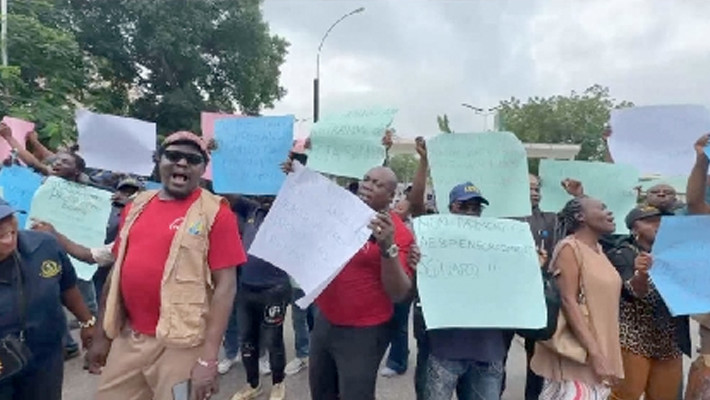
Residents of Abuja say the ongoing strike by the Federal Capital Territory Administration (FCTA) staff has caused unbearable stench from their bathrooms, locked doors of their favourite businesses and fear of diseases spreading through their neighbourhoods.
What began as an industrial action has spiraled into a full-blown crisis, crippling basic city functions and crushing livelihoods as the standoff between the FCTA and the Joint Union Action Congress (JUAC) enters the second week.
One of the major impacts is epileptic water supply, a pre-existing crisis caused by the water board’s electricity debt, leaving taps almost completely dry across the city.
In neighbourhoods like Garki, Dutse, Kubwa, Lumber and Wuse, daily life has been reduced to a grim and unsanitary routine.
“My home has become a place we dread. The restrooms are unbearable. We are essentially camping, not living. Flushing a toilet feels like a luxury from another life,” Chika Okafor, a resident of Garki II said.
The economic paralysis is equally severe, as business districts that rely on civil servant patronage now resemble ghost towns.
At her once-bustling restaurant in Area 11 close to FCTA and FCDA sectariats, manager Bisi Lateef gestured to empty chairs, saying 70 percent of her customers were from FCTA offices.
“The strike doesn’t just affect the workers; it’s starving us too. Apart from losing numbers of customers, I am paying a fortune for water tankers just to keep the kitchen clean, while my sales have vanished.
“The government’s problem has become my bankruptcy. Nothing is moving. The workers are my life sustainers. No workers, no sales. Simple,” she said.
Union leaders remain firm, insisting that the strike would continue until core demands, including unpaid promotion arrears, pension remittances and a dispute over promotion examinations are fully met.
The FCTA administration counters that significant progress has been made, calling the strike unnecessary after resolving 10 of 14 issues.
But for residents caught in the middle, the political blame game is a luxury they cannot afford, pleading that the unleaders and the FCTA administration would come to a common ground and put an end to the prolonged strike.
“We understand the workers’ plight, but we are the collateral damage. The authorities need to settle this immediately. Our lives are not their bargaining chip,” said Grace Okon at Dutse Makaranta.
The fear is now escalating from inconvenience to impending disaster. Businessman Tunde Lawal, whose shop sits near the Abuja Metropolitan Management Council (AMMC) in Zone 6, said, “Every day without water is a health crisis waiting to happen.
“Cholera, typhoid, these are real dangers. I appeal to the FCT minister and the union leaders, see the human cost of this deadlock. End this strike, pay what is owed. Accountability is not just about salaries; it is about the basic responsibility to keep a city functioning.”
As the stalemate drags on, an administrative dispute has undeniably morphed into a public welfare emergency. The nation’s capital waits, parched and anxious, for its leaders to provide more than promises, to provide water, relief, and a resolution.
We’ve got the edge. Get real-time reports, breaking scoops, and exclusive angles delivered straight to your phone. Don’t settle for stale news. Join LEADERSHIP NEWS on WhatsApp for 24/7 updates →
Join Our WhatsApp Channel