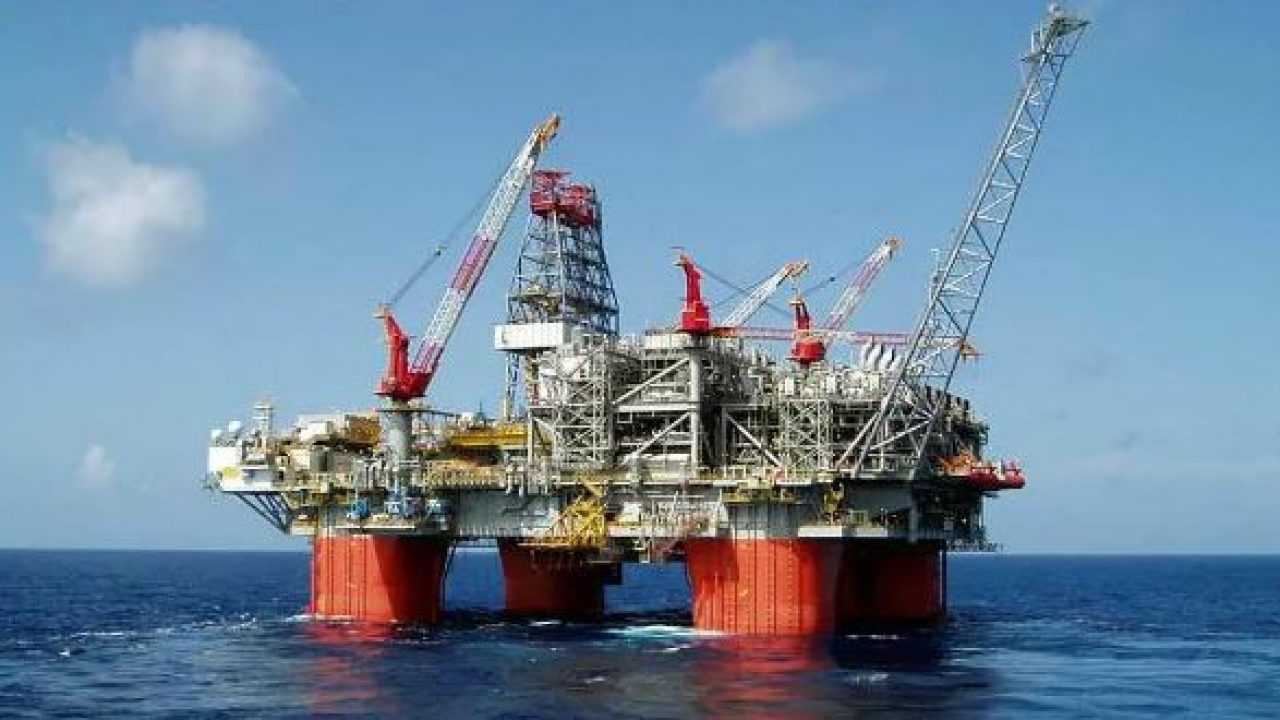
Nigeria’s sweeping petroleum reforms, aggressive licensing activity spanning 50 oil blocks and over 300 competing firms, alongside multi-billion-dollar projects including the $10.38 billion Zabazaba development, are repositioning the country as Africa’s most credible near-term energy investment destination.
The crisis around the Strait of Hormuz has exposed a potential 10 million barrels per day (b/d) supply gap, creating an opportunity for Africa to help address it gradually. With 125 billion barrels of crude reserves and 625 trillion cubic feet of gas — roughly 10 per cent of global reserves — Africa remains strategically important, though current output of 7–8 million b/d limits immediate substitution capacity.
Nigeria’s resurgence has been driven largely by reforms under President Bola Ahmed Tinubu, with support from his Special Adviser on Energy, Olu Verheijen. After years of declining investor confidence and shrinking capital inflows, the country has staged one of Africa’s strongest energy investment recoveries.
Nigeria accounted for only 4% of Africa’s upstream Final Investment Decisions (FIDs) between 2014 and 2023, despite holding the continent’s largest oil reserves. Between 2024 and 2025, however, that share surged to 40 per cent.
Verheijen attributed the turnaround to deliberate reforms aimed at restoring confidence and improving fiscal competitiveness.
“The unprecedented scale and speed of energy reforms and outcomes have made President Bola Ahmed Tinubu the most consequential President for the sector,” she said.
The reforms include the 2023 directive clarifying regulatory responsibilities between petroleum agencies, ending years of overlap and uncertainty. The 2024 Presidential Directive 40 introduced competitive tax incentives, while VAT reforms eased multiple taxation burdens. In 2025, the Upstream Cost Efficiency Order improved economics for marginal and deepwater assets.
The policy reset has translated into significant investments. In 2024, Nigeria secured FIDs for the $100 million Iseni Gas Project, the $550 million Ubeta Gas Project, and the $5 billion Bonga North Deepwater Project. In 2025, momentum continued with the $2 billion HI Non-Associated Gas Project, pushing Nigeria’s medium-term upstream investment pipeline beyond $50 billion.
Upcoming projects include Bonga South West, Zabazaba, Owowo, Nwadoro, Bosi, Preowei, Nsiko, Usan and Erha.
Nigeria also added about 400,000 b/d to production between 2023 and 2026, raising output to 1.6 million b/d and achieving its strongest onshore production in more than two decades.
However, stakeholders urged caution. Executive Director of the Civil Society Legislative Advocacy Centre (CISLAC), Auwal Musa Rafsanjani, warned that frontier exploration must prioritise environmental safeguards, stronger Environmental Impact Assessments and equitable revenue distribution.
Industry expert Sola Adebawo of Hyphen Partners noted that while reforms improve transparency and revenue discipline, sustained funding remains critical for frontier basin exploration.
For investors, Nigeria’s revival signals renewed confidence in a sector once constrained by uncertainty.
“The work continues, but the foundation has been laid for sustained growth,” Verheijen said. “Capital markets have delivered their verdict — Nigeria is once again the place to invest in African energy.”
We’ve got the edge. Get real-time reports, breaking scoops, and exclusive angles delivered straight to your phone. Don’t settle for stale news. Join LEADERSHIP NEWS on WhatsApp for 24/7 updates →
Join Our WhatsApp Channel