
Following a warning from the National Emergency Management Agency (NEMA) that 132 local government areas across 23 states, including the Federal Capital Territory (FCT), are at high risk of flooding this year, states are stepping up efforts to stem the tide and avoid the ugly experience of the past. ATTAH ANTHONY, ANAYO ONUKWUGHA, ANGELA NKWO-AKPOLU, KABIR WURMA, ACHOR ABIMAJE, EMMANUEL MGBEAHURIKE, FELIX IGBEKOYI, INIOBONG EKPONTA, IBRAHIM OBANSA, NONYE EKWENUGO, and AZA MSUE, report
States across the federation have begun rolling out preventive measures and emergency response plans to mitigate the impact of the flooding predicted for this year’s rainy season.
This follows a warning by the National Emergency Management Agency (NEMA) that 132 local government areas in 23 states and the Federal Capital Territory (FCT) are at high risk of flooding in 2026, while another 148 local government areas across 14 states fall within the moderate-risk category.
The warning, based on projections from the Nigerian Meteorological Agency (NiMet) and the Nigeria Hydrological Services Agency (NIHSA), has prompted state governments and emergency management agencies to intensify sensitisation campaigns, clear drainage channels, establish emergency response teams, identify temporary shelters, and strengthen early warning systems.
Launching the 2026 National Preparedness and Response Campaign on Flood Disaster in Jalingo, Taraba State, NEMA director-general, Hajiya Zubaida Umar, said recurrent flooding continues to claim lives, destroy livelihoods and critical infrastructure, and displace thousands of Nigerians annually.
Represented by the agency’s North-East Zonal Director, Alhaji Sulaiman Yakubu, Umar said forecasts also indicate delayed and erratic rainfall patterns, shorter growing seasons, prolonged dry spells, and rising temperatures, all of which could impact agriculture, transportation, healthcare, and other critical sectors.
To mitigate the anticipated impact, she said NEMA had developed a Climate-Related Risk Management, Preparedness, and Mitigation Framework focused on strengthening local emergency response capacity, conducting simulation exercises, pre-positioning relief materials, and developing evacuation plans for vulnerable communities.
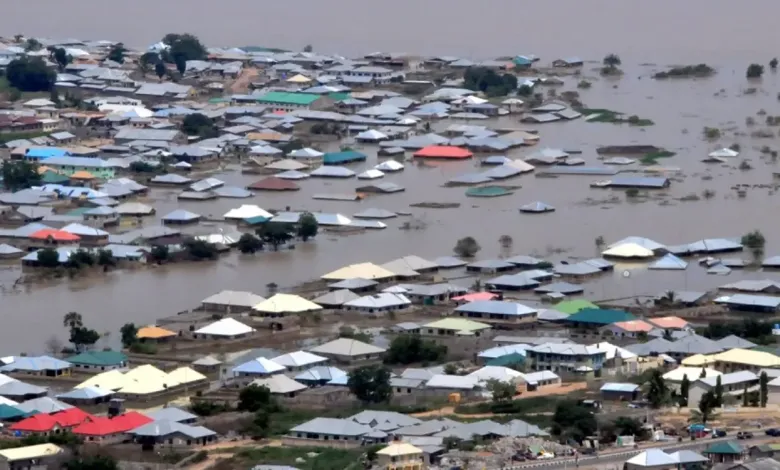
In response, states say they have begun implementing a variety of flood-control and preparedness strategies.
We’re Conducting Full-Scale Flood Stimulation Exercise – Rivers
The National Emergency Management Agency (NEMA) has said it is advancing its 2026 Flood Preparedness and Response Strategy through a full-scale flood simulation exercise in Rivers State.
Speaking in Port Harcourt, the director of the NEMA South-South Zonal Directorate, Dr Godwin Tepiko, said the concern followed a forecast by the Nigerian Meteorological Agency (NiMeT).
Tepiko stated that the exercise was aimed at sensitising communities at risk of flooding and strengthening coordinated response mechanisms in the state.
He said NEMA was concerned over the imminent risk of flooding across Rivers State following the onset of the rainy season and the likely resultant flooding.
Tepiko stated that the NIMet forecast predicted severe flooding in four local government areas of Rivers State, including Ahoada West, Ahoada East, Andoni and Opobo/Nkoro.
“The devastating impacts of annual flooding in Nigeria necessitate collaboration among all tiers of government, development partners, the private sector, the media and citizens to manage disaster risks and build national resilience.”
“Lives, livelihoods, and infrastructure worth billions of naira have been lost to floods and related hazards in recent years,” he said.
He added that the agency has put in place all the machinery to prevent devastating floods this year and urged residents of the zone to avoid dumping refuse in gutters and water channels in their areas.
Mechanism already put in place, says Imo
In Imo State, NEMA said a mechanism has been put in place to mitigate flooding.
The deputy director of Disaster Risk Reduction, Dr Evans Ugoh, made this statement during an interaction with LEADERSHIP Sunday.
According to him, the initiative is designed to strengthen resilience and enhance preparedness and response to flood disasters across the state.
Dr Ugoh reiterated NEMA’s commitment to collaborating with stakeholders to improve disaster response capabilities.
He said that activities included technical presentations on flood risk management and preparedness, the development of action plans for flood response and mitigation, intensive community awareness campaigns and safety demonstrations, and the distribution of multilingual flyers to educate communities on flood safety.
He tasked residents and stakeholders with preparedness, mitigation, and coordinated responses at the state, local, and community levels.
He advised communities against indiscriminate waste disposal and the construction of shanties along waterways, which he said exacerbate the risk of flooding.
Dr Ugoh charged residents to embrace proper waste-disposal methodology and other responsible environmental practices.
We’re conducting assessments of vulnerable areas– Taraba
In Taraba, the State Emergency Management Agency (TSEMA) said it has taken proactive measures to protect the lives of residents in vulnerable communities ahead of the rainy season peak.
According to the agency, it is intensifying efforts to prevent devastating flood disasters across the state.
The executive secretary of the agency, Dr Echuseh Audu, said the state government had commenced early flood-preparedness measures, including the planned relocation of residents living in high-risk riverine areas to safer locations.
Speaking through the agency’s Public Relations Officer, Confidence Bitrus Bello, Dr Audu said TSEMA had already mapped out flood-prone communities across the state and launched sensitisation campaigns to educate residents on flood risks and emergency response procedures.
According to the spokesperson, the agency is also conducting continuous assessments of vulnerable areas to identify possible threats and strengthen intervention plans before flooding escalates.
“We are working proactively to ensure that residents in high-risk areas are relocated to safer environments before the situation worsens beyond control.
“As part of the strategy, TSEMA recently deployed officials to assess communities affected by early rainfall and flooding in parts of Jalingo, including Nasarawo Kwalbati, Tecnobat, Green Beach and the Mayo Dassa axis.
“The assessment team, led by the director of Administration, Mr Sani Maisukwati and the director of Technical Services, Mr Bakari Kwanchi, evaluated the extent of damage caused by flooding and identified critical areas requiring urgent attention.”
Dr Audu explained that findings from the assessment would guide the distribution of relief materials, emergency response operations and future flood mitigation projects.
She added that the agency was making arrangements for temporary shelters and basic relief materials for persons who may be displaced during flood emergencies.
The TSEMA boss also urged residents to support government efforts by clearing blocked drainage channels and avoiding the construction of shanties or settlements along waterways.
The agency warned that flooding remains a recurring challenge in Taraba State, stressing that community cooperation and early compliance with evacuation directives would be crucial to reducing loss of lives and property damage during the rainy season.
In a related development, the Taraba State Government, through SEMA, has evacuated victims of flood disasters from four communities in Jen ward, Karim Lamido local government, to safer ground and provided relief interventions.
The executive secretary, represented by the director of Corporate and Public Affairs, Mr Sani Maisukwati, visited the community to express the government’s sympathy and offer support.
In the same vein, the National Emergency Management Agency (NEMA), which is coordinating Imo and Abia States, said it has activated collaboration with other key institutions to ensure an early response to any flood outbreak in the State.
Head of Operations for Imo and Abia, Nnamdi Igwe, said, “We are working with the Nigerian Meteorological Agency (NiMet) and the Nigeria Hydrological Services Agency (NIHSA) has issued repeated alerts that Imo is among the states vulnerable to flash floods and river flooding in 2026.”
Regarding preparedness to address any flood issues in the State, Igwe disclosed that the agency has already set up an emergency response team, which includes other agencies such as NIWA, the Federal Fire Service, the Nigerian Army, SEMA, and others.
He said, “NEMA has already begun nationwide flood preparedness campaigns, including: public sensitisation campaigns, coordination meetings with state emergency agencies, strengthening early warning systems, pre-positioning emergency response arrangements, encouraging communities to clear drainage systems, and collaboration with state governments on evacuation planning.
“We have formed a response team to address any flood problems, which has representatives from the emergency services providers like the Nigerian Army, Fire Service, NSCDC, Road Safety, NIWA, SEMA, Nigerian Red Cross, and a host of others. And our people are always on the ground to monitor the water levels of flood-prone communities.”
What we are doing differently – Kaduna
As the rainy season intensifies across the country, the Kaduna State government said it has stepped up measures to prevent potential flooding and safeguard residents living in vulnerable communities.
Speaking with one of our correspondents, the Public Relations Officer of the Kaduna State Emergency Management Agency (KADSEMA), Dominic Philip, said the state government had inaugurated two flood response teams to coordinate emergency preparedness, early warning systems and rescue operations across the state ahead of predicted flooding.
Philip explained that the first team, known as the Flood Response and Emergency Strategic Team, comprises about 22 government and non-governmental agencies, including security and environmental bodies.
According to him, the strategic team is expected to meet weekly to review weather forecasts and flood predictions issued by agencies such as the Nigerian Meteorological Agency (NiMet) and the Nigeria Hydrological Services Agency (NIHSA).
He said the team would, after reviewing the forecasts, issue advisories to the government and residents on possible flood threats and precautionary measures.
Philip further disclosed that the second team, known as the Flood Response Tactical Team, comprises the State Fire Service, the Federal Fire Service, the Red Cross, the Nigeria Security and Civil Defence Corps, and other relevant agencies.
He said the tactical team would be responsible for search-and-rescue operations whenever flooding occurs or an imminent flood alert is issued.
“In the event of flooding, the team will carry out rescue operations and evacuate affected residents to safer locations,” he said.
The PRO added that the state government had already identified temporary shelters and safe havens located on higher grounds for residents who may be displaced by flooding.
He also revealed that relief materials, toiletries and food supplies capable of sustaining displaced persons for at least 72 hours had been provided at the centres.
Philip noted that officials of the agency had commenced assessments and sensitisation campaigns in flood-prone communities across the state to encourage residents to relocate temporarily whenever water levels begin to rise.
Sensitisation ongoing, say Benue, Kebbi
In Benue State, the National Emergency Management Agency (NEMA) and the Benue State Emergency Management Agency (Benue-SEMA) said they have launched a grassroots sensitisation and early warning campaign to reduce the impact of floods, especially in prone areas.
The head of the Information Unit of Benue-SEMA, Tema Ager, explained that the agency, under the leadership of its executive secretary, James Aondoakaa Iorpuu, in collaboration with NEMA, had deployed flood emergency response and awareness teams in the Makurdi local government area.
The teams alerted residents living in prone areas of the looming flood threat and the need for immediate preventive actions.
Kebbi State, one of the riverine states in Northern Nigeria, said it has already taken drastic measures to address expected flooding this year’s rainy season.
Our correspondent gathered that authorities such as the Kebbi Urban Development Authority (KUDA), the State Emergency Management Agency (SEMA), and the Ministry of Environment have embarked on the clearance of drainages and waterways across the state.
Part of the measures is the monthly environmental sanitation exercise, enforced by the Ministry of Environment, in which refuse is evacuated from drainage systems across the state.
Speaking with one of our correspondents, the general manager of KUDA, Mohammed Abubakar, said the agency, in collaboration with the Ministry of Environment, has cleared all drainage systems in the major towns and villages in the state to allow the free flow of water during the rainy season.
According to him, they have imposed fines on defaulters caught dumping refuse into the drainage systems. “We passed a strong warning to households and shop owners always to dump their waste or refuse in dustbins provided by the government at designated areas,” he said.
Be vigilant, Plateau tells residents.
In Plateau State, the State Emergency Management Agency (SEMA) said it has directed residents in flood-prone areas to remain vigilant and take preventive measures to safeguard lives and property.
The agency said it has launched a grassroots sensitisation and early‑warning campaign to reduce flood risk in vulnerable communities as the rainy season intensifies.
Speaking with LEADERSHIP Sunday about preparedness, the SEMA executive secretary, Hon. Sunday Abdul, warned residents of the looming flood threat and urged immediate preventive measures.
He also linked persistent, devastating flooding in the state to artificial blockages such as illegal structures and poor waste disposal.
He stated that the agency has intensified community‑based early warning activities across the state’s flood-prone areas.
Abdul called on residents to clear drainage channels and gutters, avoid indiscriminate dumping of refuse, and refrain from building or settling in low‑lying areas. According to him, proactive community action is critical to reducing flood damage.
Also, the State Commissioner for Environment and Climate Change, Hon. Peter Gwom, expressed the state government’s readiness to combat the effects of any impending flood.
In Delta, the state government has reaffirmed its commitment to environmental sustainability and flood prevention following a high-level visit to assess and manage flood risk.
This may not be unconnected to the visit by officials of the Federal Ministry of Environment, the World Bank, the National Emergency Management Agency (NEMA), the Nigerian Meteorological Agency (NiMet), the Nigeria Hydrological Services Agency (NIHSA), and other key stakeholders.
Speaking during the engagement, the Hon Commissioner for Environment, Jamani Tommy Ejiro, said the discussions centred on strengthening inter-agency collaboration, improving early warning systems, and developing sustainable flood control measures to protect vulnerable communities across Delta State.
He noted that the meeting underscored the need for proactive and coordinated responses to the growing environmental challenges posed by climate change and flooding.
Ejiro explained that, in line with the Environmental Sustainability Agenda of Governor Hon. Sheriff Oborevwori, the state government has intensified interventions across flood-prone areas by constructing stormwater drainage systems, clearing blocked water channels, dredging silted waterways and settlements, and continuously distilling and maintaining critical flood-control infrastructure.
He added that collaboration with federal agencies and international development partners remains vital to achieving long-term environmental sustainability in the state.
IDP camps activated in Kogi
In Kogi, the executive secretary of the State Emergency Management Agency (KOSEMA), Alhaji Mouktar Atimah, said the state government has put in place proactive measures to contain predicted flooding across vulnerable communities.
Atimah disclosed that several low-lying and riverine areas, including Ibaji, Idah, Igalamela, Ajaokuta, Lokoja, Bassa, Ofu, Kotonkarfi, and Omala Local Government Areas, remain highly prone to flooding during the rainy season.
He, however, called for stronger collaboration among stakeholders, communities, and relevant agencies to minimise the impact of the anticipated disaster.
The KOSEMA boss commended Governor Ahmed Usman Ododo for what he described as the administration’s proactive response to disaster management in the state, noting that the governor has consistently provided shelter and relief materials to victims whenever flooding occurs.
According to him, the state recorded over 76,000 persons in Internally Displaced Persons (IDP) camps during the previous flooding incident, but no lives were lost.
He further revealed that the State Response and Preparedness Team has already activated IDP camps across the state to accommodate potential victims should flooding occur this year.
Speaking on the development, a resident of Adankolo, one of the riverine communities in Lokoja, Haruna Maikudi, appealed to the government to intensify efforts to mitigate the impending flood.
“This is where we live. We are fishermen and farmers, and this is where we earn our livelihood. Permanent relocation is out of it,” he said.
Maikudi also urged the government to consider constructing an embankment along the River Niger, particularly from Pata to Adankolo, to help prevent devastating floods in the area.
Our strategies for the task ahead – Ogun, Akwa- Ibom
Similarly, the Ogun State government has stepped up flood awareness campaigns across the state as part of efforts to prevent disasters in 19 of the 20 Local Government Councils, in line with the Nigerian Meteorological (NiMet) agency’s forecast for 2026.
Apart from the awareness campaign, the Dapo Abiodun-led administration in the state has also stepped up efforts to clear and desilt drainage channels and canals ahead of the months when the state is predicted to experience flooding.
The state Commissioner for Environment, Ola Oresanya, who spoke with LEADERSHIP Weekend in Abeokuta, said his ministry, alongside other agencies like the State Emergency Management (SEMA), the Fire Service and those from the Ministry of Health, are leaving no stone unturned towards ensuring that the state is not caught off-guard during the expected flood.
Oresanya listed two causative factors as responsible for the perennial flooding usually experienced in the state, including human factors, such as the indiscriminate dumping of wastes on the canals and drainages and the property owners’ refusal to observe the necessary measures to allow for drainages, as well as the natural occurrences, which he said included the failure to dredge rivers and canals, among other factors.
Speaking on the levels of the state’s preparedness to avert flood disasters, Oresanya explained that his ministry has continued to create awareness by educating residents through the Local Government Areas and the various Community Development Associations (CDAs) to enable the people to know what to do to prevent flooding or manage it whenever such occurs.
Commenting on the possibility of recalcitrant residents, Oresanya disclosed that his ministry has, in the recent past, had to prosecute erring individuals and companies that contravened the state’s environmental laws, and that some of the companies were sealed. Some individuals convicted were sentenced to Community Services for specified periods.
“We have a task force in place that arrests residents who fail to desist from dumping refuse on the drains and canals. These individuals were arrested, prosecuted, and sentenced to several months and weeks of Community Services. Some manufacturing companies along the Sagamu, Mowe-Ibafo, and Ijebu-Ode axes were sealed. Some of us are not joking with our environmental regulations in Ogun State,” he said.
In Akwa Ibom, the state government has warned residents of flood-prone areas to take proactive measures to mitigate impending floods.
The Commissioner for Information, Dr Aniekan Umanah, said the reminder became necessary in view of the earlier notification by the Nigeria Meteorological Agency (NiMet), which listed the state among others most affected by flooding.
He therefore urged residents to be wary of the expected deluge, advising them to clear gutters and remove debris and garbage. blocking water channels in time for the heavy downpours.
LEADERSHIP Weekend gathered that, following NiMet’s warning, the state has instituted a flood intervention committee with members drawn from different Ministries, Departments, and Agencies (MDAs), including the Ministry of Environment, Works, the Akwa Ibom State Waste Management and Environmental Protection Agency, and others.
We’ve got the edge. Get real-time reports, breaking scoops, and exclusive angles delivered straight to your phone. Don’t settle for stale news. Join LEADERSHIP NEWS on WhatsApp for 24/7 updates →
Join Our WhatsApp Channel