
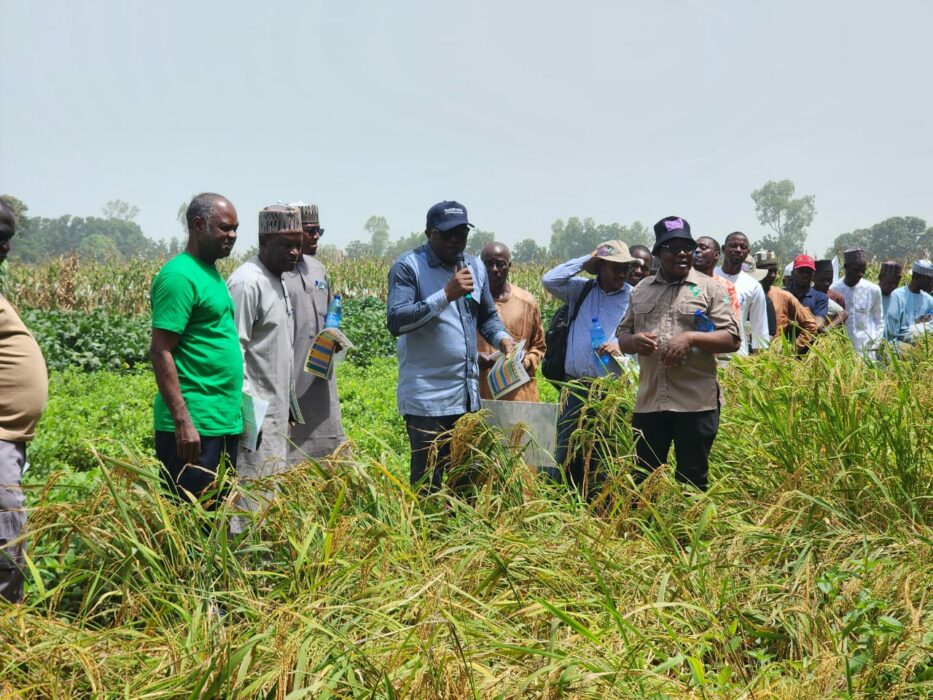
Stakeholders in Nigeria’s seed industry have tested improved varieties of maize, rice, sorghum, millet, soybean, groundnut and cowpea in Zaria, Kaduna State in an effort to expand farmers’ access to quality seeds and strengthen food security.
The one-hectare field demonstration was organised by the African Cereal and Legume Breeding Consortium (ACLBC), the Technologies for African Agricultural Transformation (TAAT) and the African Seed Trade Association (AFSTA) during a two-day workshop.
The demonstration plot established with Premier Seeds, the consortium’s Nigerian Champion Partner, allowed seed companies to assess the varieties under field conditions before considering their adoption.
The exercise brought together the Seed Entrepreneurs Association of Nigeria (SEEDAN), the National Agricultural Seeds Council (NASC) and participating TAAT Compacts where participants examined crop performance, yield potential, grain quality and post-harvest characteristics, with the aim of identifying varieties suited to farmers, agro-ecological zones and target markets.
ACLBC lead , Geoffrey Nsofon, said the initiative was designed to accelerate the adoption of improved varieties and hybrids developed by CGIAR centres and advanced agricultural research institutions.
He said the consortium used a demand-driven model that enabled seed companies to communicate market requirements and work with breeders to develop or access suitable varieties.
“We work on a demand-driven approach where we produce what the seed companies want, or seed companies collaborate with us to produce what they want for their particular market,” Nsofon said.
He added that the consortium could help companies secure exclusive lines and develop their own parental lines, creating opportunities for product differentiation and stronger commercial positioning.
AFSTA secretary-general, Yacouba Diallo, said the initiative was intended to move improved varieties from research institutions into commercial seed distribution channels.
“We want to engage the private sector, mainly seed companies, to uptake the new varieties for business purposes by putting the new varieties in their portfolio, multiplying and selling to farmers,” he said.
Head of the TAAT clearing house, Solomon Gizaw, urged seed companies to participate, describing the programme as a platform for encouraging investment in breeding technologies and increasing the availability of improved seeds across Africa.
During the field assessment, companies examined mature crops, observed selected harvests and received technical information from breeders and technology developers.
Discussions also covered varietal suitability across agro-ecological zones, seed availability, intellectual property, licensing and commercial partnerships.
The field evidence was intended to help companies make adoption decisions based on actual crop performance.
Nigeria’s estimated 600 seed companies make the country a strategic market for commercialising improved crop varieties.
The Nigerian demonstration followed a similar event held in August 2025 at the Kenya Agricultural and Livestock Research Organisation station in Njoro, Kenya.
That exercise showcased improved varieties of maize, soybean, rice, wheat, high-iron beans, sorghum and millet to seed companies, breeders, farmers, seed inspectors and other agricultural stakeholders.
The organisers said the programme was intended to shorten the gap between agricultural research and farm-level adoption that could support seed multiplication and distribution.
We’ve got the edge. Get real-time reports, breaking scoops, and exclusive angles delivered straight to your phone. Don’t settle for stale news. Join LEADERSHIP NEWS on WhatsApp for 24/7 updates →
Join Our WhatsApp Channel