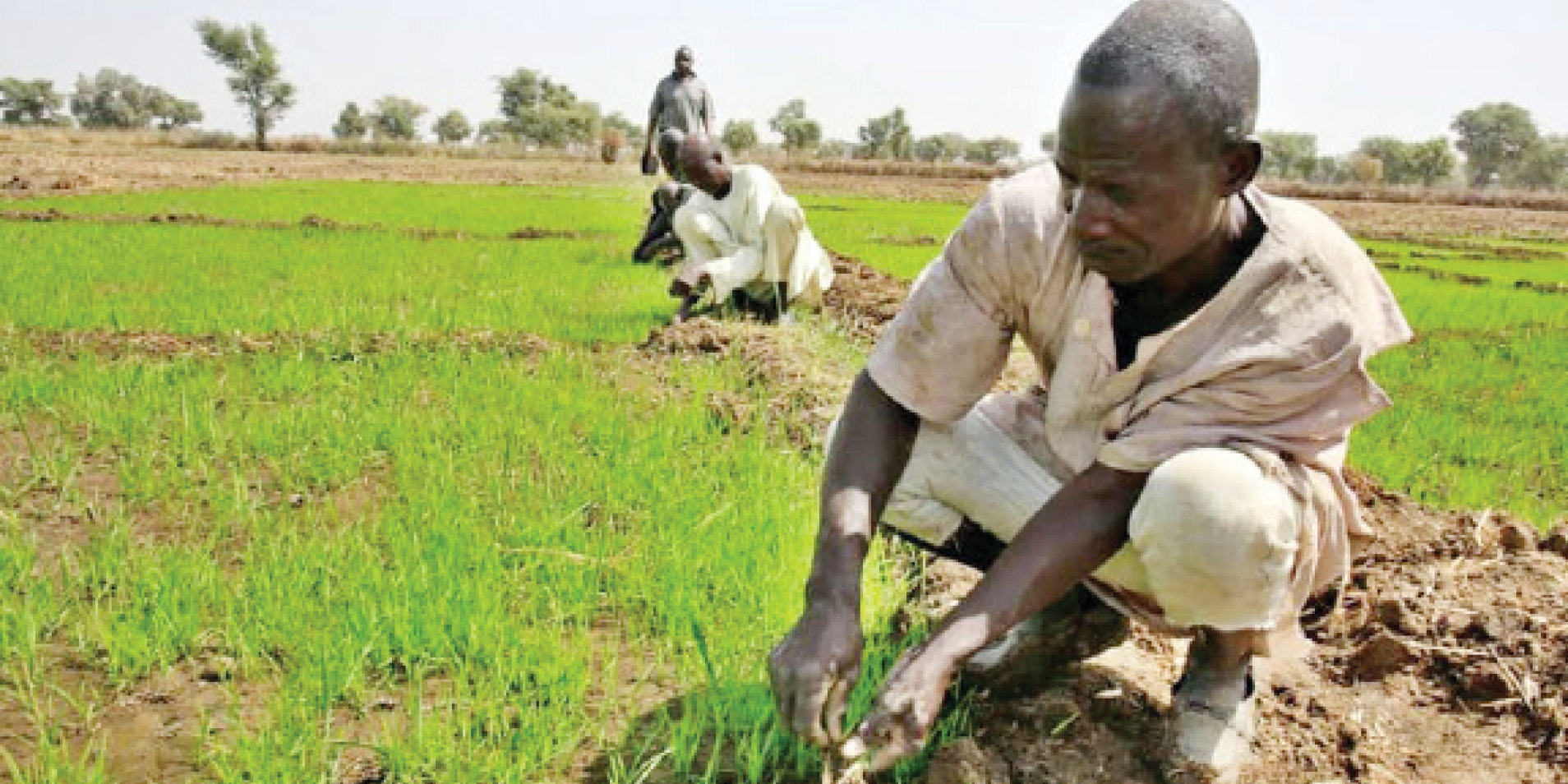
Despite agriculture’s significant contribution to Nigeria’s economy, employing about 70 per cent of households and accounting for over 20 per cent of the country’s gross domestic product (GDP), only 7 per cent of farming communities accessed bank loans, highlighting a critical credit shortage that hampers the sector’s growth.
Experts have called for more funding for Nigerian farmers and urged financial institutions to do more to assist them with the financial tools they need to grow.
Findings show that despite Nigeria boasting over 84 million hectares of arable land, the country’s farmers remain cut off from the financial tools they need to grow.
For instance, in 2022, only 7 per cent of farming communities secured bank credit (NBS, 2022), leaving millions unable to scale operations.
A recent National Bureau of Statistics (NBS) report revealed that out of the vast number of farmers across Nigeria, just a small fraction secured micro-credits or bank loans, with Lagos and Ogun states recording the highest access rates at 26 per cent and 14 per cent, respectively. Overall, only 11 per cent of agricultural communities reported the ability to borrow from banks, with many farmers preferring cooperative organisations for credit due to less stringent collateral requirements.
The low level of bank lending to agriculture is stark when compared to the sector’s importance. In 2023, only about ₦2.26 trillion -roughly 5 per cent of total private sector loans -was extended to agriculture, making it the lowest among Nigeria’s top economic sectors for commercial bank loans.
This undercapitalisation persists despite government interventions such as the Central Bank of Nigeria’s Anchor Borrowers’ Programme, which has supported millions of smallholder farmers but still faces challenges in loan repayment and scale.
Experts warn that limited access to finance was restricting farmers’ ability to invest in critical inputs, technology, and infrastructure needed to boost productivity and meet Nigeria’s growing food demand. With an average farming household cultivating just 3.3 plots, and many farmers engaged in subsistence agriculture, the sector’s productivity remains low compared to more developed economies where only a small percentage of the population is involved in farming.
The credit gap is further exacerbated by high interest rates, insufficient collateral, and poor rural banking infrastructure, which discourage commercial banks from deeper engagement with the agricultural sector. To transform Nigeria’s agriculture and achieve food security, experts have called for innovative financial products, increased public and private investment, and stronger support systems that can unlock the sector’s vast potential.
According to the Food and Agriculture Organisation (FAO), agriculture contributes significantly to Nigeria’s GDP, employing around 35 per cent of the workforce. The sector spans four key sub-sectors: crop production, livestock, forestry, and fishing.
An Abuja-based agricultural researcher, Henry Oji, notes that Nigeria’s food demand far exceeds current production levels.
He said, “With a population of about 223 million projected to rise to 263 million by 2030, agricultural productivity remains stagnant, leaving food needs unmet. Significant investment in agricultural financing is essential to bridge this gap and achieve at least 70 per cent domestic food self-sufficiency.
“The sector faces persistent financing challenges. Farmers’ limited access to credit stems from insufficient collateral, high interest rates, and the limited presence of financial institutions in rural areas. These issues are compounded by infrastructural deficits, price volatility, and restricted market access.”
Speaking in a TV programme recently, the chairman of OPTY Farms in Ogun State, Joshua Opeyemi, agreed that Nigeria’s agricultural industry faces deep-rooted challenges such as low productivity, inadequate infrastructure, climate-related shocks, post-harvest losses, and, most critically, limited access to finance.
He said these factors have long discouraged commercial banks from engaging the sector.
“However, the story is shifting in Lagos and Ogun states. In 2022, 26 per cent and 14 per cent of farmers, respectively, accessed micro-credits (NBS) and nationally. The value of credit to private agriculture jumped from ₦853 billion in Q1 2020 to over ₦4 trillion by Q4 2021 (NBS, 2022), illustrating what’s possible when financing is prioritised.
Sterling Bank is changing that narrative through digital solutions, customised financing, and strategic partnerships that empower farmers, boost yields, and strengthen food systems. The bank has emerged as a transformative force in Nigeria’s agriculture sector. Through its HEART strategy – an investment focus on Health, Education, Agriculture, Renewable Energy, and Transportation – the bank developed the Agriculture Finance Value Chain Model (AgFin),’’ he said.
The managing director and chief executive officer of Sterling Bank, Abubakar Suleiman, explained that the bank was investing in entire value chains, not just funding farms but supporting processors, aggregators, and market access.
He said, “Our approach is both financial and digital. Through collaborations with agritech startups, it delivers weather analytics, remote diagnostics, and market intelligence directly to farmers. Tools like SABEX, a commodity-trading platform, link farmers to buyers and eliminate middlemen, while initiatives like SWAY-AgFin increase financing access for women and youth.”
Experts said that agriculture remains significantly undercapitalised despite being the country’s most significant economic driver and top employer.
Opeyemi said that small and medium-sized agribusinesses—many of which combine farming with processing—struggle to access short- and long-term financing.
“This lack of financial support stalls the sector’s growth and denies smallholder farmers the opportunity to improve their livelihoods and contribute meaningfully to national food security.
“Agricultural transformation cannot happen without robust financing. From mechanisation to innovation adoption, finance is the engine that drives productivity. Without adequate capital, small-scale farmers and agripreneurs cannot procure essential inputs like seeds, fertilisers, and machinery or invest in critical infrastructure such as processing, packaging, and transportation systems,” he said.
Experts also said that the agricultural sector is deeply dependent on supportive infrastructure—rural transport, irrigation, power supply, telecommunications, water, sanitation, storage, and more. These vital systems, according to them, require substantial financial investment because farmers cannot efficiently connect with markets or reduce post-harvest losses without them, thereby limiting sector-wide productivity and profitability.
“Agriculture operates through a complex value chain—from input supply to consumption—where each link is strengthened through strategic financing. Specialised financial instruments are required to support the transactions and relationships between actors across this chain. Whether supplier credit, buyer advances, or warehouse receipt financing, value-chain-based financial systems are critical to strengthening agribusinesses and rural livelihoods. Research and Development (R&D) in agriculture must also be financially supported. Investment in new technologies, improved farming methods, and value-added processes can revolutionise the sector. Without adequate R&D funding, the sector will remain stagnant and disconnected from global advancements,” said Mohammed Musa, a farmer based in Kaduna.
Findings showed that countries prioritising agricultural financing provide compelling evidence of their transformative power. China, for instance, increased its agricultural research funding from 600,000 yuan in 1961 to 10.5 million yuan by 2007. This financial commitment led to a 350 per cent surge in grain production.
“The link between finance and food security is undeniable. While private investment is important, government intervention is indispensable. Public funding should act as a catalyst to crowd in private capital, de-risk investment, and provide foundational support to farmers and agribusinesses. To achieve food security, Nigeria must significantly boost agricultural financing,” said Musa.
We’ve got the edge. Get real-time reports, breaking scoops, and exclusive angles delivered straight to your phone. Don’t settle for stale news. Join LEADERSHIP NEWS on WhatsApp for 24/7 updates →
Join Our WhatsApp Channel