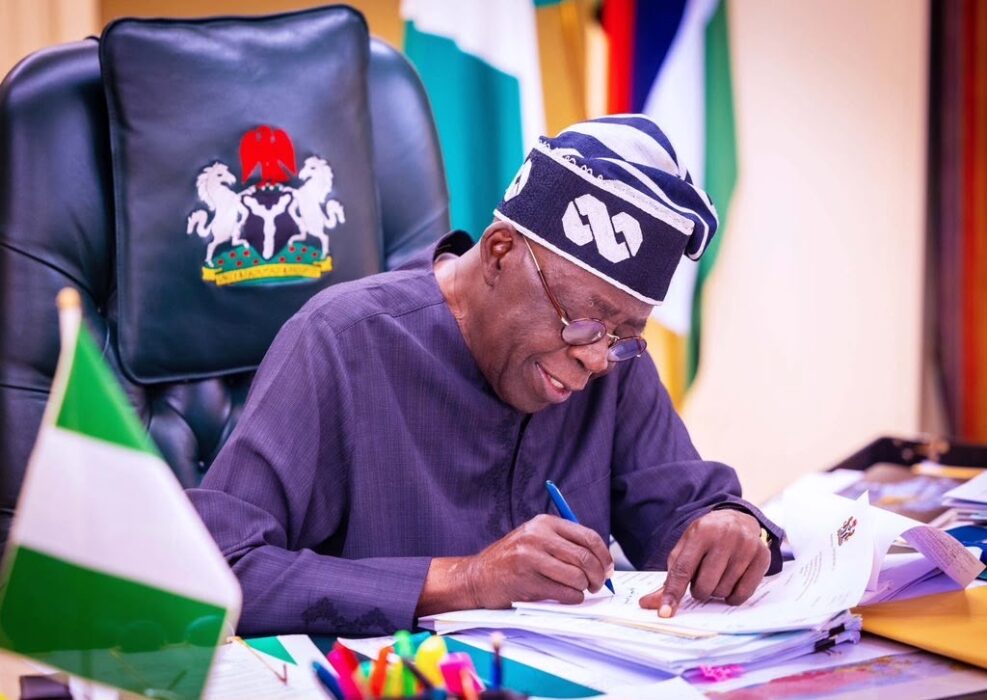
President Bola Tinubu’s proposed $21.7 billion external borrowing plan has renewed concerns over Nigeria’s debt sustainability, accountability for previous loans and the economic benefits Nigerians stand to gain from additional borrowing.
The proposed borrowing comprises $20.52 billion and €1.045 billion and is intended to finance projects under the Federal Government’s 2026–2027 Supplementary External Borrowing Plan.
The facilities are expected to support investments in critical sectors, including power, transportation, healthcare, education, agriculture, water supply, security and employment generation.
However, the proposal has raised questions about Nigeria’s ability to service additional debt amid rising public liabilities, pressure on government revenue and competing demands for public expenditure.
A report published on October 28, 2026, put Nigeria’s public debt at N166.79 trillion at the end of June 2026, compared with N87.37 trillion in June 2023.
The report also projected that the proposed borrowing could push the country’s debt towards N200 trillion if fully approved and disbursed, depending on exchange rates and other debt movements.
The development has intensified calls for the government to demonstrate that previous loans have delivered measurable economic benefits before taking on additional obligations.
Economists Question Growing Borrowing
A report quoted Ibrahim Bakare, a professor of economics at Lagos State University, as expressing concern about the government’s increasing reliance on borrowing to finance an expanding budget.
Bakare said, “The budget expanded to N68.3 trillion, and the revenue expected to fund most of that would come from borrowings, implying that the debt levels will rise. And that’s what we’re seeing now.”
His remarks highlight concerns about the relationship between government expenditure, revenue generation and debt accumulation.
For Nigeria, the central question is whether economic growth and government revenue can expand sufficiently to meet future repayment obligations without crowding out essential public services.
‘What You Do With Borrowed Funds Is Critical’
Eze Onyekpere, lead director of the Centre for Social Justice, said the key issue was how borrowed money was spent.
“We do not have much problem with collecting loans, but what you actually do with borrowed funds, and so that is the critical challenge of Nigeria,” he said.
Onyekpere argued that borrowing should be directed towards capital expenditure, projects capable of generating economic returns and human capital development.
His position underscores the need for the Federal Government to publish detailed information on projects financed through previous loans, including their costs, implementation status and economic impact.
Such disclosures would help Nigerians determine whether borrowing has improved infrastructure, expanded productive capacity, generated employment and strengthened government revenue.
Sinking Fund Raises Repayment Concerns
Another report published on October 28, 2026, raised concerns about the Federal Government’s provisions for repaying maturing loans.
The report stated that the government remitted N374.63 billion of the N1.32 trillion budgeted for the Sinking Fund to Retire Maturing Loans between 2021 and 2025.
The sinking fund is designed to help the government set aside resources to meet maturing debt obligations.
The reported shortfall has raised questions about the government’s preparedness to meet future repayments without relying excessively on refinancing or additional borrowing.
Although refinancing can help governments manage repayment schedules, excessive dependence on new debt to settle existing obligations could increase financing costs and expose public finances to further risks.
Nigeria’s external debt also creates foreign exchange exposure because repayments must be made in foreign currencies, even when government revenues and the proceeds of some projects are denominated in naira.
A sustained depreciation of the naira could therefore increase the domestic currency cost of servicing external loans.
Experts Propose Alternative Financing
Beyond concerns about debt accumulation, economists have called for greater consideration of alternative financing arrangements for infrastructure and development projects.
Sylvester Anaba, head of research at United Capital, said commercially viable projects should be structured to attract private investors without exposing taxpayers to excessive risks.
Ayo Teriba, chief executive officer of Economics Associates, also advocated equity financing as an alternative to conventional borrowing.
Equity financing allows investors to contribute capital in exchange for ownership or a share of returns rather than requiring the government to make fixed interest payments in the same manner as conventional debt.
Other options include public-private partnerships, concessions, diaspora investment and the mobilisation of pension funds for suitable infrastructure projects.
However, such arrangements require transparent procurement, credible project assessments and clear agreements on the distribution of risks and returns.
Calls For Greater Accountability
The proposed borrowing has also intensified calls for transparency before the National Assembly approves the facilities.
A report said former Vice-President Atiku Abubakar called on lawmakers to suspend consideration of the request until the government provided details of the projects, costs, contractors, loan terms and repayment obligations.
The Senate referred the proposal to its Committee on Local and Foreign Debts for scrutiny.
The debate has placed renewed attention on the role of the National Assembly, the Debt Management Office, the Auditor-General and other oversight institutions in monitoring public borrowing.
Public finance experts argue that Nigerians should be able to establish how much has been borrowed, how much has been disbursed, which projects have been completed and what benefits have resulted from the expenditure.
An independent assessment of previous borrowing could also help determine whether additional loans are justified and whether existing project implementation arrangements are delivering value for money.
What Nigerians Stand To Gain
The economic justification for the proposed borrowing will ultimately depend on its impact on citizens.
Investments in electricity infrastructure could reduce operating costs for businesses, while improved roads and transport systems could lower the cost of moving goods and connecting farmers to markets.
Funding for agriculture could improve food production, while investments in healthcare and education could strengthen human capital and support long-term productivity.
However, these benefits are not guaranteed. Poor project selection, cost overruns, corruption, implementation delays and inadequate maintenance could prevent the investments from generating sufficient economic returns.
The government must therefore demonstrate how each proposed loan will contribute to economic growth, job creation, increased productivity and revenue generation.
Economists and public finance experts are expected to assess whether the proposed borrowing is sustainable, how previous loans have been utilised and what safeguards are necessary to ensure that the new facilities deliver measurable benefits.
Ultimately, the debate is not simply about whether Nigeria should borrow, but whether the country can demonstrate that the money borrowed is being used effectively and that the resulting economic gains justify the repayment burden.
We’ve got the edge. Get real-time reports, breaking scoops, and exclusive angles delivered straight to your phone. Don’t settle for stale news. Join LEADERSHIP NEWS on WhatsApp for 24/7 updates →
Join Our WhatsApp Channel