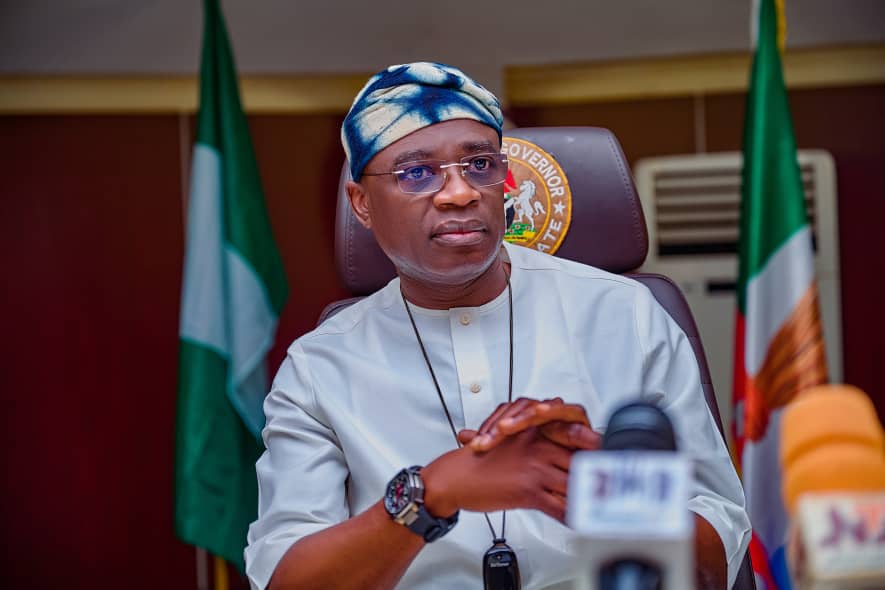
Governor of Benue State, Hyacinth Alia, has said his administration inherited a state burdened with dysfunctional institutions, a weakened economy, and widespread insecurity in many local government areas.
He said that deliberate steps have since been taken to stabilise governance and chart a new course for development.
The governor reaffirmed his administration’s commitment to rebuilding the state, outlining key achievements and ongoing efforts across critical sectors.
The chief press secretary to the Governor, Sir Tersoo Kula, in a statement yesterday, said the governor spoke during the 2nd Virtual Town Hall with the Benue Diaspora Community, organised by the Benue State Directorate for Diaspora Linkages and Investments and hosted by its director general, Abraham T. Girgir.
On security, governor Alia disclosed that insecurity occasioned mostly by incessant attacks and killing of the natives by armed herdsmen and terrorists which previously affected about 17 local government areas, has been significantly reduced to a few remaining hotspots.
He attributed the progress to sustained collaboration with the federal government and security agencies, despite challenges posed by porous borders with neighbouring states and international boundaries.
The governor added that the deployment of technology-driven security measures is enhancing ongoing operations.
Alia also addressed the situation of internally displaced persons (IDPs), revealing that over 600 persons were displaced at the peak of the crisis as of December 2025.
He noted that many have begun returning voluntarily to their communities, while the government continues to ensure safe and complete resettlement.
The governor acknowledged support from the First Lady, Oluremi Tinubu, as well as contributions from institutions such as UBA, the DSS, and the Nasarawa State Government, with total interventions amounting to ₦1.27 billion.
In the education sector, Governor Alia stated that more than 22 per cent of the 2026 state’s budget has been allocated to revitalization efforts, particularly targeting primary and secondary schools that had suffered years of neglect.
He added that the healthcare system is also undergoing a serious upgrade following a period of decline.
Highlighting economic initiatives, he emphasised efforts to revive key industries such as Taraku Mills, while sustaining Benue’s leadership in soybean production.
Governor Alia listed several operational factories, including juice, bread, water, and beverage production facilities, designed to stimulate local manufacturing and retain economic value within the state.
On infrastructure, the governor detailed completed and ongoing road projects across the state, including major township roads in Makurdi and Gboko, as well as inter-local government road networks aimed at improving connectivity.
He also noted federal collaboration on major infrastructure such as the Wurukum overhead bridge.
He further disclosed plans to support civil servants through a federal housing scheme, alongside the development of a “Renewed Hope Estate” in Makurdi to attract investors and diaspora participation.
Responding to questions from participants including Mwuese Vershima, Dr Emmanuel Ejembi, Dr Aver Yakubu, and Rev. Ralph Okworie, the governor acknowledged the complexities of governance and differing public opinions, particularly as the 2027 political season approaches.
He stressed that rebuilding the state is a gradual process, likening it to the healing of “an old wound” that requires time to fully take effect.
Governor Alia reaffirmed his openness to ideas and continuous learning, urging members of the diaspora to remain actively engaged in the state’s development.
We’ve got the edge. Get real-time reports, breaking scoops, and exclusive angles delivered straight to your phone. Don’t settle for stale news. Join LEADERSHIP NEWS on WhatsApp for 24/7 updates →
Join Our WhatsApp Channel