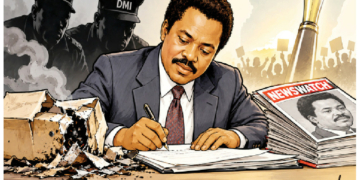
Nigeria’s political landscape continues to be a never-ending source of drama, akin to a captivating telenovela series that unveils a new episode each week.
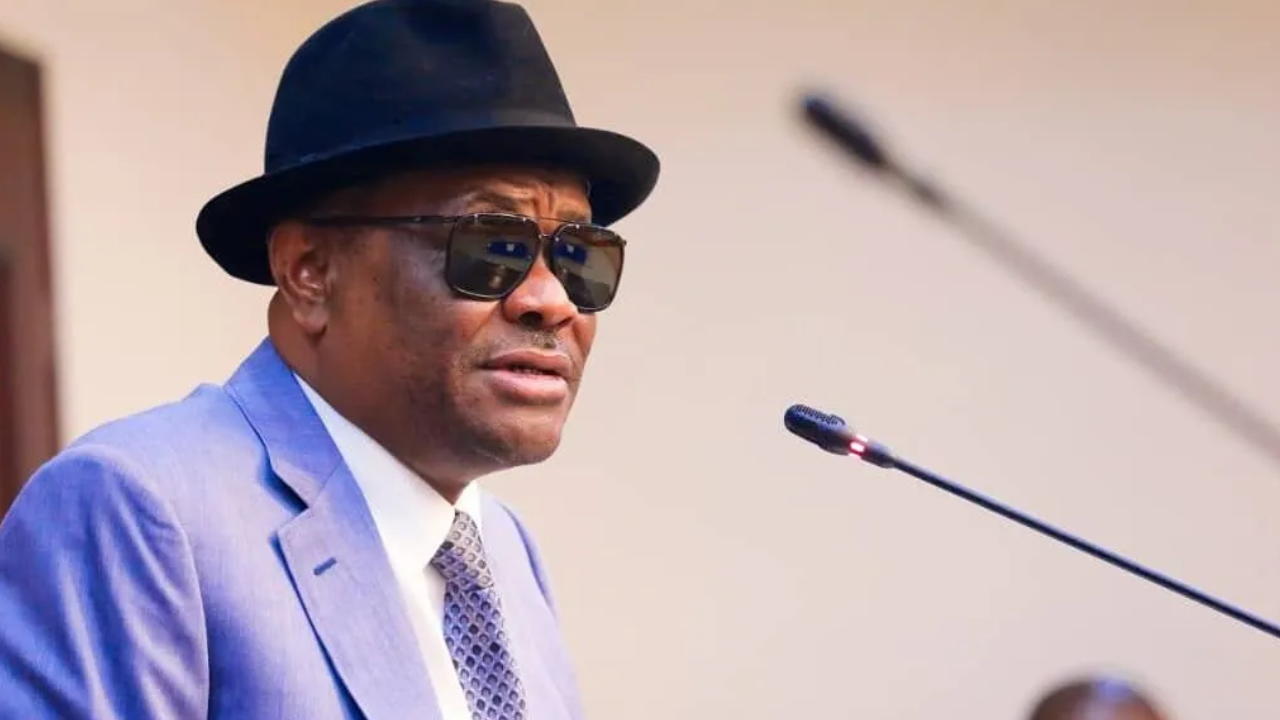
The most recent installment of this ongoing political saga unfolds in Rivers State, where Governor Sim Fubara finds himself embroiled in a highly publicized dispute with his predecessor and the current Federal Capital Territory (FCT) minister, Wyesom Wike.
This recurring narrative of conflicts between political godfathers and their successors has become an enduring theme in Nigerian politics. It’s a script that has played out repeatedly across the nation since the dawn of the Fourth Republic in 1999. The predictability of these clashes is almost disheartening, leaving many to wonder if they have not witnessed this movie before.
In Nigeria, the hierarchy of political power is quite clear: second only to the president, governors wield immense influence. The ability to influence policies, direct resources, and control the levers of power makes governors key figures in the political landscape.
However, a curious pattern has emerged over the years: the tendency for political proteges, even those with limited experience, to rebel against their mentors. It’s a phenomenon that transcends party lines and geographical boundaries.
Even if you were to appoint a secondary school student as a governor, it seems that, given a year or two in office, they would find reasons to assert their independence and challenge their political benefactors.
This dynamic is not limited to mentors and proteges; it has even extended to familial relationships. A noteworthy example is the case of Bukola Saraki, who famously challenged his father in Kwara State’s political arena. The younger Saraki’s quest for political ascendancy led to a direct confrontation with his father’s established political legacy, emphasizing the recurrent theme of political rebellions in Nigerian politics.
Ironically, amidst this sea of political turbulence and shifting allegiances, one political godfather has managed to maintain a firm grip on his base and wield significant influence. That figure is none other than Bola Tinubu, who has held sway as the Numero Uno in Lagos politics since 2007.
His enduring influence and ability to navigate the complex terrain of Nigerian politics provide an intriguing contrast to the prevalent pattern of conflicts between political godfathers and their successors.
Analyzing the case of Governor Sim Fubara in Rivers State, one might argue that his decision to openly rebel against his political mentor, the FCT minister Wyesom Wike, appears somewhat premature. The question arises: is it tactful for the governor to challenge a seasoned political heavyweight just six months into his term?
So far, the only person I have seen maintain cordial relationships with his successor is the current vice president, Kashim Shettima, and his successor, Borno State Governor Babagana Zulum.
I think one of the driving forces behind these clashes is the innate ambition of political proteges. While they may have started as loyal and obedient disciples, the allure of power and the desire to leave their mark on the political landscape can lead them to challenge their mentors. The belief in their ability to govern, influence policy, and make a difference in their respective states or constituencies often fuels their ambitions.
Personal ego also plays a significant role in these conflicts. As individuals ascend the political ladder and accumulate power and influence, they may develop a sense of invincibility and entitlement. This can lead to clashes with their mentors, as they may no longer be willing to play a subordinate role in the relationship.
Let’s not forget the role of sycophants who will be telling the governor, “It’s time to be your own man; clip the wings of your godfather.”
I have also seen tweets from people pushing the Rivers governor to deal with Wike. Where were they when Wike was taking the governor around the state and campaigning? There are a thousand and one people that Wike could have chosen to succeed him, but he chose Fubara.
I think both men, for the sake of peace and stability in the state, should manage this situation.
We have not recovered from the rift between Rabiu Musa Kwakwaso and Abdullahi Ganduje in Kano. Both men are now national figures, yet the rift has not abated.
The desire to build a personal political legacy is a compelling motive for many Nigerian politicians. While political godfathers may have nurtured their proteges and supported their rise to power, the proteges often seek to establish their own legacies, distinct from those of their mentors.
In all these rifts, none is for the interest of the state or the poor masses. None is about how to build more schools or healthcare facilities. It’s not even about how to build roads or bridges. It’s all about self-interest.
We’ve got the edge. Get real-time reports, breaking scoops, and exclusive angles delivered straight to your phone. Don’t settle for stale news. Join LEADERSHIP NEWS on WhatsApp for 24/7 updates →
Join Our WhatsApp Channel