
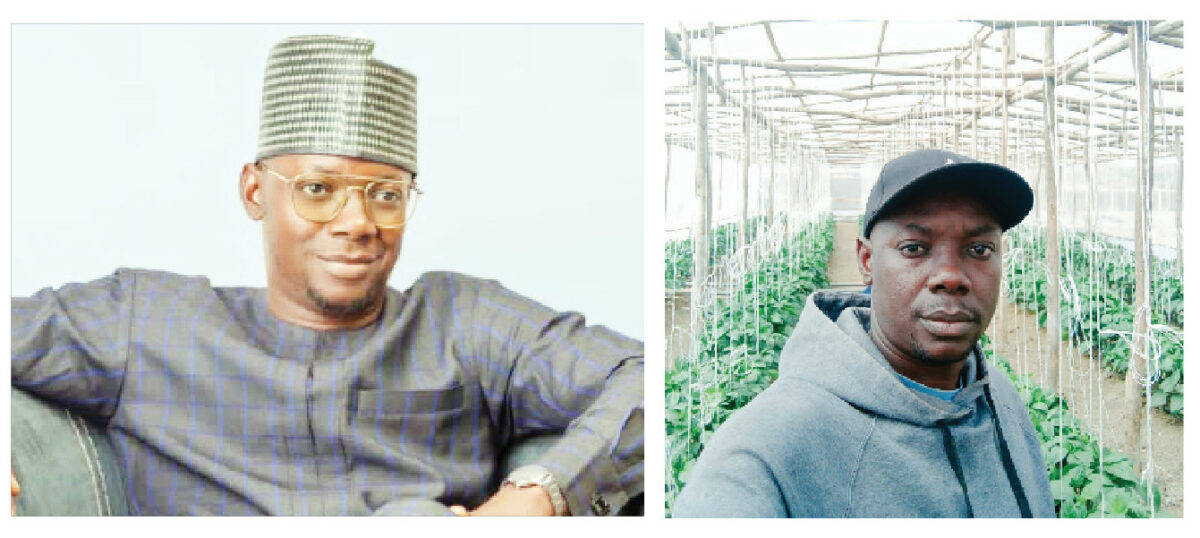
In this interview with KINGSLEY OKOH, Agro-preneur and chief executive officer of CAV Agro-Ventures, VINCENT OJEAH, speaks on the potential of greenhouse farming in Nigeria, the challenges facing the country’s food exports, and the role modern agricultural practices can play in strengthening food security and agribusiness development
What advice would you give the government to ensure Nigerian food products meet global standards?
My advice to the government is that regulatory agencies such as NAFDAC should strengthen collaboration with food standard control agencies in export destination countries.
This will help Nigeria clearly understand the standards we are currently failing to meet.
Through such engagements, the country can align its food production processes with global best practices of the world. Issues such as proper packaging, acceptable chemical residue levels, and food safety compliance must be strictly monitored.
If farmers adhere to these standards and regulatory officers perform their duties without cutting corners, the rejection of Nigerian staple foods in international markets will gradually become a thing of the past.
What advice would you give the government on improving food security through budgetary allocation?
The current allocation of about N262 billion on capital expenditures to the agricultural sector in the 2026 budget should have a strong focus on agro-industrial infrastructure and food security interventions nationwide.
Government must increase investment in agriculture, but more importantly, it must address the issue of security for farmers and farmlands. Farmers need assurance that their lives and properties will be protected. Without security in farming communities, discussions about food security will remain theoretical. Government should also provide subsidised farm inputs and financial support to farmers.
What are some of the economic benefits of greenhouse farming?
Greenhouse farming enables farmers to achieve prolonged and multiple harvests within a single planting cycle. It also significantly reduces post-harvest losses because crops are cultivated under controlled conditions that improve both yield and quality.
What are the cost implications of setting up a greenhouse farm?
The cost of constructing a greenhouse depends on factors such as available land space and the type of materials used.
For example, constructing a greenhouse on a “50 by 100 plot of land”, assuming a water source and overhead tank are already available, may cost about N2.7 million if bush poles are used as construction materials.
However, if galvanised metal structures are used, the cost will be considerably higher.
How profitable is greenhouse farming compared to open-field farming?
A greenhouse farmer can generate significantly more revenue than an open-field farmer operating on the same portion of land.
For instance, if a greenhouse farmer spends about N2.9 million covering construction, planting, and maintenance over a period of 10 months, the farmer can expect to earn approximately 35 per cent profit, especially when cultivating crops such as bell peppers.
In contrast, open-field farmers are often limited by seasonal conditions and may not be able to cultivate crops beyond five months from planting to final harvest.
What tools and equipment are required for greenhouse farming?
After the structural construction, which includes “Solarig or UV nylon plastic covers” and “insect-treated nets”, several tools are required for efficient farm operations. These include:drip irrigation tapes, Venturi fertilizer injection system, “Automatic power knapsack sprayer”, capable of spraying up to heights of 9 to 10 feet, especially for tall vegetable varieties.
What is the survival adaptation and viability of crops grown under greenhouse conditions?
Crops grown in a greenhouse generally perform better than those grown in open fields. The insect-treated nets act as a barrier against pests, while the Solarig covers help regulate sunlight and reduce excessive radiation. These controlled conditions give crops a better chance of thriving and producing higher yields.
What is the commercial viability of greenhouse farming?
Greenhouse farming is highly commercial in nature. Farmers can cultivate high-yield crop varieties and produce premium-quality vegetables that are attractive to both domestic and export markets.
What is the essence of greenhouse farming?
The major essence of greenhouse farming is that it allows farmers to cultivate crops under controlled climatic conditions regardless of weather fluctuations.
It also helps farmers reduce labour costs and farm inputs due to the manageable size of the farm. This allows farmers to pay closer attention to each plant through careful monitoring and management.
What are the major constraints in constructing a greenhouse farm?
Water availability remains the number one constraint. Greenhouse farming relies heavily on irrigation systems, meaning a consistent and reliable water source is essential for successful operations.
Is greenhouse farming capital-intensive for smallholder farmers?
Yes, greenhouse farming can be capital-intensive for smallholder farmers. However, like every viable business venture, it requires some level of initial investment. That said, greenhouse farming offers strong returns on investment. In many cases, farmers can begin to see significant profit margins within two years.
What does maintenance of a greenhouse farm involve? Is it cost-effective?
If a greenhouse is properly constructed and installed, the farmer may not have major maintenance concerns for at least five years. After that period, certain components such as the “Solarig covers”or “insect nets” may begin to experience wear and tear. By then, the farmer would likely have generated enough income to replace these components if necessary.
Which crops can be cultivated in greenhouse farming?
A wide range of crops can thrive in greenhouse environments, including bell peppers, broccoli, kale, purple cabbage, beef tomatoes, seedless cucumbers, grapes, potatoes, eggplant, peas, bananas, and plantains, and the list continues to expand as greenhouse technology evolves.
In how many states in Nigeria does greenhouse farming currently have a strong presence?
From my observations within the sector, greenhouse farming currently has a noticeable presence in at least three locations in Nigeria. These include Ogun State, the Federal Capital Territory (Abuja), and Plateau State. These areas have shown growing interest in greenhouse technology due to favourable conditions and increased awareness of the benefits of controlled-environment agriculture.
As a greenhouse farmer, what are your key milestones so far?
One of my major milestones is the growth of my business. In less than five years, I have expanded from one greenhouse structure to over ten structures and the expansion is still ongoing. I help small holder farmers to build Greenhouse on farm sites. This reflects my commitment to help outgrowers with survival tips to strengthen the growing demand for greenhouse farming.
What is the market value of greenhouse farming in Nigeria?
The market value of greenhouse farming in Nigeria is very high compared to many other agricultural ventures. Unlike conventional farming systems, greenhouse farming offers faster turnover and higher yields. In many cases, farmers can recover their capital investment and still make profit within the same year the greenhouse structure is established.
What is your viewpoint on genetically modified organisms (GMO)?
When many people hear the term “GMO”, they often assume it is harmful. However, genetically modified organisms have existed for decades.
Scientific work on GMOs began in the 1970s, while their commercial use started in the early 1990s. Many of the foods consumed today globally are derived from genetically modified crops.
Essentially, scientists transfer desirable genes between species to create beneficial traits such as drought resistance, pest resistance, fungal resistance, or improved nutritional value, traits that may not easily occur through conventional breeding.
Having spent five years in agribusiness, what survival tips would you give greenhouse farmers in Nigeria?
The success of greenhouse farming depends on several key factors. First, there must be access to clean and reliable water, as each plant requires about one litre of water daily for optimal growth. Adequate staffing is also important, since farmers need workers who can follow instructions carefully and carry out the necessary tasks on the farm. Proper nutrient management is essential to support healthy plant development and achieve good yields. In addition, farmers should possess technical knowledge, particularly in Intensive Pesticide and Fungal Management (IPFM) and Intensive Nutrient Management (INM), as the right expertise greatly improves the chances of the farm’s survival.
Finally, the greenhouse structure itself must be of high quality; a poorly constructed structure could collapse and destroy the crops.
How has CAV Agro-ventures supported smallholder farmers?
CAV AgroVentures has primarily supported farmers through training and awareness programmes. We educate farmers on the proper use of fertilizers and agrochemicals to improve productivity. We also help improve the agricultural literacy of rural farmers by introducing them to modern farming tools and techniques.
What advice would you give agricultural start-ups?
Agricultural start-ups should think long-term. “Greenhouse farming represents the future of crop production.”
Beyond profitability, it offers greater security and efficiency. It also reduces the need for large expanses of land. Even within small spaces, including paved areas, farmers can grow crops using grow bags and modern cultivation techniques.
We’ve got the edge. Get real-time reports, breaking scoops, and exclusive angles delivered straight to your phone. Don’t settle for stale news. Join LEADERSHIP NEWS on WhatsApp for 24/7 updates →
Join Our WhatsApp Channel