
Griffin Capital Group has officially entered Nigeria’s financial services industry with a strategic focus on expanding access to SME financing, deepening capital market activities and supporting infrastructure development across the country.
The company said its market entry reflects a deliberate effort to address financing gaps facing small and medium-sized enterprises, housing development, mortgage financing and structured investments, while also unlocking liquidity within the nation’s financial markets.
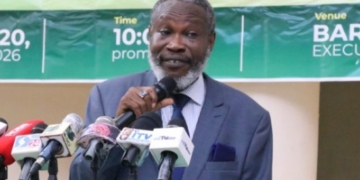
Speaking during the unveiling of the company’s operations on Wednesday, the Group Chief Executive Officer of Griffin Capital Group, Mr Babatunde Obaniyi, said the institution was established to provide innovative financing solutions capable of supporting Nigeria’s long-term economic growth.
According to him, Griffin Capital Group is structured around five major business divisions, including investment banking, asset management, trusteeship, insurance brokerage and SME-focused finance operations.
“The opportunity in Nigeria’s financial markets is significant, but unlocking it requires more than capital. It requires structure, governance and the ability to deploy capital with discipline,” Obaniy. Still, recently explained that the company’s operating model enables it to manage the full transaction cycle from advisory services to execution, while maintaining a strong focus on risk management, corporate governance and sustainable value creation.
Obaniyi expressed confidence in the ongoing economic reforms introduced by President Bola Tinubu’s administration, noting that improvements in foreign exchange management and liquidity conditions were gradually restoring investor confidence in the Nigerian economy.
He stated that Griffin Capital Advisory, the group’s investment banking subsidiary, would concentrate on debt and equity capital markets through instruments such as bonds, commercial papers and other structured financing products aimed at deepening Nigeria’s capital market.
Obaniyi noted that the Nigerian equities market had recorded strong gains in 2026, describing the current trend as a “bull run.”
“As of today, the market has recorded an increase of about 50 to 60 per cent year-to-date, and we remain very bullish,” he said.
He attributed the renewed market optimism to reforms in the foreign exchange market, especially efforts to ease the liquidity constraints that previously discouraged foreign portfolio investors.
According to him, foreign investors had withdrawn between $10 billion and $15 billion from Nigeria during the foreign exchange crisis due to difficulties in repatriating funds, but recent policy changes were helping to reverse the trend.
Obaniyi also cited Nigeria’s foreign reserves, estimated at approximately $49 billion, as another factor that strengthens investor confidence and improves macroeconomic stability.
Beyond capital market activities, he said Griffin Capital intends to expand aggressively into infrastructure financing, shareholder finance and structured trade finance, while improving access to credit for SMEs.
Describing SMEs as the backbone of the Nigerian economy, Obaniyi said the sector contributes nearly 60 per cent of the country’s Gross Domestic Product and accounts for over 90 per cent of employment despite persistent challenges in accessing finance.
“There are between 35 million and 40 million SMEs in Nigeria, but the pain point has always been access to finance,” he said.
He added that the company also plans to focus significantly on housing finance, citing Nigeria’s estimated housing deficit of about 20 million units and the need for long-term funding solutions for developers and homebuyers.
According to him, Griffin Capital intends to create financing structures that would make housing delivery and mortgage access more affordable.
Obaniyi stressed that Nigeria’s ambition of becoming a trillion-dollar economy would require innovative financing models and stronger private sector participation in large-scale infrastructure projects.
Using the Lagos-Calabar Coastal Highway project as an example, he noted that major infrastructure delivery in the country would increasingly depend on private capital and creative financing structures.
He further emphasised the importance of integrity, governance and fiduciary responsibility in building sustainable financial institutions and investor trust.
“Our goal is to be the most trusted adviser in the market while contributing meaningfully to national development,” he said.
Chairman of the Group, Musa Bello, said financial institutions have a critical role to play in driving economic transformation, especially in emerging markets where capital deployment must be done strategically and responsibly.
According to Bello, Griffin Capital Group represents a long-term commitment to building an institution that combines local market expertise with global standards in governance and execution.
“As Nigeria continues to deepen its capital markets and expand private sector participation, institutions with the capacity to structure, mobilise and manage capital effectively will be essential,” he said.
He added that the company’s objective is not only to participate in Nigeria’s financial market evolution, but also to contribute meaningfully to sustainable economic development.
We’ve got the edge. Get real-time reports, breaking scoops, and exclusive angles delivered straight to your phone. Don’t settle for stale news. Join LEADERSHIP NEWS on WhatsApp for 24/7 updates →
Join Our WhatsApp Channel