
Nigeria’s health sector is at a critical point in its reform journey. After years of fragmented programmes, inadequate financing, weak coordination and heavy reliance on development partners, the federal government said it is building a more coordinated health system capable of delivering better outcomes for Nigerians.
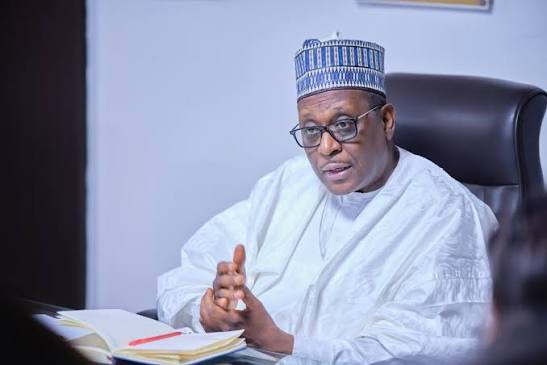
The coordinating minister of Health and Social Welfare, Prof. Muhammad Ali Pate, said the government had deliberately adopted a new way of working, bringing federal and state governments, development partners and civil society into a common framework for planning, implementation and accountability.
According to him, the reform is designed around greater transparency and coordination, with quarterly performance dialogues with states, joint annual reviews and a consolidated “State of Health of the Nation” report.
Pate said the objective was to ensure that governments and partners were not working in isolation or duplicating interventions, but were moving towards common national objectives.
He stressed, however, that while development partners remained important to the health sector, government could not outsource its responsibility for improving the health of Nigerians.
“Ultimately, the responsibility for improving family planning, maternal health and primary healthcare is of the government of Nigeria,” Pate said.
For decades, Nigeria’s health sector has been characterised by numerous programmes operating at federal, state and local government levels, often with different partners, funding streams and reporting mechanisms.
The Sector-Wide Approach (SWAp) and the Health Sector Renewal Investment Initiative seek to address this fragmentation by bringing stakeholders under a more coordinated framework.
Pate said the government was working with states through operational plans and regular performance reviews, recognising that while national objectives may be shared, states have different challenges and require different approaches.
However, as the reform agenda reaches its mid-term point, civil society organisations are seeking that the policies should transform into measurable improvements in the lives of ordinary Nigerians?
The CSOs stated this at a high-level media and policy engagement in Abuja, organised by the Nigeria UHC Forum and the Health Sector Reform Coalition (HSRC), where government officials and civil society organisations reviewed the progress, challenges and sustainability of Nigeria’s ongoing health reforms.
Presenting the CSOs’ mid-term position, the Chairperson of the Health Sector Reform Coalition, Dr. Muhammed M. Lecky, said the direction of reform was right but warned that the gains must now be protected, institutionalised and translated into measurable results.
The CSOs described the SWAp as an opportunity to reduce fragmentation and improve coordination across federal, state and local government levels.
But they cautioned that the next phase must move beyond counting activities and begin measuring actual health outcomes.
This is particularly important at the primary healthcare level.
A renovated health centre, they argued, cannot be regarded as fully functional if it lacks health workers, essential medicines, diagnostics, electricity, water, infection prevention systems, referral arrangements and mechanisms for receiving feedback from patients.
Despite the reforms, several health indicators continue to expose deep gaps in access and quality.
The Nigeria Demographic and Health Survey 2023–24 shows that 79 per cent of women received antenatal care from a skilled provider, but only 43 per cent had four or more antenatal visits.
Only 50 per cent of live births were assisted by a skilled provider.
Child immunisation also remains a concern, with only 39 per cent of children aged 12–23 months fully vaccinated with basic antigens, while 14 per cent received no vaccination.
The nutrition figures are equally worrying. About 40 per cent of children under five are stunted, including 21 per cent who are severely stunted.
Family planning access remains limited, with modern contraceptive use among currently married women at 15 per cent and unmet need at 21 per cent.
For the CSOs, these figures demonstrate that the success of reform must ultimately be judged by whether women, children and vulnerable populations experience better access to care.
One of the most persistent challenges confronting Nigeria’s health system is financing.
High out-of-pocket expenditure, delayed release of funds, fragmented financing flows and dependence on external funding continue to threaten financial protection and service delivery.
The CSOs said that government must be judged not simply by how much it allocates to health, but by how much is actually released, how much reaches the frontline and what services those resources produce.
This is particularly important for primary healthcare, where delays or inadequate funding can quickly translate into shortages of medicines, equipment and personnel.
The CSOs called for timely release of appropriated funds, stronger accountability for the Basic Health Care Provision Fund, transparent tracking of resources from allocation to facility level and expanded health insurance coverage.
Evidence from Kaduna State provided another window into the challenge.
The Social and Citizen Accountability for Primary Health Care Performance project, implemented by BudgIT and the Health Sector Reform Coalition across all 23 local government areas of the state, examined the role of Ward Development Committees in strengthening accountability.
The findings showed that WDCs could contribute to service utilisation, community mobilisation, facility improvements and advocacy when properly supported.
However, an analysis of 862 WDC meetings found that only 11.6 per cent discussed the Basic Health Care Provision Fund (BHCPF).
For the CSOs, the implication is straightforward: communities cannot demand accountability for resources they do not know exist.
Lecky and other civil society representatives therefore called for greater transparency around health financing and stronger community participation in monitoring the use of public health funds.
As the CSOs emphasised, a renovated primary healthcare centre without staff, medicines, power and the systems required to provide care is not yet a fully functioning health facility.
We’ve got the edge. Get real-time reports, breaking scoops, and exclusive angles delivered straight to your phone. Don’t settle for stale news. Join LEADERSHIP NEWS on WhatsApp for 24/7 updates →
Join Our WhatsApp Channel