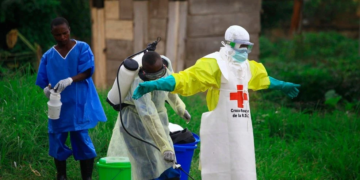
Like other critical sectors of the nation’s economy, the Nigerian health sector is bedevilled by many challenges, mainly from long years of neglect and poor funding. Whether overcrowding, a shortage of skilled workers, outdated facilities, inadequate maintenance, frequent drug shortages, power outages, or a lack of clean water, healthcare delivery in Nigeria is on life support.
These challenges, coupled with the ongoing skyrocketing cost of medicines, have made accessible and affordable healthcare services challenging for most Nigerians, especially those at the lower rungs of the social ladder, who mainly reside in urban slums and rural areas.
In Nigeria, the poor and rural dwellers feel the pain of the deplorable state of healthcare delivery the most, pushing many to patronise traditional remedies with all the attendant consequences, especially regarding standardisation and safety.
Fundamentally, the focus of healthcare delivery in most rural areas is to enhance maternal and child health, immunisation, malaria prevention, and other essential services in underserved areas, which are often handled by the primary healthcare system controlled by the subnational governments.
Even though the World Health Organisation (WHO) recommends allocating a minimum of 15% of a national budget to healthcare, the Nigerian government has consistently fallen short of this requirement, not minding that it supported the formalisation of the 15% benchmark through the 2001 Abuja Declaration by African Union member states.
For instance, in 2015, the health sector budget was a paltry 5.78% of the total Nigerian budget. The figure was 4.13% for 2016; 4.09% for 2017; 3.91% for 2018; 4.18% for 2019, and 4.33% for the 2025 budget.
A study on post-pandemic health financing in Nigeria finds that state governments collectively budget more for health than the federal government, even though more budgetary allocation does not necessarily translate to better health outcomes.
Like most development indices, northern Nigeria ranks low in the health care index. Even among the states of the north, the statistics for the northwest are alarming. The region has the worst health indices with high maternal and child mortality, poor access to health services and many healthcare centres lacking basic amenities.
Studies show that people who need medical attention in the Northwest are confronted with limited healthcare facilities and a shortage of doctors and other healthcare workers, most of whom are overworked and underpaid. Additionally, residents contend with the high cost of basic treatment and health services. Addressing these challenges requires a holistic approach. This informed the calls for the state government to prioritise health care delivery since doing otherwise risks undermining the population’s health and well-being.
Jigawa State, under Governor Umar Namadi’s administration, is leading the charge in that direction. Good enough, the state has recorded improvement in prioritising healthcare delivery.
In the last two years of Governor Namadi’s administration, the Jigawa health sector witnessed some modest transformations. Thus, the state, which has, for decades, been struggling with high rates of child and maternal mortality, child malnutrition, stunting, and poor immunisation coverage, has earned good ratings. A United Nations Children Fund (UNICEF) report shows that the state recorded a 25 per cent reduction in Child and maternal mortality.
At the last count, 181 health facilities had been renovated and upgraded. The state established 5 Dialysis Centres for free treatment of Kidney patients, approved free therapy for all hypertension, diabetic, and sickle cell patients, and enrolled 143,000 less privileged people in the state’s healthcare insurance scheme.
The state government sponsored 187 Medical students to Cyprus. It introduced the Girl for Health programme, through which qualified girls from rural areas are enrolled in the College of Health and posted back to their community upon graduation. Additionally, the state has remained committed to its programme, emphasising safe motherhood, ‘Haihuwa Lafiya’ and ‘Jakadan Lafiya’ (Volunteers Health Ambassador).
Expectedly, the state is witnessing steady improvements as health indices improve. Data from the National Demographic and Health Survey (NDHS) showed that immunisation coverage increased to about 70%, while the child stunting rate dropped from 64% in 2018 to 55% in 2024.
Even though data from development partners and records on the ground show appreciable progress, there is still so much more the state can do to be a model state for healthcare delivery in the Northwest and the entire northern region. One key way of ensuring this is to have a structure built on accountability and transparency.
We’ve got the edge. Get real-time reports, breaking scoops, and exclusive angles delivered straight to your phone. Don’t settle for stale news. Join LEADERSHIP NEWS on WhatsApp for 24/7 updates →
Join Our WhatsApp Channel