The United Nations Children’s Fund (UNICEF) has expressed concern about the growing impact of climate change on education and healthcare delivery, warning that rising temperatures, storms, flooding and poor water infrastructure were disrupting learning and putting mothers and children at risk.
Dr Nuzhat Rafique, Chief of UNICEF’s Bauchi Field Office, stated this in Gombe during the flag-off of the Climate Resilient Infrastructure for Basic Services (CRIBS) project and formal handover of documents to contractors for the rehabilitation of schools and primary healthcare facilities across five local government areas in the state.
She said climate change was no longer a future threat but a present danger affecting schools and health facilities in Gombe State and other states across northern Nigeria.
“Climate change is not a future; it’s a present. You can see heat waves, sandstorms, rainstorms, flooding and changing weather patterns.
I have seen roofs blown off after storms,” she said.
According to her, the CRIBS project aims to provide safer schools and health facilities that can withstand extreme weather while improving water, sanitation, and hygiene services.
The UNICEF chief stressed that access to water and sanitation remained central to child protection and healthcare delivery, especially for adolescent girls and pregnant women. “There are already thousands of children out of school, and sometimes the reason is that adolescent girls do not have toilets or water in schools. We do not want mothers to deliver in unsafe environments.”
Under the project, nine schools and 14 health facilities in selected LGAs in Gombe State will be upgraded with climate-resilient features, including improved roofing, ceilings, solar systems, sanitation facilities, emergency exits and rehabilitation works.
UNICEF education specialist, Abdurahman Ado, said the intervention became necessary after assessments showed that climate conditions were negatively affecting both teaching and learning outcomes.
“We have seen how the climate is affecting learning. Think about classrooms with 250 learners under this kind of heat. How do they cope? Are teachers able to teach effectively? Is learning really taking place?”
He explained that the selected LGAs emerged after extensive assessments involving the education, health and water sectors.
According to him, UNICEF used indicators such as the number of out-of-school children, climate vulnerability and existing healthcare challenges to determine priority areas. He said enumerators visited facilities across the state to collect data before selecting the communities considered most vulnerable to climate-related risks.
Ado added that contractors would begin work immediately after technical review meetings, with the entire project expected to be completed by December 2026.
He said the interventions would include the rehabilitation of classrooms and clinics, the replacement of damaged roofs and ceilings, the installation of solar systems, and improved ventilation and emergency exits.
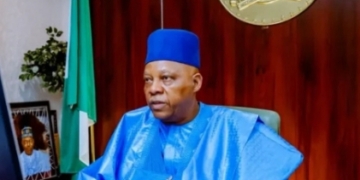
The deputy governor of Gombe State, Dr Manassah Daniel Jatau, described climate adaptation as a necessity for survival, saying governments and institutions must adjust to changing environmental realities.
He acknowledged that poor classroom conditions previously identified by UNICEF had pushed the government to improve school infrastructure across the state.
“You once told me Gombe schools looked good outside, but classrooms were bad inside. Immediately, we took action.”
We’ve got the edge. Get real-time reports, breaking scoops, and exclusive angles delivered straight to your phone. Don’t settle for stale news. Join LEADERSHIP NEWS on WhatsApp for 24/7 updates →
Join Our WhatsApp Channel