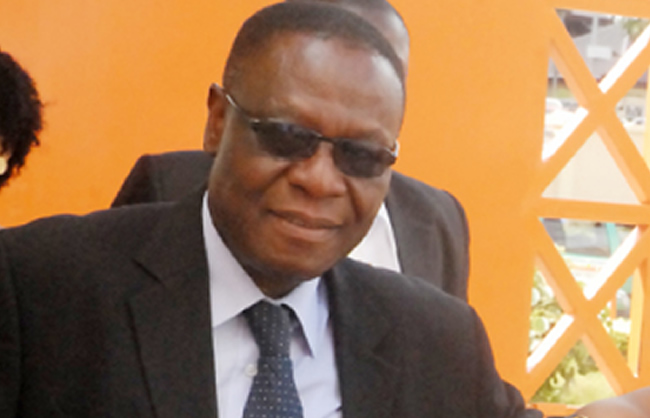
Mr Sunday Ehindero is a former Inspector General of Police. In this interview with ADEMU IDAKWO, he speaks on sundry national issues, including what the President and the National Assembly should do before the establishment of state police.
What were the key challenges you faced during your tenure as the IGP, and how did you address them?
In 2005, when I was appointed Acting IGP, the challenges confronting me primarily concerned maintaining public safety and order. One of such was the nationwide demonstration by the Nigerian Labour Congress (NLC) in 2005. Due to rising petroleum prices, the NLC decided to go on strike. I was informed by the leadership. Recognising that they had the right to strike, I agreed with them. But insisted that I would determine the routes. In the process, I visited the President of NLC, Governor/Senator Adams Oshiomhole, and his team at Labour House in Abuja. We agreed on the routes to be taken. The protesters were not to pass through Wuse Market or any other Markets in Abuja, or through the Mosque, on Friday, a prayer day. These rules applied not only to Abuja but also to other parts of the country, including Lagos, Kaduna, and Kano. My officers in charge of the Demonstrations were not to bear firearms. Only the vehicle at the rear of the protest had limited armament. In Lagos, on Ikorodu Road, the Protesters maintained law and order. Laurette Wole Sohinka, Chief Ghani Fewehinmi, Femi Falana, and others waded off miscreants to the extent that no one was killed or injured. In Abuja, the Labour Leader was at the front of the demonstration. The government did not interfere with the way I handled the protests. But I was sure I would have been fired if things went wrong. That is the lot of a policeman: when things go right, he receives accolades, but when they go wrong, he is fired. In that incident, I received accolades.
My second challenge with the extrajudicial killings of Apo Traders in Abuja. The report of the FCT Commissioner of Police indicated that those killed were robbers. When it became clear that those killed were not robbers but traders, I set up the Mike Okiro Panel of Inquiry. Upon receiving the Panel’s report, those found culpable were charged in court. Compensation was paid to the deceased victims to the tune of 21million Naira. Again, the government established the Justice Goodluck Panel to investigate the incident. When the Panel realised that I had done the needful, it was disbanded.
The third challenge relates to my confirmation. I was appointed Acting IGP on 18 January 2005. It was not until December 2025 that I was confirmed. The two incidents above took place while I was acting. There were other incidents, but the above were the major ones.
You have spoken about the need to rejig Nigeria’s security architecture. What specific changes would you propose?
Security Architecture refers to the structure employed to guarantee the safety and security of Nigeria. It is the policies, laws, and processes that security agencies currently employ to contain crime. The structure is not only defective but faulty. It should be subject to assessment with a view to changing it. At the moment, our security architecture is more tailored to the role of a major security agency than to the Police and other security agencies in matters of internal security. It is not that the security agent is not doing their best. They are overstretched and cannot cover the field. The Police and other security agencies are everywhere in the country. The Government needs only to empower, motivate, and properly equip them. As an IG in 2006, when there were frequent violent incidents in the Langtang and Wase areas of Plateau State, I recommended to the Government that a Mobile Squadron be established in Gagarko to address this problem. This was done. Throughout my tenure, no incident was reported.
Recently, I saw a video going viral where drones are used to secure borders. From command bases in control rooms in the capital, terrorists can be monitored using laser technology. Fighter drones are unleashed on terrorists before they get to the border. Soldiers need not be at the borders. In fact, their numbers have been reduced by eighty per cent. Any slight movement in the bush at the borders is detected, and terrorists are eliminated. Now that our Generals are dying through direct combat with terrorists, is it not time that drones be used for our borders? Our country will be crime-free once the military concentrates on external aggression, and police and other law enforcement agencies are in charge of internal security.
How can the Police Force improve Community Policing and trust building in Nigeria?
Community policing is a Police-Public partnership for positive interaction between the Police and various groups in the community to allay their fears and concerns about crime. The Police must interact with various groups, such as the Transport Workers Union, students, religious and community leaders, the Market and Traders’ Association, and other private enterprises, to find out how they wish to be policed. By doing so, we earn the community’s trust in how we perform our duties. In my time as an IG, Transport plying Abuja and the Eastern States were always robbed midway somewhere at Lokoja. Upon information, I directed the CID to liaise with the Transport Workers in the garages. When vehicles were fully loaded and about to begin their journeys, police would disembark and search them. Many arms were recovered, and incidents of midday robberies were reduced.
What qualities make an effective police leader, and how can Nigeria develop such leaders?
An effective police leader must be accountable, fair and just, impartial, and possess integrity. He must be able to think critically and weigh the consequences of his decisions. He must be able to make a distinction between what is a crime and what is not, between order and disorder, whether to use force or not, and the proportion. Nigeria can develop such leaders through continuous ethics training, with input from our universities on leadership training. Making the right judgment is dependent on competent training for police leadership.
How should the police force balance its role in maintaining law and order with protecting citizens’ rights?
Citizens’ rights are rights that every democratic society must accept as belonging to each person as a human being. They are Fundamental Rights contained in Chapter IV of the Constitution. These are the right to life, the right to the dignity of a human person, the right to personal liberty, the right of fair hearing, and so on. These rights are not to be violated except as provided by law. Our Constitution provides for restrictions on and derogations from these fundamental rights. Thus, the police powers of arrest, search, detection, and detention may justify some interference with the rights of private citizens. The police must realise that their powers constitute an invasion of an individual’s privacy, which the constitution frowns upon. Therefore, such privacy should not be invaded except on the surest grounds.
How can Nigeria address the issue of armed banditry and kidnappings?
Armed banditry is an act of violence by members of an armed group in the environment of a community. Kidnapping is taking persons illegally and keeping them as prisoners to get money or valuables for their return. These are opportunist crimes whose motivation is wrongful gain. Nigeria can address these crimes in more than one way. First, remove the opportunity to commit these crimes, just as the introduction of the cashless banking strategy has minimised robbery. Robbers usually chase cash. Arrest, detection, and punishment must be certain. There is also the prevention aspect. Poverty, unemployment, and illiteracy must be addressed. The standard of living of the populace must be enhanced.
What role should the police play in addressing electoral violence and ensuring peaceful elections?
An election is a process, not an event. The election process includes candidate selection, voter registration, and voting procedures. The role of the police has always been to secure the electoral process to ensure a free and fair election free of violence. This role falls into three categories: first, the pre-election period, consisting of voter registration, policing congresses and conventions, and policing political campaigns and rallies. Secondly, on Election Day, police are required to secure electoral materials and INEC officials. Thirdly, there is the post-election period, during which petitions arising from the conduct of the elections and their results are heard by Tribunals. In all these stages, the police are to ensure there is no violence.
What are your thoughts on the creation of state police in Nigeria, considering your past stance on the issue?
State police do not mean the absence of a Federal Police Force. Rather, it means a locally controlled police force coexisting with the federal police force. However, the state police force will not be under the control or supervision of the IG; it will be the responsibility of state governors to maintain law and order in their states.
I had opposed the establishment of state police all along on the grounds, inter alia, that we were not ripe for it. The previous administration only paid lip service to its establishment. In 1985, police experimented with the establishment by directing policemen of superintendent ranks and below to be transferred to their states of origin.
The exercise showed that some states, like Bendel, had more police men, while states in the majority of the north had inadequate numbers. It indicated that the police were not ripe for it. Compounding this was the fact that previous governments had no template for state police. Of course, this was compounded by the fear of misuse by state governors to intimidate political opponents.
But now the template presented to the National Assembly includes checks and balances on the governor’s powers. However, the criticism against the state police still remains. The issue of multiple costs associated with the maintenance of 36 police forces and FCT, each force pursuing the same issue of recruitment, training, and finances.
Looking back, what were some of the most critical decisions you made as IG, and how did they impact the force?
I will mention only two of these decisions. The establishment of Chaplaincy in the Nigeria Police Force. Some policemen did not know God existed. Fortunately, I had a President who appreciated God. He had a chapel in the Villa where some of us worshipped on Sundays. I proposed establishing a police chaplaincy, which he approved. As an IG in 2005, my concern was the spiritual well-being of policemen and ensuring they were not distracted from their onerous duties. Repeated exposure to trauma, a policeman may experience spiritual injury. Chaplaincy provides excellent social and welfare services to support officers’ wellness and well-being. It is the police face of compassion and empathy during tumultuous events, bringing calm to police families, allowing officers to focus on their duties.
The concern is about trauma recovery and the introduction of spirituality into the force. Managing stress, depression, moral injury, family crises, and burnout are areas of its concern. Today, because of IGs who came after me, particularly Koyode Egbetokun, who completed the chaplaincy building at the Force Headquarters, Abuja, police ethical conduct has improved, and the wellness of policemen in crisis and trauma situations is being taken care of.
The second is in the prosecution of offenders. Police were not allowed to prosecute beyond the Magistrate Courts. I concluded what I started as Commissioner of Police, Legal Section, in 1995, enabling the Police to prosecute in the Superior Courts of Record. That was granted. Today Police and other security agencies can approach these courts. However, they must be lawyers who are called to the Nigerian Bar.
What strategy would you recommend for addressing police-public clashes and protests?
There is no omnibus strategy. The strategy you use will depend on the circumstances: the nature of the protest or clash, its composition, and its aim. In my time as the IG, two protests that I handled would make this clear. First, there is the Labour Congress’s protest against the fuel price increase. I had already mentioned this. Comrade Adams Oshiomhole, before he became the Governor of Edo State and now a Senator, intimated to the Government and the police of the intention of the NLC to go on strike. I first went to his office to discuss the modalities. Thereafter, he came to my office, where we looked at the laws and finalised the modalities of the protest, particularly the routes. We agreed that, for instance, in Abuja, the protest should avoid the mosque and the markets, especially the Wuse market. My policemen were not to carry arms except the patrol team behind the protest. In Lagos, the same modality was implemented. Professor Wole Soyinka, Gani Fawehinmi, Beko Ransom Kuti and Femi Falana, inter alia, led the protest along Ikorodu Road and prevented miscreants from hijacking it. All went well. Nobody was killed or injured. The government did not give me directives on whether to allow the protest; I handled it independently.
The second was a protest against the Killings of six Apo traders. The report reaching me was that those killed were robbers. When it became clear that those killed were not robbers but traders, I set up the Mike Okiro Panel of Enquiry to investigate the killings and report. The report identified those policemen who did the killings and their levels of involvement. I directed the Force CID to arrest and prosecute them. They did, and I later paid compensation to the families of the deceased. That calmed the protest. So, you see different protests require different strategies.
What role should the police play in addressing police welfare and improving working conditions?
The role of the police is to inform the government of the police’s condition. It is left for the government to provide remedial measures. The government has established the Police Trust Fund. In its operation, the police ought to have executive power over the content and quality of the items purchased. The welfare and working conditions of police men should take cognisance of the prevailing conditions in a similar organisation. The government may not be aware of the appalling working conditions in the police force. During my time, it took a revelation by me in a meeting before the President was alerted. Immediately, I informed the president in that meeting that the take-home pay of a Sergeant was not more than seven thousand naira a month after deduction of contributory pension fund, tax and housing. The President immediately called the Accountant General of the Federation to confirm. That was the genesis of the Danmadami Reform Panel. Sadly, the report and subsequent ones have not been implemented.
What are the main arguments for and against the establishment of state police in Nigeria?
Let me start with the argument for. Chief Obafemi Awolowo asked this question more than six decades ago. How can a governor of a region be without the power to control the police? It is a paradox.
The second reason is the need to reduce crime. It is said that crime is local, and therefore, there is a need for a local force with local knowledge of the topography and intelligence. Such a local force will reduce the response time to crime. The other reason is the Federal Government’s inability to properly fund and equip the force.
The reasons against the establishment are the Governor of the State’s abuse for political gain. The other reason is that police are too expensive to be left to the states. What of the multiple costs associated with the maintenance of 36 states and the FCT, each force pursuing the same issues, such as recruitment, training and finances?
What constitutional amendments would be required to establish state police in Nigeria?
First, to have a state police, section 9 of the Constitution must be complied with. The National Assembly must pass an Act for the establishment of state police supported by a two-thirds majority of votes of the National Assembly members and approved by two-thirds of the State Assemblies.
Secondly, sections 214 and 215, relating to the appointment of the IG and the establishment of a single police force, must be amended to provide for separate functions for the federal and state police forces. The President shall appoint the IG on the advice of the National Police Council, subject to confirmation by the Senate, while the Commissioner of Police of the State shall be appointed by the Governor of the State on the advice of the Federal Police Service Commission, subject to confirmation by the State House of Assembly. The Federal Police shall be responsible for security throughout the Federation; the state police shall be responsible for security in the state. However, the federal police shall not interfere with the operation of the state police except when the latter is overwhelmed to the extent of being incapable of performing its duties and requests the intervention of the federal police. This intervention must be approved by a two-thirds majority of the Senate. In effect, Part 1, second schedule, relating to the Exclusive Legislative List, and Part 11, dealing with the concurrent Legislative List, have to be amended. Also, the provisions in the Third Schedule, Part 1, sections L and M, relating to the Nigeria Police Council and the Police Service Commission, respectively, have to be amended to pave the way for the establishment of a State Police Service Commission. Again, Section 216(2) relating to the removal of the IG, the Constitution has to be amended to provide for the Governor’s removal of the Commissioner of Police of a State.
What will be the role of the National Police Council and the Police Service Commission in overseeing State Police?
Under the Bill of the National Assembly for the establishment of State Police, the President still has the power to appoint an IG from the Federal Police Force on the advice of the National Police Council, subject to confirmation by the Senate. On the other hand, the Commissioner of Police of a state shall be appointed by the Governor on the advice of the Federal Police Service Commission, subject to confirmation by the State House of Assembly. But if the Commissioner of Police disagrees with an order issued by the Governor, he may request that the matter be referred to the State Service Commission, whose decision is final.
In the same manner, when it relates to the removal of the IG and the Commissioner of Police, section 216 has to be amended to enable IG to be removed by the President upon the recommendation of the National Police Council subject to two-thirds of the Senate while the CP can be removed by the Governor upon the recommendation of the Federal Police Service Commission subject to approval by two-thirds majority of the House of Assembly. So, the role of the National Police Council is to recommend to the President who to be appointed IG, while that of the Federal Police Service Commission is to advise the Governor on the appointment of the Commissioner of Police. The State Police Service Commission has no role in the appointment of the Commissioner of Police.
What are the concerns about the State Police, including potential abuse of power and ethnic tension?
I think the bill of the National Assembly has put in place checks and balances on the Governor’s powers to use the state police to settle scores with political opponents and to commit other abuses. My concern is that it is too expensive. What about the multiple costs associated with the maintenance of 36 state police and the FCT: each force pursuing the same issues as recruitment, training, and finance? Otherwise, it is worth the while to establish state police.
How do you feel now about retirement?
I feel fulfilled. There have been eleven Inspectors General since I retired in 2007. One of the IGs was the one I trained in 1986 at Police College, Ikeja, when he enlisted into the force. He became IG and has retired. Another was my personal staff officer (PSO), who had retired and became the Chairman of the Police Service Commission. May the Lord grant him eternal rest. Two of my trainees were the chairmen of EFCC, of which one is the NSA. Many others retired as DIGs, AIGs and so on. That I am alive today, witnessing these developments, is nothing but the grace and mercy of God. Ore ofe shaa ni, Aanu ni mo ri gba (It is by God’s grace).
We’ve got the edge. Get real-time reports, breaking scoops, and exclusive angles delivered straight to your phone. Don’t settle for stale news. Join LEADERSHIP NEWS on WhatsApp for 24/7 updates →
Join Our WhatsApp Channel