Nigeria’s public debt burden is projected to decline steadily over the next six years, falling from 52.9 per cent of GDP in 2024 to 45.4 percent by 2030, according to the International Monetary Fund(IMF) in its newly released Fiscal Monitor report.
This is even as the International Monetary Fund (IMF) said, there is need for Nigeria to spend wisely after it made difficult reforms that would help it save more, stating that, there is an urgent need for fiscal authorities and governments to build buffers.
The improvement, which marks a gradual shift toward debt sustainability following years of pandemic-induced fiscal strain. According to the report, the decline in Nigeria’s debt-to-GDP ratio in 2024, from 53.7 percent the previous year, was driven by higher economic growth that boosted revenue collection.
“In 2024, low-income developing countries experienced an improvement in their primary deficit from 1.8 to 1.2 percent of GDP. Revenue-to-GDP ratios increased because of higher economic growth, but this was partially offset by rising primary expenditures on average. Notable examples of such offsetting are Nigeria and Somalia,” he said.
Nigeria’s overall fiscal deficit also improved in 2024, narrowing to -3.4 percent of GDP from -4.2 percent in 2023. However, the medium-term outlook points to fluctuating deficits, with projections showing a temporary widening to -4.5 percent in both 2025 and 2026 before moderating again.
It pointed out that access to external financing remains constrained, and the decline in foreign aid, expected to persist in the coming years, adding pressure to domestic fiscal efforts. Moreover, a declining interest-growth differential poses a key risk to long-term debt sustainability.
The report stated that, Nigeria’s gross public debt is set to continue its downward trajectory, reaching 52.5 percent in 2025, and falling further to 45.4 percent by the end of the decade. The path forward will depend on the government’s ability to sustain fiscal discipline and navigate an increasingly complex global financing environment.
Despite the progress, the country continues to face mounting fiscal challenges. Rising government expenditures, in line with patterns observed in peer economies like Somalia, have tempered the pace of improvement. At the same time, effective interest rates remain elevated, pushing Nigeria’s net interest payments to the highest level in two decades, averaging 23 percent of tax revenues.
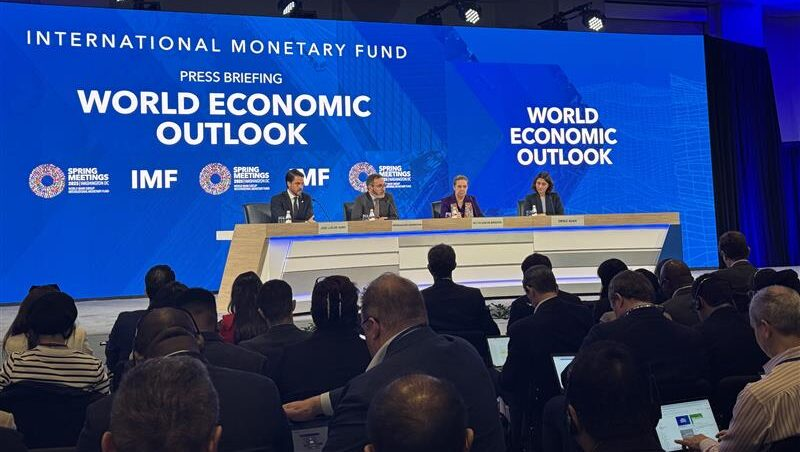
Meanwhile, the IMF has said, there is a need for Nigeria to spend wisely after it made difficult reforms that would help it save more. Speaking at the Fiscal Monitor Press Conference at the ongoing 2025 IMF/World Bank Spring Meetings in Washington DC, the director of the Fiscal Affairs Department at the IMF, Vitor Gaspar said, there is need for governments to act urgently and decisively as they face trade offs and painful choices.
For Nigeria, division chief in the Fiscal Affairs Department of the IMF, Davide Furceri noted that Nigeria had been able to make some of those painful choices to have space for fiscal savings but it needs to spend wisely.
Nigeria managed to do a very difficult reform that was important in delivering fiscal savings, Furceri stated, noting that the country need to focus on boosting revenue through improved mobilization efforts, and second, scaling up spending in key areas like social protection and investment.
“That said, we understand that many countries, including Nigeria, face pressing spending needs. But spending must be done wisely. This means stronger prioritization and greater efficiency in how resources are allocated.
“One key message not just for Nigeria, but for many countries, is the importance of strong fiscal institutions. Medium-term fiscal frameworks and solid public financial management systems are essential. They provide a fiscal anchor to guide necessary adjustments and help reduce uncertainty. We want fiscal policy to be a source of stability, not a source of volatility.” he stated.
The IMF director, Fiscal Affairs Department, Gaspar, stressed the need for policy makers to invest their “political capital in building confidence and trust that starts with keeping their own houses in order that is especially important in a situation that tests the resilience of individual economies, not to mention the entire system.
“Putting house in order involves three policy priorities. First, fiscal policy should be part of an overall policy. Second, fiscal policy should, in most countries, aim at reducing public debt and rebuilding buffers to create space to respond to spending pressures and other economic shocks through a credible medium term framework.
“Third, fiscal policy should, together with other structural policies, and aim at improving potential growth, thereby easing policy trade offs in these times of high uncertainty, fiscal policy must be an anchor for confidence and stability that contributes to a competitive economy, delivering growth and prosperity for all ministers of finance must build trust, tax fairly, spend wisely and take the long team,” Gasper pointed out.
We’ve got the edge. Get real-time reports, breaking scoops, and exclusive angles delivered straight to your phone. Don’t settle for stale news. Join LEADERSHIP NEWS on WhatsApp for 24/7 updates →
Join Our WhatsApp Channel