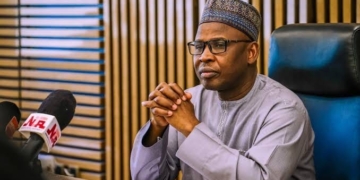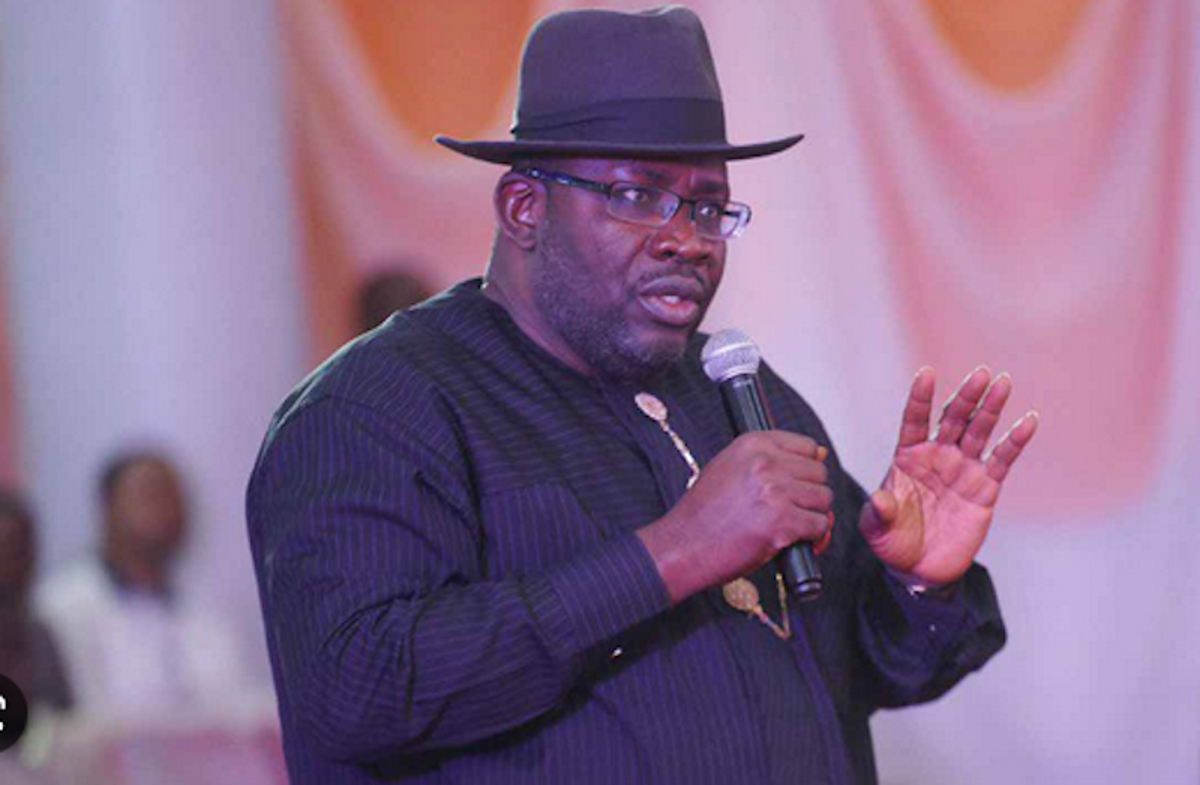
Senator representing Bayelsa West, Seriake Dickson, has implored Nigerians to ensure that their votes are counted during elections.
In a statement on Wednesday, the former Bayelsa governor and member of the electoral committee in the red chamber, noted that the Independent National Electoral Commission (INEC) has the capacity to transmit and upload results electronically on a national scale.
“INEC has told us it can transmit election results nationwide, and we believe them. Nigerians must insist that their votes are transmitted and counted transparently,” he said.
“Anywhere someone can make calls, send or receive money electronically, INEC can also upload and transmit election results electronically. This is not a decision Presiding Officers can make arbitrarily.”
Dickson called on citizens to sensitise others, mobilise to polling stations, and vote for credible candidates who can protect their democratic rights.
He noted that while Nigeria does not practise electronic voting, results declared at polling stations can be transmitted to IReV immediately, reducing manipulation at collation centres.
Meanwhile, Senator representing Ebonyi North Senatorial District, Onyekachi Nwaebonyi, has said the latest amendment to the Electoral Act by the National Assembly has effectively closed the loopholes that previously enabled electoral manipulation.
Speaking on ARISE Television on Wednesday, Nwaebonyi said the new legal framework makes electronic transmission of election results mandatory, stressing that the revised law now carries greater force than existing guidelines issued by the Independent National Electoral Commission (INEC).
Leading with the Senate’s position on the amendment, the lawmaker said, “nobody can rig an election in Nigeria” under the new arrangement.
According to him, the key distinction between the 2022 Electoral Act and the latest amendment lies in the fact that electronic transmission of results is now provided for in the law itself.
“The difference between the Electoral Act of 2022 and what we are doing now, and which will make the decision of the court different from what happened in INEC versus Atiku, which is a very popular case, as far as this electronic transmission of votes is concerned, is that this time, the National Assembly have inserted it in our law,” he said.
He explained that the amendment’s language makes the provision compulsory.
“And the word there is ‘shall’, not ‘may’. That is the difference,” he added.
Nwaebonyi further argued that the new Electoral Act would override any conflicting operational guidelines issued by INEC, including those relating to the use of the Result Viewing Portal (IREV).
“And moreover, the Electoral Act overrides the INEC guideline. If there is a conflict between the guideline and the Act, the Act prevails. The guideline is the agency’s guideline. So the Electoral Act supersedes the guideline,” the senator said.
The Ebonyi lawmaker maintained that the amendment would fundamentally change the legal framework for determining future election disputes, particularly regarding the electronic transmission of results.
“So with what we have done now, nobody can rig an election in Nigeria,” he said.
He, however, noted that the success of the reform would depend on the vigilance of political actors and stakeholders.
“All that is required is for all eyes to be on the ball by all political players,” he added.
The Senate had reconvened on Tuesday in an emergency session following public outcry over earlier changes to the Electoral Act, especially provisions on the transmission of election results and the status of INEC’s IREV portal.
We’ve got the edge. Get real-time reports, breaking scoops, and exclusive angles delivered straight to your phone. Don’t settle for stale news. Join LEADERSHIP NEWS on WhatsApp for 24/7 updates →
Join Our WhatsApp Channel