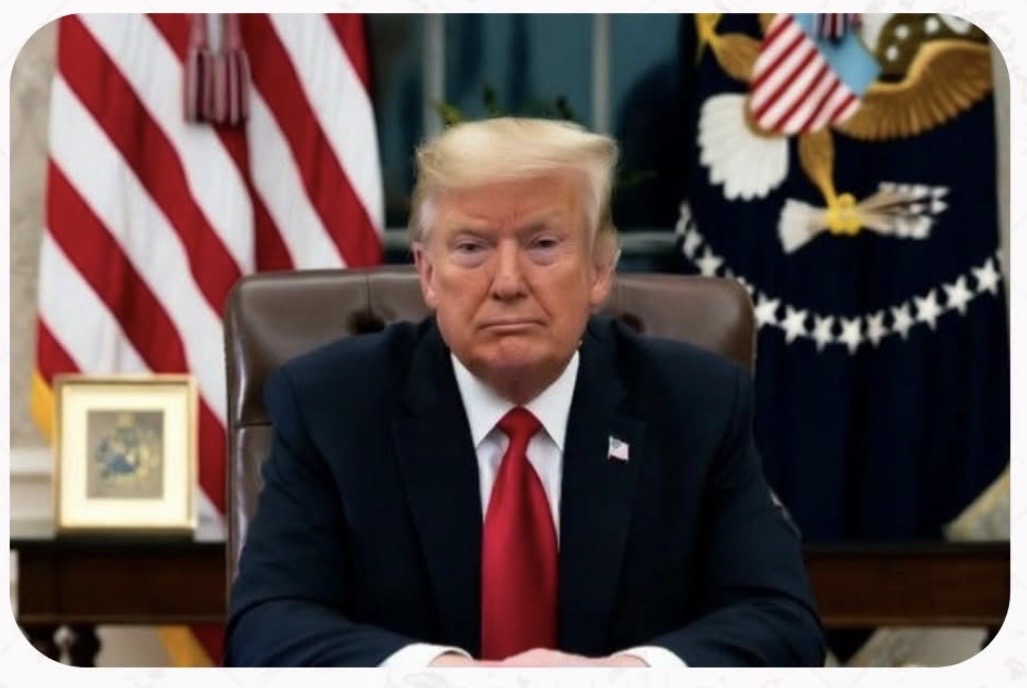
US President Donald Trump has reiterated that preventing Iran from acquiring a nuclear weapon remains his administration’s “number one goal” as diplomatic efforts to end the escalating Middle East conflict remain stalled.
Trump made the declaration in a post on Truth Social on Monday, insisting that Iran must not be allowed to possess a nuclear weapon “in any way, shape or form.”
“The number one Goal is, and always will be, that Iran cannot have, in any way, shape, or form, a Nuclear Weapon,” Trump said.
His remarks came as Tehran signalled that it had yet to decide whether to resume negotiations with Washington, further dimming prospects for an immediate diplomatic breakthrough.
Iranian Foreign Ministry spokesperson Esmaeil Baqaei rejected reports that Tehran was facing a 60-day deadline under the Islamabad Memorandum of Understanding with the United States.
Baqaei said the memorandum did not establish a fixed deadline but provided a 60-day period for discussions on sanctions relief and Iran’s nuclear programme, with the period capable of being extended if no agreement was reached.
According to him, the talks never commenced because Iran considered the United States to have committed a “blatant and extensive violation” of the memorandum.
He therefore said the 60-day period had become irrelevant.
Iranian Foreign Minister Abbas Araqchi also said over the weekend that Tehran had not decided whether to resume negotiations with Washington.
Iranian officials further dismissed reports of a secret communication channel between Tehran and Washington through Iraq’s Kurdistan region, describing such reports as part of psychological and media warfare.
Iranian Parliament Speaker Mohammad Bagher Ghalibaf, meanwhile, claimed that Tehran had achieved both a military and political victory in its confrontation with the United States and Israel.
Ghalibaf argued that Washington and Israel had failed to accomplish the objectives they publicly announced before the conflict.
He described the outcome as a major setback for both countries, making the claim as the 60-day period referenced in the Islamabad memorandum was reportedly due to expire.
Baqaei also said Iran would assume that three Iranian pilots who went missing following an operation in Qatar in March had been taken captive until their fate was established.
He said Tehran had been seeking information about the pilots and had contacted the International Committee of the Red Cross.
Qatar, however, has denied holding the missing pilots.
The diplomatic impasse has also affected shipping through the Strait of Hormuz, one of the world’s most important energy corridors.
Kpler shipping data showed that only five commodity vessels passed through the strategic waterway on Saturday, while no vessels were recorded on Sunday.
That represented a sharp decline from the previous weekend, when 31 vessels were recorded passing through the strait.
Iran’s Islamic Revolutionary Guard Corps (IRGC) has linked the reopening of the Strait of Hormuz to US commitments under the Islamabad memorandum.
IRGC political deputy Yadollah Javani said:
“The Strait of Hormuz will reopen once the United States fulfills its commitments under the Islamabad memorandum.”
The development has heightened concerns over global energy supplies and contributed to increased volatility in crude oil prices.
Trump has meanwhile urged Americans to accept somewhat higher petrol prices while the conflict continues, as restrictions on maritime traffic through the Strait of Hormuz continue to put pressure on energy markets.
Meanwhile, Yemen’s army said the Houthi movement fired two hypersonic ballistic missiles towards the southwestern city of Mocha and the Red Sea.
The missiles were reportedly launched from an area under Houthi control east of Taiz.
There were no immediate reports of casualties or material damage, while the Houthis had not commented on the allegation.
The development came a day after Yemen’s National Resistance Forces said the Houthis had targeted Mocha with seven drones.
The renewed activity has raised concerns about a possible escalation in Yemen, where fighting had remained relatively subdued since a lull began in 2022.
With negotiations between Washington and Tehran apparently stalled, restrictions around the Strait of Hormuz and renewed Houthi activity in Yemen are adding to concerns that further regional escalation could disrupt global energy supplies and deepen pressure on oil prices.
We’ve got the edge. Get real-time reports, breaking scoops, and exclusive angles delivered straight to your phone. Don’t settle for stale news. Join LEADERSHIP NEWS on WhatsApp for 24/7 updates →
Join Our WhatsApp Channel