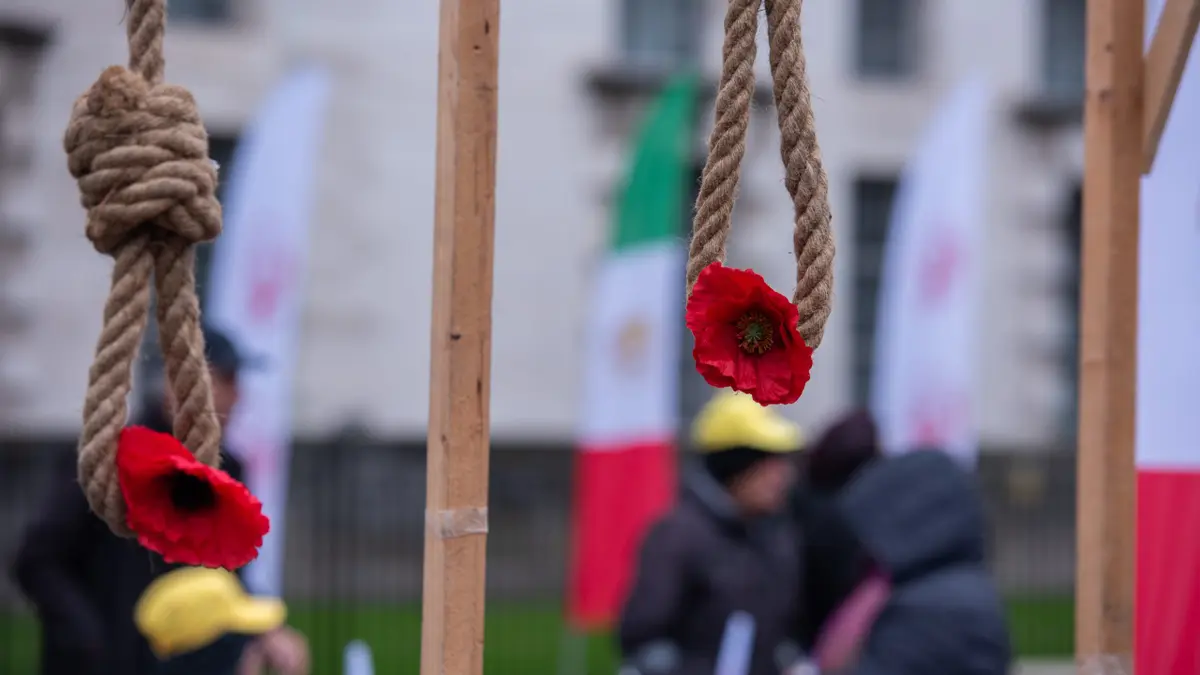
Iranian authorities executed at least 1,639 people in 2025, marking a sharp rise in capital punishment, as rights groups warned of further hangings following tensions linked to conflict with the United States and Israel.
This was disclosed in a joint annual report released on Monday by Iran Human Rights and Together Against the Death Penalty (ECPM), which urged Western governments to prioritise the abolition of the death penalty in any negotiations with Tehran.
The figure represents a 68 per cent increase from the 975 executions recorded in 2024. The report also revealed that 48 women were among those executed in 2025.
According to the organisations, the number was an “absolute minimum,” as many executions were not officially reported by Iranian authorities. The report noted that this is the highest figure since tracking began in 2008 and the most recorded since 1989.
The groups warned that if the Islamic Republic survives the current geopolitical crisis, executions could be further weaponised as a tool of repression.
Executive Director of ECPM, Raphael Chenuil-Hazan, said the abolition of capital punishment must be central to ongoing diplomatic efforts.
“Be strong, put the death penalty in all the deals,” he said during a press conference in Paris, adding that the “reality is the same” despite over five weeks of conflict that reportedly resulted in the killing of Iran’s supreme leader, Ali Khamenei.
Similarly, Director of Iran Human Rights, Mahmood Amiry-Moghaddam, criticised recent diplomatic engagements, including talks between the US and Iran in Islamabad, for failing to address human rights concerns.
“There was no mention of the Iranian people’s rights in any of those negotiations,” he said.
He stressed that a moratorium on executions and the release of political prisoners should be the top demands in any future talks.
The report further warned that hundreds of detained protesters risk execution after being charged with capital offences linked to the January 2026 protests, which were violently suppressed. Rights groups claim the crackdown left thousands dead and tens of thousands arrested.
Even during the conflict period, Iran reportedly executed several individuals, including seven people linked to the protests, six men accused of belonging to the banned opposition group, People’s Mujahedin of Iran, and a dual Iranian-Swedish national charged with espionage for Israel.
Amiry-Moghaddam disclosed that at least 26 individuals connected to the protests have already received death sentences, with “several hundred more” facing charges that could lead to execution.
“The message they send by executing people every day is to say ‘we have the power to kill’,” he added.
The report also highlighted a rise in executions of women, with 48 recorded in 2025 — the highest in more than two decades — representing a 55 per cent increase from 31 cases in 2024. Of these, 21 women were executed for killing their husbands or fiancés.
While most executions were carried out within prisons, public hangings more than tripled to 11 cases in 2025.
Nearly half of those executed were convicted of drug-related offences, the report stated.
Rights organisations, including Amnesty International, have consistently ranked Iran among the world’s leading executioners, second only to China, where data remains largely undisclosed.
However, Amiry-Moghaddam noted that more than 500 additional execution cases in 2025 could not be verified due to limited access to information, worsened by internet blackouts during the protests and conflict.
Chenuil-Hazan added that Iran may now have “perhaps” overtaken China as the world’s top executioner.
We’ve got the edge. Get real-time reports, breaking scoops, and exclusive angles delivered straight to your phone. Don’t settle for stale news. Join LEADERSHIP NEWS on WhatsApp for 24/7 updates →
Join Our WhatsApp Channel