
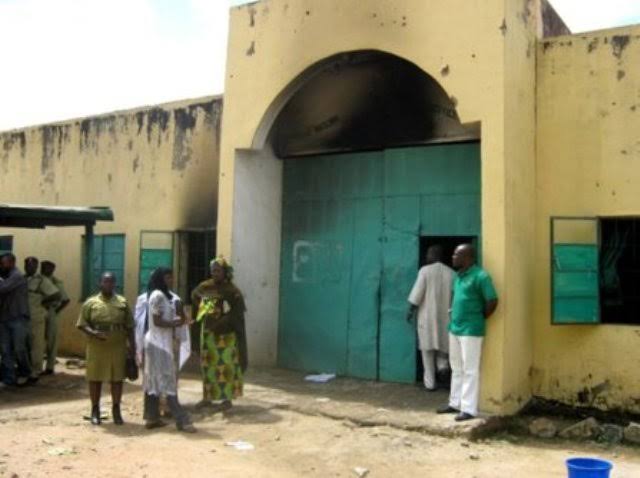
Justice Rahman Oshodi of the Lagos State Special Offences Court in Ikeja has identified prosecutorial inefficiency and custodial authorities’ refusal to comply with court orders as the main cause of prison congestion in Nigeria.
Justice Oshodi made the comments after acquitting one Ibrahim Usman, who had been detained for nearly 10 years without trial over a defilement charge.
While delivering judgment in the case in which Usman has been detained at Kirikiri Maximum-Security Custodial Centre since 14 June 2016, the judge described the situation as deeply troubling.
He noted that Usman was arrested in June 2016, but formal charges weren’t filed until March 2017, causing a nine-month delay in prosecution.
The judge stated, “When the case was set for arraignment, the custodial centre repeatedly failed to produce the defendant in court despite multiple warrants.
“This pattern persisted from October 2017 to February 2020, even after court orders directing prison officials to present the defendant.
“In February 2020, the case was dismissed for lack of diligent prosecution after authorities found prosecutors did not even know where the defendant was held,” he stated.
Justice Oshodi further observed that Usman was detained for years at public expense without trial because key institutions failed to fulfil their responsibilities.
He criticised correctional authorities for demanding prison decongestion while contributing to overcrowding through negligence.
The judge pointed out that prison officials kept and fed the defendant for years without verifying the legal grounds for his continued detention, describing this as a serious institutional failure.
Even after the case was reassigned to his court, the defendant was not produced between 21 December 2023 and 19 January 2024, despite repeated warrants. He was finally brought before the court on 14 March 2024.
Justice Oshodi emphasised that courts should not be blamed for prison congestion, asserting that delays stemmed from prosecutorial inefficiency and custodial authorities’ refusal to comply with court orders.
He referenced a previous case, The State of Lagos v. Olawale Olanrewaju, where he similarly held correctional authorities responsible for prolonged detention.
He also cited Sections 7 and 10(c) of the Nigerian Correctional Service Act 2019, which mandate authorities to produce inmates and support speedy trials.
The judge maintained that the Lagos judiciary reforms, such as the Lagos Criminal Information System (LCIS), were introduced to prevent defendants from disappearing within the justice system. “This system tracks defendants from court entry to judgment and links courts, prosecutors, and custodial centres in real time.
He also highlighted the Offenders’ Biometrics System (OBS), which collects biometric data before charges are filed and maintains records of warrants, fingerprints, photographs, case status, and criminal histories.
According to Justice Oshodi, both systems were created to ensure no defendant is lost in detention and to promote accountability within the justice system.
He warned that prosecutors must file charges promptly, and that custodial authorities must comply with court orders and regularly verify the legality of detentions.
After holding that the prosecution failed to prove the case beyond a reasonable doubt, Justice Oshodi discharged Usman and ordered his immediate release, stating, “The defendant is not guilty. I discharge him and order his immediate release from custody.”
We’ve got the edge. Get real-time reports, breaking scoops, and exclusive angles delivered straight to your phone. Don’t settle for stale news. Join LEADERSHIP NEWS on WhatsApp for 24/7 updates →
Join Our WhatsApp Channel