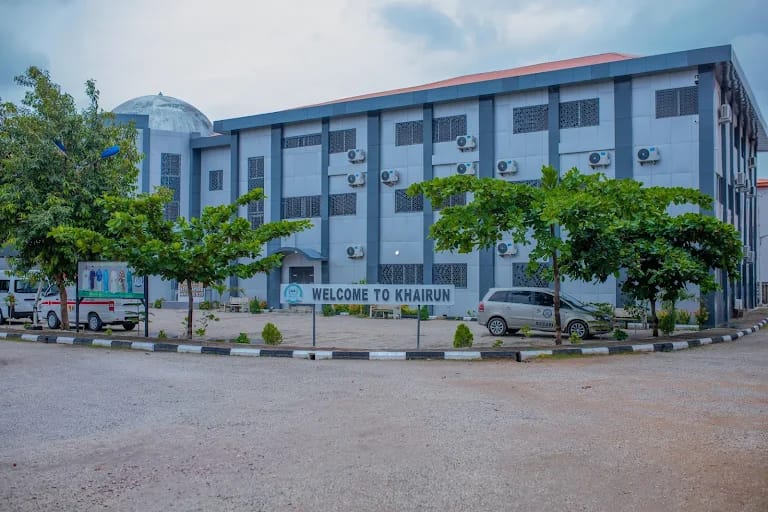
The management of Khalifa Isyaku Rabiu University (KHAIRUN) has debunked claims that students of other faiths were compelled memorise Qur’an as a condition for admission, clarifying that the policy applied only to Muslim students, while alternatives are provided for non-Muslims.
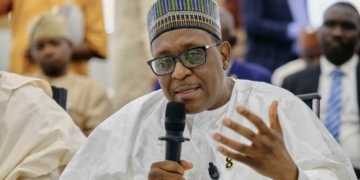
The Vice Chancellor, Prof. Abdulrashid Garba, made the clarification during a media parley and facility tour at the university campus in Kano, where journalists inspected newly upgraded laboratories and other academic facilities.
KHAIRUN, founded by the late industrialist and acclaimed Qur’anic scholar, Khalifa Isyaku Rabiu, received its operational licence from the Federal Government in 2022. The institution is science-based, with a strong emphasis on practical training and entrepreneurship.
Addressing concerns over the university’s Qur’anic studies requirement, Prof. Garba explained that Qur’anic recitation is a non-credit compulsory course for Muslim students but is optional for students of other faiths.
“There is a non-credit compulsory course, that is the Qur’anic recitation. Currently we have Christian students,” He further noted that to ensure inclusivity, the university created an alternative compulsory non-credit course in Artificial Intelligence for non-Muslim students.
“We created an AI course so that we do not shortchange them. The NUC under the CCMAS has allowed a percentage for university unique courses and this is our own way,” he said.
Beyond addressing the misconception, the Vice Chancellor highlighted what he described as an unprecedented upgrade of the institution’s teaching and research infrastructure.
Between November 2025 and January 2026, the university upgraded 45 teaching and research laboratories, with 32 completed and fully equipped with modern facilities, while the remaining 13 were at various stages of completion.
Prof. Garba described the development as “unprecedented in the history of private university education in Kano.”
He explained that the upgrades were driven by regulatory requirements and the university’s vision to produce self-reliant graduates.
“We don’t want to cut corners. We don’t want a situation where we will be bribing our ways. We prefer to do the needful,” he said.
He noted that the university has undergone resource verification and revalidation of its operational licence by the National Universities Commission (NUC), adding that accreditation is a continuous process.
“We have already faced accreditation in three programmes last year. By the end of this year, we will be facing accreditation for nine programmes, and in 2027, additional programmes will also be due,” he said.
On emerging technologies, the Vice Chancellor said the university was embedding them into classroom practice rather than offering them as standalone programmes.
“We are not embracing emerging technologies as a programme or course. We are embedding them in our classroom activities,” he said, adding that the university has six smart classrooms and five additional laboratories fitted with smart boards.
He also disclosed that the institution has prioritised laboratory staffing, employing more technologists to ensure effective practical sessions.
“For one laboratory, we have a minimum of two technologists. If a class has 100 students, one lecturer handles 50 and the other takes the remaining 50,” he explained.
According to him, the strategy ensures that students receive adequate hands-on training despite space limitations.
“We want to produce a graduate in nursing, in engineering, in software, who can rely on his or herself without being a burden on the government looking for a job. That is only possible if we have the required facilities for training,” he emphasised.
We’ve got the edge. Get real-time reports, breaking scoops, and exclusive angles delivered straight to your phone. Don’t settle for stale news. Join LEADERSHIP NEWS on WhatsApp for 24/7 updates →
Join Our WhatsApp Channel