There is something almost ritualistic about the way Nigeria responds to disasters. Fire guts a market. Politicians arrive with cameras and condolences. Money is pledged. Prayers are offered. Then everyone goes home, and the cycle begins again.
Kano has just lived through that ritual twice in less than two weeks.
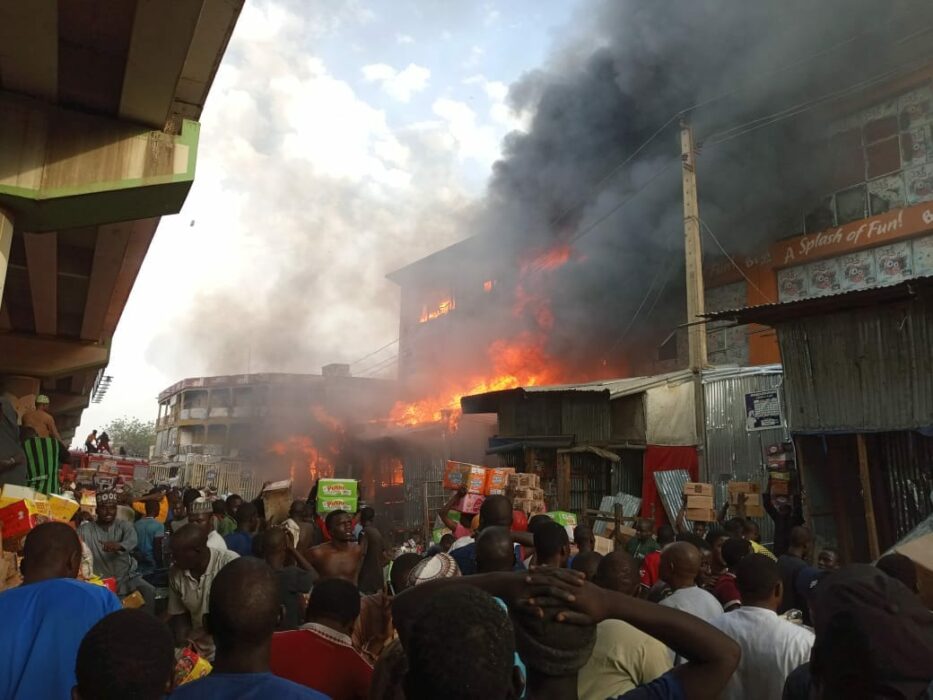
The Singer Market fire that erupted last Saturday evening and burned well into Sunday morning was not merely a catastrophe in isolation. It came eleven days after a previous inferno had already torn through sections of the same market along Bello Road, swallowing shops and livelihoods whole.
The second fire destroyed properties worth over ₦5 billion, wrecked more than 1,000 businesses, and left seven people missing. Before the smoke from that disaster had fully cleared, another fire broke out at the Fatima Simra Multi-Purpose Market in the Dakata area, razing at least 50 shops by 5:40 on a Friday morning while traders watched the flames spread and waited for fire service vehicles that took too long to arrive.
Three fires. Two markets. One deeply troubling pattern of institutional failure.We are not dismissing the government’s response as entirely hollow. President Bola Tinubu reached out to Governor Abba Kabir Yusuf and ordered a comprehensive investigation. The Federal Government pledged ₦5 billion in intervention funds. All Progressive Congress (APC )governors added another ₦3 billion through the Progressive Governors’ Forum, bringing the total relief package to N8 billion.
But sympathy money, however substantial, cannot substitute for the structural reforms that would prevent the next fire from happening. And there will be a next fire in Kano, in Lagos, in Onitsha, in Aba unless the country reckons honestly with why its markets burn so frequently and so catastrophically.
Start with the markets themselves. Nigerian markets, particularly those that have grown organically over decades like Singer Market in Kano, are engineering nightmares waiting for a spark. Wooden stalls crowd against each other with almost no breathing room between them.
Electrical wiring is often improvised, overloaded, and running far beyond any reasonable safety margin. Shops dealing in highly flammable goods cooking oil, detergents, plastics, nylon sit alongside textile traders and food vendors without any meaningful separation or fire breaks. At Fatima Simra, the market fire committee chairman, Dauda Haruna Chula himself acknowledged that oil production and plastic recycling operations likely accelerated the blaze’s spread. That acknowledgement deserves more than a passing note in a news report. It deserves urgent regulatory action.
Then there is the question of fire response capacity. At Fatima Simra, traders complained openly about delayed emergency response even as they watched the flames consume one shop after another. The market fire committee chairman could hear the sound of approaching fire service vehicles only after extensive calls for intervention and only when the fire had already razed 50 shops.
At Singer Market, emergency responders are credited with eventually containing the blaze, but the damage was already overwhelming long before they could make a meaningful difference. These are not isolated operational failures.
In our view, they are symptoms of a chronic underfunding and under-equipping of fire services across the country that has persisted for years.
The Kano State Government, following the first Singer Market fire earlier in February, pledged support for traders and directed relevant agencies to “intensify fire-prevention campaigns across markets and commercial hubs.” That pledge was barely two weeks old when the market burned again.
Which raises the uncomfortable question: what exactly did those campaigns look like? Were market operators given actionable safety protocols? Were electrical installations inspected? Were traders handling flammable materials given any guidance on storage and separation?
The investigation ordered by President Tinubu must not follow that pattern. An investigation that produces a report filed away in some ministry archive serves no one. The findings must lead to enforceable standards mandatory fire breaks between market sections, regular electrical inspections with real consequences for violations, zoning requirements that separate businesses dealing in combustible materials from general traders, and investment in fire stations with modern equipment and adequately trained personnel within reasonable response distances of major commercial hubs.
There must also be a functioning insurance system for market traders. The ₦8 billion in government and political party donations is a relief measure, not a solution. Hundreds of families whose livelihoods have been “crippled,” as the market chairman put it, cannot rebuild sustainable businesses on the basis of emergency handouts distributed in the chaotic aftermath of a disaster.
The National Insurance Commission and state governments need to work together to make affordable market insurance a practical reality rather than a theoretical option that most small traders never access.
Seven people are still missing from the Singer Market fire. Their families deserve answers, and the country deserves to know whether those answers, when they come, will change anything at all. The pattern so far does not inspire confidence.
But the scale of this particular disastrous multiple fires, billions in losses, thousands of businesses destroyed within days of each other may yet create the political pressure needed to force genuine reform.
Markets are the economic heartbeat of northern Nigeria. When they burn repeatedly without structural intervention, it is not just traders who suffer. It is supply chains, household incomes, food prices, and the broader economy of an entire region.
We’ve got the edge. Get real-time reports, breaking scoops, and exclusive angles delivered straight to your phone. Don’t settle for stale news. Join LEADERSHIP NEWS on WhatsApp for 24/7 updates →
Join Our WhatsApp Channel