
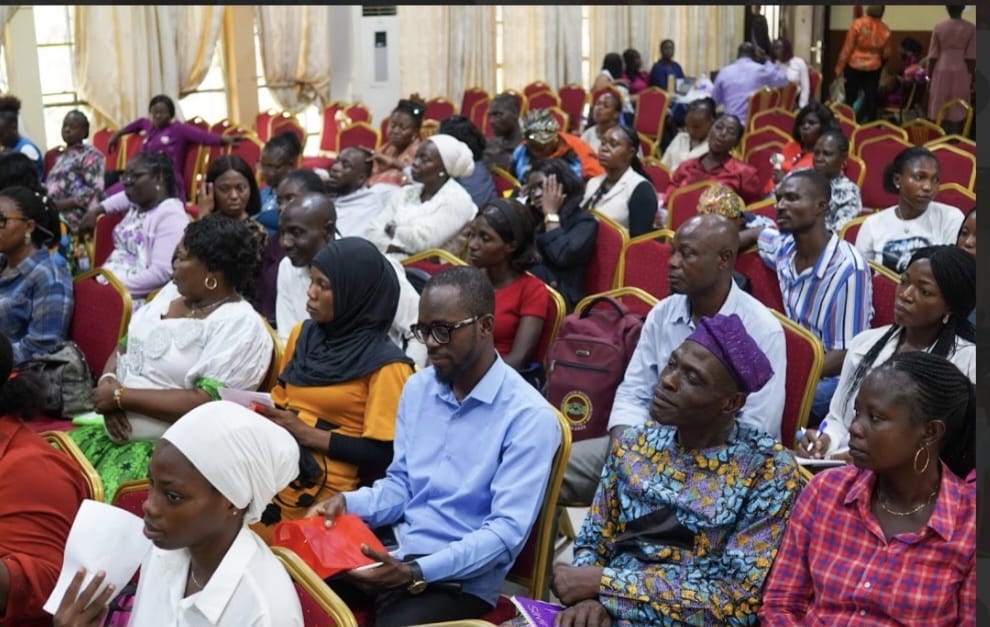
The Lagos State Primary Health Care Board, in conjunction with Maternal and Reproductive Health Collective (MRH Collective), has built the capacity of health educators to strengthen community engagement, improve health literacy and increase the utilisation of primary healthcare services, particularly in maternal and reproductive health.
They were trained at a two-day workshop titled ‘Influencing Demand and Utilisation of Skilled Maternal Care in Lagos State’ at the College of Medicine, Lagos University Teaching Hospital (LUTH), Idi-Araba.
In a press statement made available to LEADERSHIP, the permanent secretary, Lagos State Primary Health Care Board, Dr Ibrahim Akinwunmi Mustafa, in his opening remarks, said that the workshop was designed to bridge communication gaps between health facilities and communities.
Mustafa, who was represented at the training by the director in charge of Health Care Planning, Research and Statistics Department of the Lagos State Primary Health Care Board, Dr Temitope Balogun-Alo, explained that health educators play a critical role in the primary healthcare system as they serve as the interface between communities and health facilities where government services are delivered.
“We understand the importance of the health educators. They are the ones that act as the interface between the community and the health facilities where patients and clients are supposed to access health services that have been made available by the state government,” she said.
According to her, the training became necessary after authorities observed disconnect in the flow of information between health facilities and the communities they serve.
“We noticed a slight disconnect and we felt it was time to bring people up to speed, including the health educators themselves, on ensuring continuity of information flow from the services being provided to the people it is meant for, in order to increase access and utilisation,” she explained.
Balogun-Alo said the programme was designed to strengthen the role of health educators as the “face of the primary health care system,” emphasising the need for consistent engagement with community structures.
Also, Dr Olajumoke Oke of the MRH Collective, said the training aimed to improve the capacity of health educators to communicate more effectively with communities and promote the uptake of skilled healthcare services.
“The health educators have a vital role of engaging communities and sensitising them on health topics while also improving demand and utilisation for health care,” she said.
Oke explained that the MRH Collective focuses on maternal and reproductive health with the goal of ensuring childbirth in Lagos is safe, respectful and dignified, especially in public health facilities.
She said the organisation works primarily in underserved communities, conducting research to understand the barriers that prevent women from accessing skilled healthcare during pregnancy and childbirth.
According to her, findings from these studies informed the development of evidence-based programmes, including an initiative known as MamaBase, which uses what she described as the MILES framework.
The programme involves mapping communities with poor health indicators, identifying pregnant women through community health workers, linking them to nearby primary health centres, and supporting them throughout pregnancy through follow-up calls and visits.
“With this, we have been able to build trust with women in the communities and link them to the health facilities,” she said.
We’ve got the edge. Get real-time reports, breaking scoops, and exclusive angles delivered straight to your phone. Don’t settle for stale news. Join LEADERSHIP NEWS on WhatsApp for 24/7 updates →
Join Our WhatsApp Channel