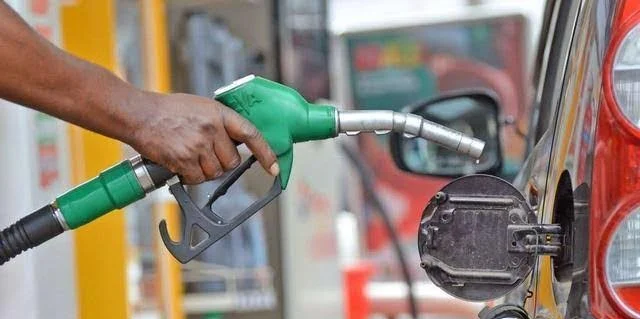
The statement by the Presidential Candidate of the African Democratic Congress (ADC), Alhaji Atiku Abubakar, that he would revisit the fuel subsidy policy with a view to reinstating it has reopened a heated conversation on the controversial issue.
Perhaps in response to comments by his media team that he had recanted his position, the former Vice President insisted that his position on the matter had not changed and would never change, and added that he would restore what he described as a targeted subsidy to ease the economic hardship confronting the country.
Most discerning Nigerians are not surprised that some politicians might decide to play on the intelligence of the people thought to be gullible, and are willing to be carried away by a well-worn issue that added no real value to their existence. It actually added to their pain.
To Nigerians, therefore, the issue of fuel subsidy is not just controversial; it is immensely sensitive and a distraction for good reasons. Nigerians do not trust the policy, especially its implementation. By definition, a subsidy is money given by the government: a grant or gift of money from a government to a private company, organisation, or charity to help it to function. In reference to this policy in Nigeria, it was designed to cushion the effect of the escalating high cost of fuel, which was negatively impacting the economy at the time. The idea was that the government would bear part of the cost of distribution. Its intention cannot be faulted because, across the world, governments subsidise the cost of living to alleviate the hardship people face in their daily struggle to eke out a living.
The problem with the policy in Nigeria was that it became a cesspool of corruption and other malfeasance. It ended up as a self-aggrandising instrument deployed by officialdom for political settlement, enriching, in the process, a few who abused the policy’s good intentions and turned it against the people who were expected to derive some benefits from it.
Expectedly, there was a genuine argument that the policy ought to be reviewed if not jettisoned altogether, not because of any inherent disadvantages, but essentially because of its deliberate misapplication.
President Goodluck Jonathan made a feeble attempt to step down the policy, but was intimidated by those who corruptly benefitted from it. He sheepishly changed his mind and allowed the robbery to persist.
President Muhammadu Buhari, in all his fabled toughness, could not summon the courage to even broach the subject he had made a prime campaign issue.
Curiously, it was President Bola Ahmed Tinubu who spearheaded the public drive against Jonathan that eventually took the bull by the horns and reversed the policy. Its ripple effect on the economy, particularly the pressure it exerted on the cost of living index, was cataclysmic as it devastated the economy bringing in its wake unimagined grinding pain. Its negative trend has continued to linger. At one point, it was speculated that, because of political pressure, it might have been reintroduced through the back door.
So, as it is now, it is beginning to look as though the people have reconciled themselves to a life without subsidy of any kind.
That, in our opinion, might be the reason for the negative reaction to Atiku Abubakar’s position, which most Nigerians consider to be self-serving and a mischievous attempt to turn back the hand of the clock.
In reality, Nigerians never enjoyed the perceived benefits of the policy, and there is no guarantee that should Atiku be elected President next year, and he summons the unusual courage to reintroduce it, the people will smile.
It is an incontrovertible fact that Atiku, an accomplished politician, is playing to the gallery using that over flogged issue that touches the sore point of the people’s life as a peg.
Even his media team believes that it is a no-flyer. Part of this disinterest among Nigerians is that Atiku has always been part of the corrupt system that thwarted a policy that would have brought relief to long-suffering Nigerians, who are compelled to pay an internationally fixed price for a commodity extracted from their backyard. Elsewhere in oil-producing countries, citizens are made to feel that their land hosts the natural resource.
The point we are persuaded to canvass in this editorial is that the subsidy and the argument that it should be restored, targeted or not, may not be strong enough to sway voters who have been growing fed up with the clueless antics and shenanigans of a trust-deficient political class.
The corruption embedded in the policy is endemic to the point that even the perpetrators who deadened the humanity in them just to lap up the filthy lucre are seemingly dying of guilty conscience as a result of the pain and anguish their roguery inflicted on their fellow citizens. We imagine that they might be privately advising Atiku to perish the thought.
We’ve got the edge. Get real-time reports, breaking scoops, and exclusive angles delivered straight to your phone. Don’t settle for stale news. Join LEADERSHIP NEWS on WhatsApp for 24/7 updates →
Join Our WhatsApp Channel