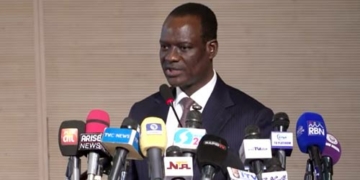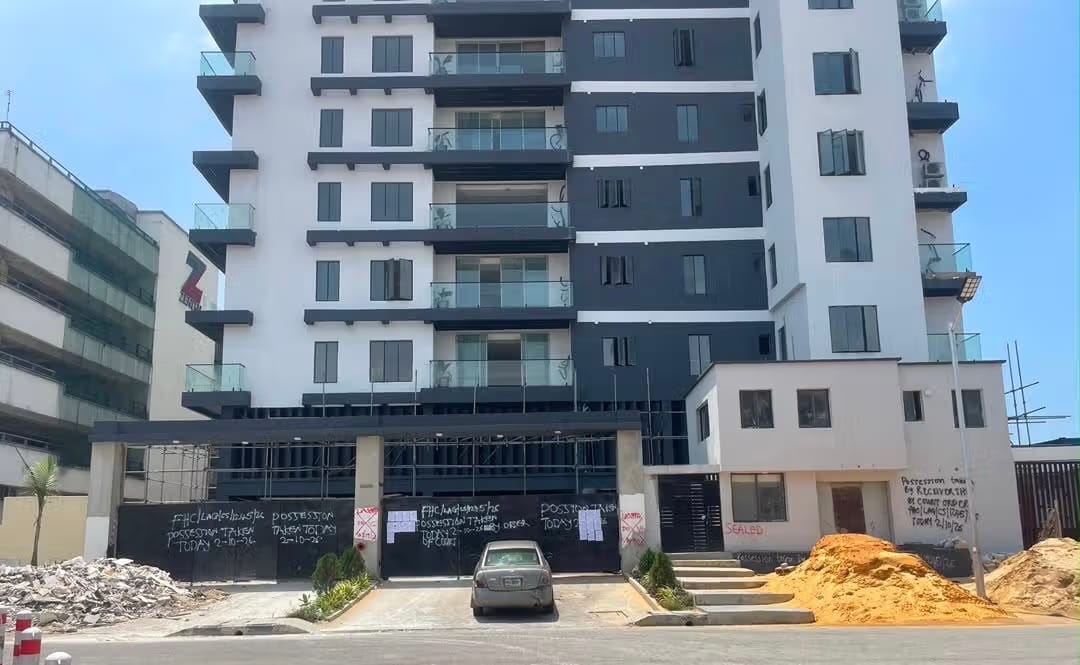
Media professional and activist David Abakpa has called for a fair hearing for Levitikal Realties & Construction Limited in its ongoing legal dispute with Maryam Sani Abacha over a property at No. 68 Molade Okoya Thomas Street, Victoria Island, Lagos.
Abakpa said the dispute raised important questions about property rights, commercial investments and the need to protect the right of every party to a fair hearing.
“The ongoing legal dispute raises important questions about property rights, commercial investments and fair hearing. While the court’s interim order must be respected, it is important to understand that an interim measure is not a final determination of the substantive dispute,” he said.
According to him, the history of the development extends beyond a straightforward disagreement over land ownership, involving contractual arrangements, financial commitments and challenges associated with redevelopment.
He said media reports indicated that the parties initially entered into a property development joint venture agreement, followed by a power of attorney issued to Levitikal, which reportedly superseded the earlier arrangement.
“The terms and legal effect of that power of attorney deserve proper consideration in determining the rights and obligations of the parties,” Abakpa said.
He added that the developer reportedly faced challenges securing vacant possession from existing tenants, settling outstanding land-related taxes owed to the Lagos State Government, and meeting demolition, excavation and other preparatory costs.
“The property was not simply an empty site waiting for construction. Existing tenants had reportedly remained on the premises for a considerable period, creating obstacles to redevelopment. The process of securing vacant possession proved difficult,” he said.
Abakpa also cited the removal of the fuel subsidy in 2023 as a factor that contributed to rising construction material, transportation and labour costs, placing additional financial pressure on projects already underway.
He said Levitikal subsequently approached the government for additional space, following which approval was reportedly obtained for the construction of two-bedroom and three-bedroom flats.
“This development is important to the dispute because the additional buildings reportedly formed part of an effort to manage the financial burden of the project and create the capacity to complete the original nine units,” he said.
On the financial implications, Abakpa said the land was reportedly valued at approximately ₦400 million when the agreement was reached, representing the landowners’ contribution to the arrangement.
He put Levitikal’s reported investment in the development at more than ₦17 billion, while estimating the landowners’ potential stake in the completed development at approximately ₦9 billion.
“These figures are significant, but they must be assessed against the available evidence, including contractual terms, financial records, construction costs and valuation reports,” he said.
“Levitikal’s reported investment should neither be accepted unquestioningly nor dismissed without proper examination. If substantiated, it becomes an important consideration in determining the contractual and financial rights of the parties.”
Abakpa also raised questions about the construction of the additional flats, noting that representatives of the Abacha family reportedly visited the project to monitor its progress during the development period.
“If the visits and the timing of the construction are established by the evidence, they may be relevant to understanding when the additional development became known to the parties and whether any objections were raised,” he said.
He urged both parties to allow the relevant documents, communications, approvals and other evidence to determine the dispute.
“These are not questions that should be settled through public speculation. They should be answered through the documents, communications and evidence before the court,” he added.
Abakpa further stressed the need to consider the interests of subscribers who may have paid for units in the development, noting that a prolonged legal dispute could affect those expecting to take possession of their properties.
“Their interests do not determine the legal rights of either party, but they demonstrate why the dispute requires careful and timely resolution,” he said.
On the court proceedings, Abakpa acknowledged that the Federal High Court had granted an ex parte order appointing a receiver/manager over the development.
He said the order must be respected while the parties pursue their respective legal remedies.
“An ex parte order is made without hearing the affected party at that stage of the proceedings. However, it does not become invalid merely because it was made ex parte. It remains binding unless it expires or is varied, discharged or set aside by a competent court, as applicable,” he said.
He stressed that the interim order should not be mistaken for a final determination of the substantive dispute.
“The allegations concerning the developer’s performance, the approvals obtained and the completion of the project must be examined. However, the same scrutiny should extend to the entire history of the relationship between the parties,” Abakpa said.
He listed the original joint venture agreement, the subsequent power of attorney, challenges associated with vacant possession, outstanding taxes, rising construction costs, the additional land and buildings, and the circumstances surrounding the reported 50:50 sharing demand as issues requiring proper examination.
Abakpa maintained that both parties were entitled to present their cases and have their claims determined in accordance with the law.
“Levitikal does not need public sympathy in place of a legal process. It needs the opportunity to present its documents, substantiate its reported investment, explain its decisions, respond to the allegations against it and have its contractual rights determined on the available evidence,” he said.
He added that Maryam Abacha was equally entitled to present her case and seek whatever remedies the law provides.
“Supporting fair hearing does not require prejudging the merits of the dispute or dismissing the concerns of either party,” he said.
Abakpa said confidence in Nigeria’s property sector depended partly on the assurance that contractual disputes would be resolved through fair, transparent and predictable legal processes.
“Investors must be held accountable for their obligations, just as property owners must be able to enforce their lawful rights. Neither interest should be sacrificed through assumptions or conclusions reached before the evidence is fully examined,” he said.
He concluded that the objective should be to establish what the parties agreed, what they did, what the evidence proved and what the law required.
“Fairness cannot mean hearing only one side. It must mean hearing both sides fully. Until the substantive issues are resolved, Levitikal deserves a fair hearing, just as Maryam Abacha deserves the same opportunity to have her claims determined in accordance with the law,” he said.
We’ve got the edge. Get real-time reports, breaking scoops, and exclusive angles delivered straight to your phone. Don’t settle for stale news. Join LEADERSHIP NEWS on WhatsApp for 24/7 updates →
Join Our WhatsApp Channel