The president of the Middle Belt Forum (MBF), Dr Pogu Bitrus, has said the Middle Belt is not out to destabilise the North politically.
MBF rejected claims that the Middle Belt is a recent political invention aimed at destabilising the North, describing such assertions as historically inaccurate and intended to undermine the Middle Belt’s growing political consciousness.
Reacting to a widely circulated article titled “The Manufactured Middle Belt: The Untold History, Foreign Backing and the Agenda to Fracture Northern Nigeria,” authored by Safyan Umar Yahaya, the MBF president said the narrative misrepresents both history and colonial records.
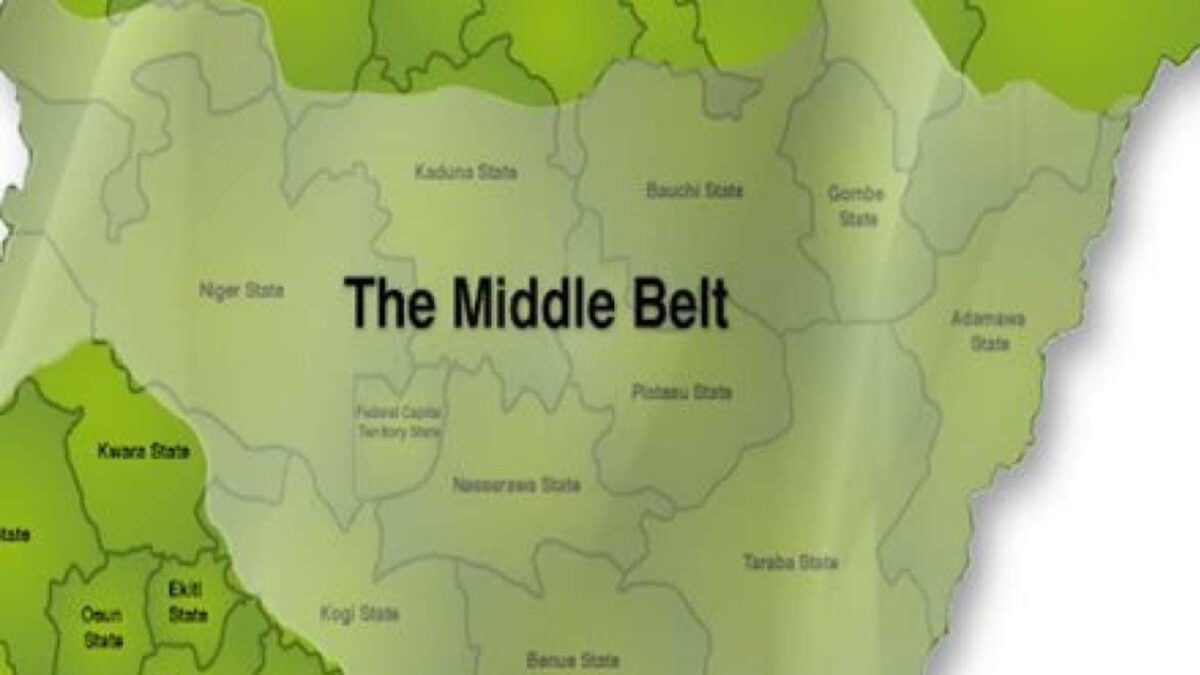
Bitrus explained that the Middle Belt refers to indigenous ethnic nationalities of Northern Nigeria that existed outside the authority of the Sokoto Caliphate and the Kanem-Borno Empire prior to British colonisation.
These groups, Bitrus noted, now span 14 northern states and the Federal Capital Territory.
“The Middle Belt consists of autochthonous peoples who were never conquered or ruled by Islamic caliphates of Sokoto and Borno before colonial rule,” Bitrus said, stressing that this was supported by historical scholarship rather than political sentiment.
MBF president cited pre-colonial polities such as the Kwararafa Confederacy and the Jukun states; the Igala Kingdom, Borgu kingdom, the Nupe Kingdom, Zuru (Lelna) Kingdom in today’s Southern Kebbi, as well as Tiv, Idoma, Gbagyi, Birom, Angas and Eggon societies, among others, which he said possessed distinct political systems.
Bitrus argued that British colonial conquest further created the Middle Belt political consciousness.
“Because of this resistance, the British imposed Indirect Rule by force, subordinating Middle Belt groups to emirate authorities that vast majority of people of the Middle Belt had resisted,” he said.
He also dismissed arguments that the Middle Belt lacked recognition before the 1940s, describing reliance on colonial political maps as “intellectually indefensible.”
Bitrus pointed out that colonial correspondence referenced the Middle Belt as early as the first decade of the 20th century, though British authorities resisted creating a Middle Belt Region:“to preserve the political dominance of Hausa, Fulani and Kanuri oligarchs.”
On the United Middle Belt Congress (UMBC), led by the late Joseph Sarwuan Tarka, Bitrus said the movement articulated long-standing grievances including land dispossession, political exclusion and cultural suppression.
He rejected claims of missionary or foreign manipulation in the formation of the UMBC, noting that Middle Belt leaders were among the most educated Nigerians of their era who directly experienced suppression, oppression and exploitations of the labour and resources of their people and were educated enough to form an alliance to fight the injustice.
Addressing contemporary politics, Bitrus said the Middle Belt movement is not separatist but seeks recognition, equity and freedom from what he described as an imposed “Arewa identity.”
MBF president further dismissed attempts to portray the Middle Belt as a religious project, noting that the region remains religiously plural, with Muslims, Christians and adherents of traditional religions represented within the MBF’s leadership.
Bitrus, who hails from Chibok in Southern Borno State, said that the current development reflects not a conspiracy against the North, but what he described as the “collapse of an artificial political arrangement sustained by history and power rather than consent.”
We’ve got the edge. Get real-time reports, breaking scoops, and exclusive angles delivered straight to your phone. Don’t settle for stale news. Join LEADERSHIP NEWS on WhatsApp for 24/7 updates →
Join Our WhatsApp Channel