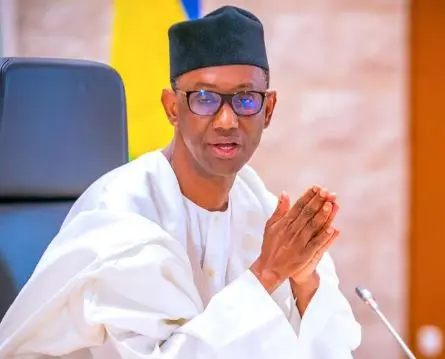
In moments of national insecurity, words matter. They shape public perception, influence behaviour, and ultimately affect the stability of the state. The recent circulation of viral clips and conflicting narratives surrounding official comments on banditry and kidnapping in Northern Nigeria by the National Security Adviser, Malam Nuhu Ribadu, highlights a deeper and more dangerous problem. The video, whose timing remains unclear, demonstrates why misinformation about national security is itself a national security threat.
Nigeria is confronting one of the most complex internal security crises in its post-civil war history. Banditry, kidnapping for ransom, insurgency remnants, communal violence, and organised criminal networks have created layers of instability, particularly across parts of the North-West and North-Central. Communities are traumatised. Rural economies are disrupted. Schools are intermittently closed. Farmers are displaced from their ancestral lands. In such an environment, any information, whether from official channels or circulated by the media, must be handled strategically to build public trust and counter fake news and disinformation without inadvertently legitimising them.
When statements by security officials are clipped, edited, stripped of context, or reframed to suggest indifference, complicity, or ethnic bias, the damage extends far beyond reputational harm. Public trust, already fragile, erodes further. Citizens begin to question not just a single statement, but the sincerity of the entire security architecture. Suspicion replaces cooperation. Fear replaces patience. Anger replaces reason. The first casualty of misinformation is trust, and without trust, no counterinsurgency strategy can succeed.
Security operations depend heavily on intelligence from local communities. Villagers must feel safe enough to report suspicious movements. Traditional leaders must feel confident enough to collaborate openly with security agencies. Families must believe that the state is acting in their interest. When viral narratives suggest that authorities are sympathetic to criminals or negotiating in bad faith, that fragile ecosystem collapses. The result is silence where there should be reporting, and hostility where there should be partnership.
Nigeria’s security crisis is often entangled with ethnic and religious sensitivities. A misrepresented comment can easily be weaponised to inflame identity tensions. In an already polarised environment, misinformation spreads not because it is verified, but because it confirms pre-existing fears. By the time clarifications emerge, the emotional damage is already done.
Modern conflict is fought as much in the information space as on physical terrain. Criminal groups exploit narratives to project strength, exaggerate state weakness, and recruit from disillusioned populations. When misinformation amplifies the perception of state incompetence or division, it inadvertently strengthens the psychological leverage of those seeking to destabilise the country. Whether the statement attributed to Nuhu Ribadu is recent or dates back to 2024, distorting it is wrong. Equally wrong is the amplification of such content for political advantage.
However, responsibility does not lie solely with anonymous social media actors. Government communication must also evolve. In an era of instantaneous digital dissemination, ambiguity is costly. Security briefings must be precise, consistent, and data-driven. Officials must anticipate how statements might be interpreted, misinterpreted, or deliberately distorted. Strategic communication is not mere public relations; it is an essential component of national defence.
At the same time, it is crucial to distinguish between misinformation and legitimate scrutiny. Democracies thrive on accountability. Citizens have the right to question security strategies, budget allocations, operational outcomes, and leadership performance. Criticism grounded in evidence strengthens institutions; fabrication designed to score political points weakens them. Conflating the two would be equally dangerous.
The deeper issue, however, remains institutional credibility. Misinformation spreads most rapidly where trust is already low. Years of unresolved insecurity, perceived political inconsistencies, and economic hardship have created a reservoir of scepticism among citizens. Nigerians are exhausted by persistent killings, abductions, and kidnappings. It is therefore unsurprising that many are inclined to believe the worst. Rebuilding trust requires more than rebuttals. It demands measurable progress in security outcomes, transparent reporting of both successes and failures, and visible accountability for lapses.
Digital literacy must also become a national priority. Citizens should be equipped to question the source of a viral clip, to ask who benefits from its circulation, and to verify claims before sharing them. Information hygiene is now as critical as public health hygiene. A society that impulsively forwards unverified content undermines its own stability.
Nigeria cannot afford to fight two wars simultaneously – one against armed criminals in forests and along highways, and another against corrosive narratives in cyberspace. The former destroys lives; the latter erodes the moral and psychological foundations of the nation. Both must be confronted with equal seriousness, discipline, and resolve.
We’ve got the edge. Get real-time reports, breaking scoops, and exclusive angles delivered straight to your phone. Don’t settle for stale news. Join LEADERSHIP NEWS on WhatsApp for 24/7 updates →
Join Our WhatsApp Channel