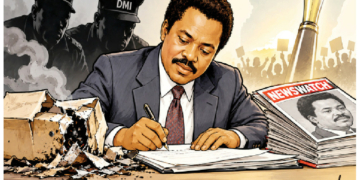
When I read the news, I began musing about Tiger Woods. His career, rise to fame, and the numerous crises faced over the years. The Golf Legend has faced a public and complicated series of troubles spanning over two decades. They range from serious legal issues, multiple car accidents, arrest and several physical injuries, as well as publicised personal scandals.
I can roll the dice on some of these and isolate each of these crises, including his recent crash, which makes it the fourth since 2009, when he was cited for careless driving after crashing an SUV into a fire hydrant and a tree outside his then-home in Windermere.
Let me run you through his recent road traffic crash as well as his arrest on suspicion of misdemeanour driving under the influence (DUI) with property damage and refusal to submit to a lawful test.
According to reports, he was involved in a rollover crash in Jupiter Island. He was arrested after he refused to give a urine sample, although he was released from Martin County Jail thereafter after paying a one-thousand-dollar bond.
The legend told authorities that he was looking down at his phone and changing the radio station in his SUV, which caused him not to see a truck slowing down before his rollover crash. His breathalyser test didn’t show signs of alcohol, although he refused to submit to a urinalysis test for other drugs, according to the Sheriff. The Golf Legend recently returned to the Gulf league for his first round of real competition since he underwent more surgeries on his back and to repair a torn Achilles tendon
This recent crash and arrest is not the first involving Woods. Recall that in 2021, he had seven back surgeries and more than 20 operations on his right leg, which he had severely injured in a car wreck outside Los Angeles in February 2021. Authorities said speeding was the causative factor as he was going nearly 90mph on a 45mph street.
Earlier, in May 2017, Woods was arrested on DUI charges with hydrocodone found in his system. I am not interested in Tiger Woods’ many troubles or his sad fall, which is a great lesson for celebrities and every human being. My interest is in his personal confession after the recent crash.
I have chosen Wood as my guinea pig. I am not focusing on his DUI misdemeanour, nor his legal battles and other truancies since his fall. My interest is in his candid confession on what caused his rollover crash. As stated earlier, Woods told authorities that he was looking down at his phone and changing the radio station in his SUV, which caused him not to see a truck slowing down before his rollover crash.
Most drivers religiously indulge in the same but would rarely own up unlike Woods who owned up to merely looking at his phone and changing radio. Unfortunately, I had a personal experience yesterday while driving to attend my cousin’s promotion reception at Zone 4 in Abuja, the Federal Capital Territory.
While driving, I couldn’t stand the heat and tried to turn on my car’s air conditioner, not realising that the cars in front of me had slowed to avoid a vehicle running a red light. That split-second action almost resulted in a crash when the vehicles ahead of me suddenly slowed.
It was just a split second, just as the legend confessed. My saviour was that, as usual, I was maintaining my slow and steady common-sense speed, which is advisable for anyone who is safety-conscious, even though the speed limit in built-up areas has been reduced from 50km/h to 30km/h.
I know I have written several times about distraction, but I am tempted because of Wood’s confession to again remind you of the danger of distraction. If you are a regular reader, you would have read my piece where I informed you that the World Health Organisation identifies distracted driving as a significant threat to road safety. The global health body also noted that distraction increases the likelihood of crashes by fourfold when driving and phoning. It warns that cognitive distraction from both hand-held and hands-free devices is the primary danger, not just the physical act of holding a phone, noting also that texting is particularly risky and raises the risk of a crash by as much as 23 times.
Please allow me to share the results of a study conducted by the Insurance Institute for Highway Safety (IIHS) that focused on technology/automation interactions. It showed that drivers using partial-automation systems (like lane-keeping or “autopilot” features) were distracted for 30% of the time while the automation was in use. This is quite high and shows that automation can paradoxically increase distractions.
To emphasise, I would like to remind you of the specific dangers of longer reaction times and missed cues: Distraction means the driver is less likely to detect changes in the road environment (other vehicles, pedestrians, signals). Secondly, as noted above, distracted drivers have significantly higher probabilities of crash involvement.
Risk amplification in certain groups revealed that teens and new drivers, using advanced automation, and high-tech phone users are especially vulnerable.
My advice involves the following key actions for drivers: the discipline to stow your phone. Put it on “Do Not Disturb” or place it in the glove box or back seat before driving. Secondly, please feel free to ignore the urge to check it at a stoplight, as Woods did. Please don’t be like Woods or freaks who utilise the navigation tool and enjoy music while driving. My advice again is to please plan ahead by setting your GPS, adjusting your mirrors, choosing your music, and turning on your car air conditioner before putting the car in drive. Alternatively, if you need to make any changes, pull over safely. Avoid multitasking while driving.
We’ve got the edge. Get real-time reports, breaking scoops, and exclusive angles delivered straight to your phone. Don’t settle for stale news. Join LEADERSHIP NEWS on WhatsApp for 24/7 updates →
Join Our WhatsApp Channel