
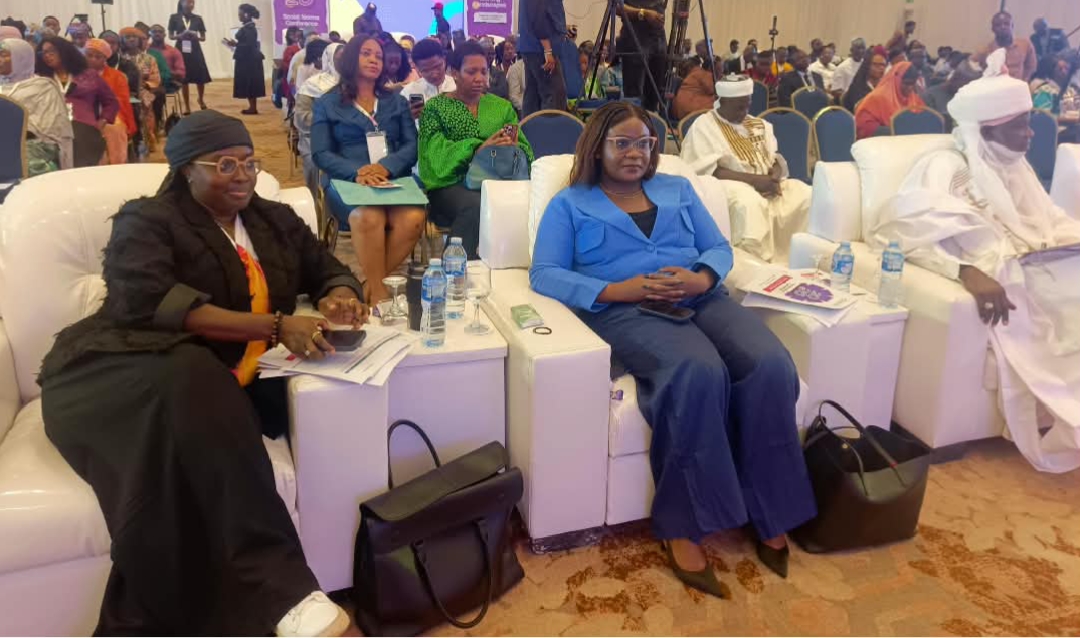
The National Agency for the Prohibition of Trafficking in Persons (NAPTIP), the Federal Character Commission (FCC) and development experts have called for urgent action to dismantle harmful social norms that promote abuse, discrimination, exploitation and violations of fundamental human rights.
They made the call on Thursday at the 2026 Social Norms Conference, themed “Norms in Shifting Landscapes: Powering Progress for People and Place,” where stakeholders emphasised the need to change societal attitudes and to ensure that community members participate in decisions that affect their lives.
The Director-General of NAPTIP, Binta Lami Adamu Bello, warned that laws and policies alone could not eliminate abuse if societal attitudes continued to tolerate harmful practices.
Bello, who was represented by the Director of the agency’s Violence Against Persons Prohibition Department, Mrs Rebecca Enwusoyele, illustrated the consequences of harmful social norms with two scenarios involving a 64-year-old grandmother in northern Nigeria and a 19-year-old awaiting trial in a correctional centre.
In the first case, she recounted how an unidentified person allegedly used artificial intelligence to manipulate the image of the grandmother’s granddaughter into a nude picture before sending it to her via WhatsApp with a demand for N50,000 to prevent its publication.
Despite having money and access to legal assistance, the grandmother reportedly paid the blackmailer because members of her community blamed her for allowing the family to use a phone.
“The law existed, but the norm was stronger than the law,” Bello said, highlighting how victim-blaming could discourage victims from seeking justice.
In the second scenario, she described how a 19-year-old awaiting trial in a correctional centre was allegedly denied sanitary pads for two weeks after refusing an officer’s demand for additional intimate pictures.
According to her, the young woman had initially sent a picture after the officer demanded it in exchange for sanitary pads but was subsequently denied the essential item when she refused further demands.
Bello said the incidents demonstrated how harmful social norms could undermine existing legal safeguards and expose vulnerable persons to exploitation and indignity.
She explained that social norms were unwritten rules that shaped people’s behaviour, relationships and access to opportunities, noting that while some promoted unity and mutual respect, others perpetuated inequality and exclusion.

The NAPTIP boss stressed that the objective should not be to abandon cultural traditions but to preserve positive values while confronting practices that undermine human dignity and sustainable development.
She further noted that urbanisation, technological advancement, climate change, economic uncertainty and changing social expectations were transforming communities, creating both opportunities and challenges.
According to her, development should be measured not only by infrastructure and economic growth but also by improvements in people’s well-being, security, dignity and access to opportunities.
She called for equal opportunities for women and men, greater participation by young people, inclusion of persons with disabilities and respect for the rights of every individual.
Bello also urged stakeholders to promote integrity, accountability, fairness and collective responsibility, insisting that communities must participate actively in decisions affecting their lives.
“Development must be undertaken with communities, not simply for them,” she said.
Also speaking, the Executive Chairman of the Federal Character Commission (FCC) in Nigeria is Hon. Hulayat Motunrayo Omidiran said societal pressure often compelled people to embrace cultural practices that were harmful and unsustainable.
Omidiran called for increased sensitisation, particularly at the grassroots, to discourage practices that restrict human potential and deprive people of their fundamental rights.
She urged individuals and organisations to embrace sustainable social norms that promote national development, unity, peace and harmony.
“As a man or woman, it is expected of us to embrace sustainable norms in the interest of nation-building,” she said, adding that people must be willing to challenge practices imposed by society when such practices undermine collective progress.
In his remarks, Senior Social Development Specialist, Mr Mike Ilesanmi, described the conference as timely, citing the changes driven by technology, demographic shifts, migration and evolving socioeconomic realities.
He said the developments offered opportunities to challenge long-held beliefs, behaviours and social expectations that prevented people from realising their full potential.
“As development practitioners, sustainable development is not driven by investment alone but is also shaped by the social norms that govern how people interact and make important decisions,” Ilesanmi said.
Similarly, the One Health Unit Lead at the Africa Centres for Disease Control and Prevention (Africa CDC), Dr Yewande Alimi, called for stronger collaboration to ensure that grassroots stakeholders were actively involved in shaping positive social norms.
She identified community councillors, youth groups and market women as important stakeholders who should participate in decision-making, budgetary processes and public awareness campaigns rather than being treated merely as beneficiaries.
“It is time to bring voices, evidence, practical examples and useful lessons to the global tables because power without money is just a talk show,” Alimi said.
She challenged government representatives to translate discussions on social norms into concrete budgetary commitments.
“For government representatives in the room, this conversation ends here unless we can put norms in the budget,” she said.
The convener of the conference and Director/Principal, Child Health, Gender and Social and Behaviour Change (SBC), Dr. Raihanah Ibrahim., said the initiative was designed to address social and behavioural change across gender, education, climate change and other development sectors.
She explained that the conference sought to deepen understanding of how unwritten rules, peer pressure and community expectations influenced people’s attitudes and behaviour.
According to Ibrahim, the collaboration would identify ways to transform harmful norms that impede development while promoting positive practices capable of advancing national progress.
She added that participants were expected to gain practical tools and knowledge to influence social behaviour and harness positive norms for sustainable development.
The conference brought together government representatives and development practitioners to explore strategies for making social norms a force for inclusive growth, human rights protection and national development.
We’ve got the edge. Get real-time reports, breaking scoops, and exclusive angles delivered straight to your phone. Don’t settle for stale news. Join LEADERSHIP NEWS on WhatsApp for 24/7 updates →
Join Our WhatsApp Channel