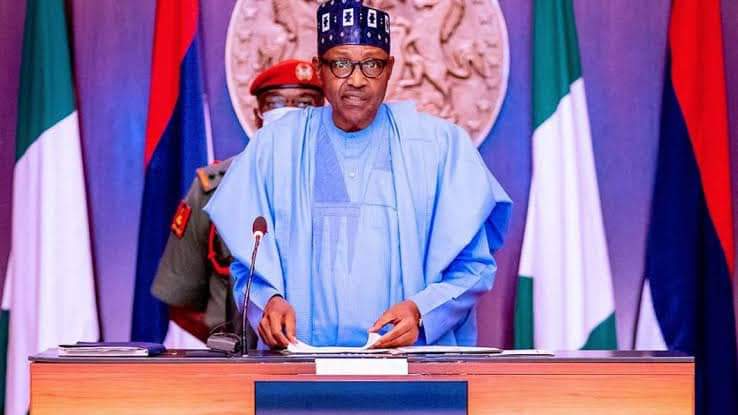
National Economic Council (NEC) has unanimously resolved to do away with the national social register used by the former President Muhammadu Buhari’s administration to implement its conditional cash transfer.
This is as the federal government has announced that it will distribute 252 thousand metric tonnes of grains to states at a subsidised rate to cushion the effect of hardship occasioned by the petrol subsidy removal.
The NEC meeting presided over by Vice President Kashim Shettima at the Council Chamber, Presidential Villa, said that the register had integrity issues as the criteria for its compilation were unclear.
Briefing State House correspondents at the end of the meeting, Anambra State Governor Chukwuma Soludo said contrary to what the previous administration projected, it is not possible to digitally transfer money to the poorest of the poor, the majority of whom are unbanked.
He said that it was agreed that states should generate registers that are comprehensive and ensure that only the vulnerable are listed.
Soludo, flanked by his Bauchi and Ogun State counterparts, Bala Mohammed and Dapo Abiodun, respectively, noted that beneficiaries of the supposedly transferred cash could not be identified in the villages.
He said NEC resolved that the states should come up with their own registers using formal and informal means to develop them.
“We need to face the problem of the fact that we don’t have a credible register,” he said.
Soludo affirmed that NEC deliberated on ways to cushion the impact of the recent petroleum subsidy removal.
While fielding questions from journalists, Soludo said, “The first question that was raised is in relation to the cost of governance. I think it’s an omnibus concept, and it’s not something you sit down in a meeting to legislate for each and every state.
“But the fact that the council recognizes that this is an issue that each tier of government should now focus on as an area of concern.
“We need to be sensitive to the times, we need to live within the average of the people that we’re governing and so on and so forth, and knock off the waste and the irrelevance, so to speak.
In relation to the social register, he said: “I think at the council today, there was almost unanimity among members that there’s a big question mark about the integrity of the so-called National Social Register.
“We have questions about how those names in the register were brought. And then distributing things through the social register by digital means, implying that these people already have account numbers and they have phone numbers. Maybe we are talking about some other people and not Nigerians. The poorest 25 percent of Nigerians are likely, if not totally, unbanked, and don’t have access to telephone.
“Now in thinking through that, we felt that sitting in Abuja and calling on somebody in Anambra to compile a list and send it to you, and then the person depends on who he brings, and the registers are generated and people go to those villages and ask where those people are and they don’t show up. This is stress testing. And we think that we need to go back to the drawing board.
“If you are delivering any such national or federal programme from Abuja, it needs to be delivered via the governments that are there using their own format and mechanisms to generate the register that is comprehensive.
Soludo explained that packages to serve as palliatives were marshalled out to encourage the tiers of government to implement in accordance with their respective fiscal space and fiscal capacities.
“For example, if you have a state that has been owing salary arrears, workers have been owed for three years, or for four years. The priority now is to even start paying some of the salary arrears, or where pensioners have been owed their pension and gratuity for seven years, for example, the priority now might be to use part of the surplus to pay them.
Bauchi State Governor Bala Mohammed said that the federal government will distribute 252 thousand metric tonnes of grains to states at a subsidised rate to cushion the effect of subsidy removal.
Mohammed said that the National Emergency Management Agency, NEMA, will also make its package available to the people.
On his part, Governor Dapo Abiodun of Ogun State said that though the hardship the masses are facing as a result of the removal of fuel subsidy was not the doing of the government as the market forces determine the price, efforts were being made to cushion its effect.
Some of the packages include cash transfer to the poorest of the poor by the states, cash award policy for all public servants which should be implemented for six months in the first instance, payment to public servants on outstanding liabilities such as pension, allowances among others.
He also said that the government is looking at the possibility of funding Micro Small and Medium Enterprises (MSME) which he said are the engine room of business.
He said the government plans immediate implementation of energy transition plants, converting mass transit buses to Compressed Natural Gas, CNG, adding that the long term vision was to establish electric automobile plants.
We’ve got the edge. Get real-time reports, breaking scoops, and exclusive angles delivered straight to your phone. Don’t settle for stale news. Join LEADERSHIP NEWS on WhatsApp for 24/7 updates →
Join Our WhatsApp Channel