
…Urges African nations to trade more in local currencies
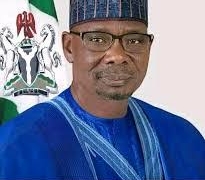
President Bola Ahmed Tinubu has said Nigeria is attracting close to $20 billion in foreign direct investments (FDI) in 2026 due to reforms focused on transparency, efficiency and openness to business.
Tinubu spoke during a panel session at the ongoing Africa CEO Forum in Kigali, Rwanda, where he also urged African countries to strengthen economic collaboration, trade more in local currencies and prioritise local processing of raw materials across the continent.
“This year alone, I can beat my chest that Nigeria is attracting close to $20 billion in foreign direct investment,” Tinubu said.
The President said his administration had put in place incentives necessary to attract investments into Nigeria and removed bottlenecks discouraging investors.
He urged African nations to move beyond rhetoric and collaborate for effective utilisation of the continent’s resources.
“Africa needs to put its money where its mouth is and build a new relationship with its own resources. We have the African Continental Free Trade Area—it must not sit on the shelf. It needs to be activated properly through collaboration and effective use of resources, not by working in silos,” he said.
Tinubu stressed the need for African countries to prioritise local value addition instead of exporting raw materials for processing abroad.
“I believe in Africa first, and I started with Nigeria first. Our resources must add value here. We don’t want scavengers and extractors. We want partners who process and manufacture locally,” he stated.
The President also advocated increased intra-African trade using local currencies, saying dependence on the dollar increases costs and instability.
“We also need to solve currency issues. If you produce in Nigeria, you can trade in naira. Why should African trade depend on dollars? That adds cost and instability. Africa should create a commodity exchange platform where 54 countries trade with one another directly,” he said.
Speaking on industrialisation and energy security, Tinubu said Nigeria’s experience with the Dangote Refinery showed that African countries could undertake large-scale projects with the right government support.
“Nigeria survived with over 200 million people without a refinery, but that changed when we supported Dangote. Government gave policy backing, credit, and licenses. Today Nigeria is a net exporter of PMS, aviation fuel, and other products. Dangote is supplying aviation fuel across Africa and to European airlines,” he said.
Tinubu added that no raw minerals should leave Nigeria without value being added locally, noting that the continent could leverage its mineral resources for battery production and other industries.
“No one will take raw minerals out of Nigeria without adding value. With our metals, we can produce batteries for cars. The private sector brings capital and expertise, but government must de-risk and create the enabling environment. That partnership is how Africa moves forward,” he said.
The President also called for the establishment of an African credit rating agency, arguing that existing international agencies do not fully understand Africa’s risks and opportunities.
“Capital is cowardly. It needs transparency, accountability, and stability. Governments must provide policy and legal frameworks that make investors feel secure. We also need an African credit rating agency. The big American agencies dominate 95 per cent of the market, but they don’t understand our risks and opportunities,” he stated.
On digital infrastructure, Tinubu disclosed that Nigeria is laying 19,000 kilometres of fibre optic cable across the country to strengthen connectivity and support the continent’s digital transition.
“Nigeria is laying 19,000 km of fiber optic across the country. That’s how we bring lessons to children, connect families, and enable traders. We need to fund Africa’s shift from basic telecoms to AI and e-commerce,” he said.
Tinubu also expressed optimism that the African Continental Free Trade Area (AfCFTA) could boost intra-African trade despite existing political and structural barriers.
“Africa has a dynamic, youthful population that’s restless and ready. Politics often gets in the way of integration. But politicians must use their influence to remove those barriers. Pan-Africanism can’t remain a slogan. It has to be lived,” he said.
We’ve got the edge. Get real-time reports, breaking scoops, and exclusive angles delivered straight to your phone. Don’t settle for stale news. Join LEADERSHIP NEWS on WhatsApp for 24/7 updates →
Join Our WhatsApp Channel