
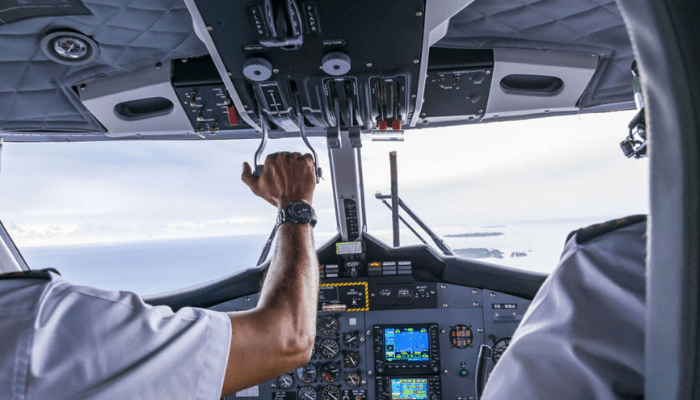
Nigeria’s private jet fleet has grown to nearly three times the size of the country’s commercial airline fleet, a development that industry stakeholders say reflects weak regulatory oversight and has cost the federal government more than N120 billion through illegal charter operations over the past decade.
The minister of Aviation and Aerospace Development, Festus Keyamo, recently disclosed that Nigeria now has the largest business aviation market in Africa, with about 240 private jets in operation compared to roughly 80 aircraft serving the country’s scheduled commercial airline sector.
Rather than signifying a thriving aviation industry, experts say the rapid expansion of private aviation has exposed regulatory loopholes that allow many operators to conduct unauthorised commercial charter services while evading taxes, regulatory fees and safety requirements.
A report by the Ministerial Task Force on Illegal Private Charter Operations, constituted by the minister, revealed that Nigeria has lost over N120 billion in revenue due to tax evasion, regulatory gaps and weak enforcement by the Nigerian Civil Aviation Authority (NCAA).
The report also identified major security concerns, poor inter-agency collaboration and outdated regulations that continue to undermine the orderly development of the aviation industry.
According to the findings, many private jet owners exploit the Permit for Non-Commercial Flight (PNCF) licence, which is strictly for private use, to operate commercial charter services without complying with the stricter regulatory and financial obligations that apply to commercial operators.
The task force further found that some of these illegal operations are facilitated through collaboration with holders of valid Air Operator Certificates (AOCs), who allegedly disguise unauthorised charter flights under their operating licences.
Security agencies have also expressed concern over the activities of foreign-registered private aircraft operating within Nigeria. Authorities, including the Office of the National Security Adviser, warn that opaque passenger manifests and inadequate monitoring make such aircraft vulnerable to misuse for money laundering, drug trafficking and illegal cross-border movements.
Speaking, an aviation security expert, Capt. John Ojikutu (rtd), called for a comprehensive audit of private jet operations in Nigeria, urging the Federal Government and aviation regulatory agencies to investigate the ownership, registration status and security compliance of aircraft operating within the country’s airspace.
Ojikutu, who is the Chief Executive Officer of Centurion Aviation Security Services, said the growing number of private jets in Nigeria raises critical national security and regulatory concerns that require urgent attention from relevant authorities.
He urged the government to identify the beneficial owners of the aircraft and examine any relationships among the owners, public officials, and the management of aviation agencies to ensure transparency and accountability in the sector.
According to him, regulators should also verify the number of foreign-registered aircraft operating in Nigeria, determine whether they possess valid security clearances to enter and operate within the country’s airspace, and establish whether such operators are complying with the terms and duration of their permits.
The aviation expert further called on the authorities to identify aircraft that may have exceeded the validity of their security clearances and ascertain whether they have been properly registered under the Nigerian aircraft registry where required.
Ojikutu also urged security agencies to investigate whether any private aircraft have been used to facilitate illegal mining, mineral scavenging, banditry, kidnapping or other criminal activities, stressing that such investigations are necessary to strengthen national security.
“There are many questions for everyone to ask those in our government administration and the management of the aviation agencies,” he said.
His comments come amid increasing scrutiny of private jet operations in Nigeria, with stakeholders raising concerns over regulatory oversight, compliance with aviation rules and the potential misuse of private aircraft.
Ojikutu maintained that a thorough audit of private jet operations would help improve transparency, enhance regulatory compliance and reinforce confidence in Nigeria’s aviation security framework.
Also speaking, a former Nigerian Airways pilot, Capt. Muhammed Gbadamasi, said private jet owners exploited regulatory loopholes to evade taxes and other statutory obligations in Nigeria.
Speaking to LEADERSHIP, Gbadamasi described the practice as a longstanding challenge that has persisted for decades, saying successive governments had largely overlooked tax evasion in the private aviation sector for political reasons, allowing operators to exploit weaknesses in the regulatory framework.
According to him, many private jet owners obtain Permits for Non-Commercial Flight (PNCF), which are intended for private, non-revenue operations, but allegedly use the aircraft for commercial “hire-and-reward” services. By operating under PNCF licences, they avoid the stricter certification requirements, taxes and regulatory charges imposed on commercial airlines.
“Over the years, the successive governments have overlooked the issue of tax evasion on aircraft because of political reasons. The issue is 50 years old. Private jet owners evade taxes by exploiting PNCF Licences.
“They acquire permits for noncommercial flight, which is much cheaper than commercial aircraft permits. They use it to bypass the strict regulations that commercial aircraft must meet to be registered. The permit allows them to circumvent taxes and other fees paid for commercial aircraft,” he stated.
He explained that some operators also evade the mandatory five per cent ticket sales tax while presenting questionable insurance certificates to regulatory authorities.
Gbadamasi identified the abuse of Temporary Import Permits (TIP) as another major avenue for tax evasion. He said aircraft are often brought into Nigeria under short-term import permits but remain in the country indefinitely without the payment of permanent customs import duties.
He further alleged that many private jets operating in Nigeria are registered to offshore shell companies located in foreign tax havens, making it difficult for the Federal Inland Revenue Service (FIRS) to identify their beneficial owners or accurately assess their tax liabilities.
According to him, some operators also register their aircraft in foreign jurisdictions and claim foreign charter status during inspections to avoid paying applicable Value Added Tax (VAT), customs duties and other luxury taxes due in Nigeria.
The former pilot attributed the persistence of the problem to weak regulatory oversight, inadequate inter-agency collaboration and the influence of politically connected aircraft owners.
He noted that the Nigerian Civil Aviation Authority (NCAA) had historically faced enforcement challenges, while poor information sharing among the NCAA, the Nigeria Customs Service (NCS) and the FIRS allowed aircraft to overstay temporary import approvals without triggering tax assessments.
Gbadamasi also argued that influential aircraft owners, including prominent business executives, oil industry players and religious leaders, often deploy legal challenges that delay enforcement actions and the recovery of outstanding taxes.
He, however, acknowledged that the Federal Government has intensified efforts to curb the practice through stricter enforcement measures.
According to him, the Nigeria Customs Service has increasingly grounded aircraft whose owners failed to meet statutory import duty obligations, while the Federal High Court has issued final forfeiture orders against luxury aircraft linked to customs violations and tax-related infractions.
He added that the government has also introduced stricter document revalidation exercises, requiring operators to present valid Certificates of Registration and Flight Operations Compliance Certificates or risk losing their operational approvals.
Gbadamasi said the NCAA now has a greater mandate to work closely with relevant government agencies to identify defaulting aircraft, enforce compliance and ground any aircraft that fails to meet statutory tax and regulatory requirements.
On his part, the Director of Research at Zenith Travels, Olumide Ohunayo, also argued that Nigeria’s status as Africa’s largest private jet market should not be interpreted as evidence of a healthy aviation industry.
“Having the highest number of private jets in Africa is not a reflection of the vibrancy of our aviation sector. It simply exposes weak monitoring, poor management and inadequate regulatory oversight,” he said.
Ohunayo noted that private aviation should ordinarily generate significant revenue for the country’s aviation ecosystem through customs duties, regulatory charges, certification fees and operational payments.
“From the moment an aircraft enters the country until it departs, it should contribute revenue to the aviation ecosystem. Sadly, that is not the case,” he said.
He explained that many operators fail to fully comply with customs procedures, certification requirements, and regulatory obligations, while some illegally conduct unscheduled commercial operations under the guise of private flights.
“Most of the revenue from these operations never reaches the aviation agencies beyond basic overflight and parking charges. They have been robbing the system, and that explains why the sector continues to grow without corresponding benefits to the industry,” Ohunayo said.
He called for stricter enforcement of existing regulations, noting that loopholes within the system are often exploited with the assistance of industry insiders.
“The rules already exist but are easily manipulated. Some within the industry show private jet operators how to retain foreign-registered aircraft, employ foreign crews and use the jets for commercial operations while avoiding the applicable regulations.
“Many of the aircraft owners are influential individuals, making enforcement difficult. The fact that Nigeria has about 240 private jets without corresponding economic or sectoral development clearly indicates serious weaknesses in regulation and compliance,” he said.
We’ve got the edge. Get real-time reports, breaking scoops, and exclusive angles delivered straight to your phone. Don’t settle for stale news. Join LEADERSHIP NEWS on WhatsApp for 24/7 updates →
Join Our WhatsApp Channel