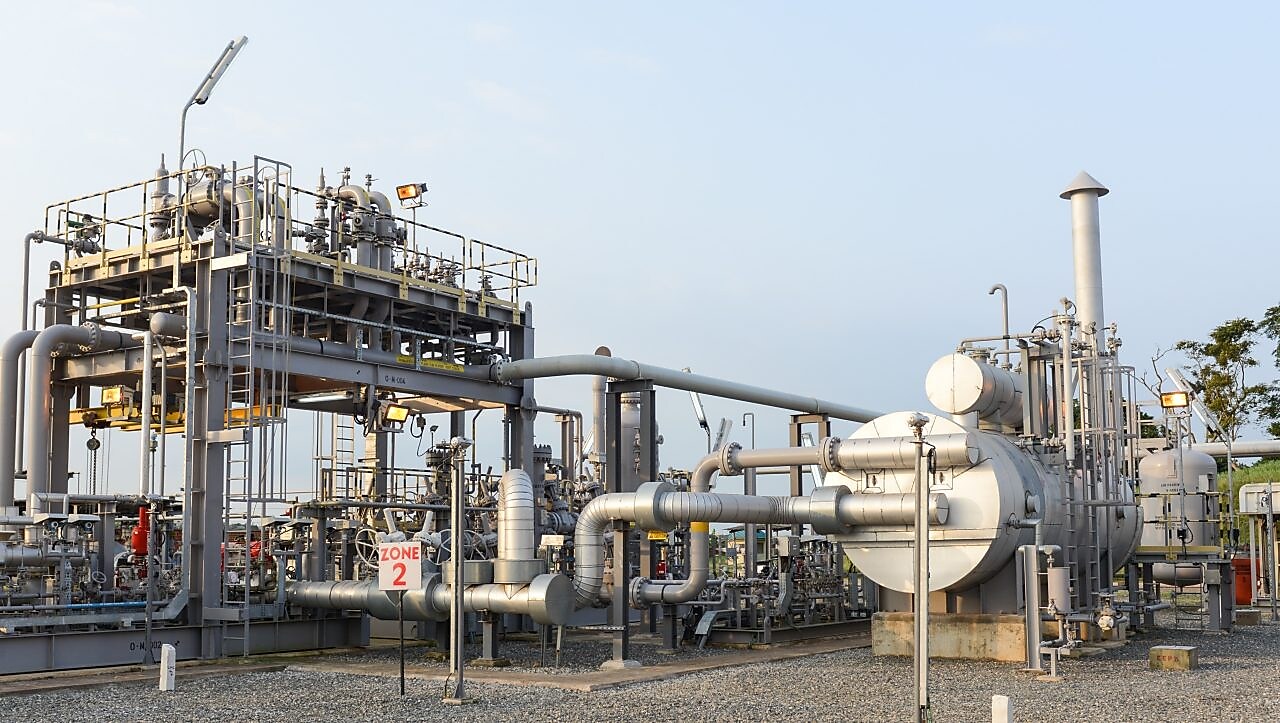
Nigeria’s gas infrastructure improvement drive has recorded significant milestone with its commissioning of a segment of the Obiafu-Obrikom-Oben (OB3) gas, pipeline, constructed by Oilserv Limited, now delivering 300 million standard cubic feet per day (MMscf/d).
Chairman, and group chief executive officer of Oilserv Limited, Dr Emeka Okwuosa, who made known, said the achievement underscored Oilserv’s leadership in engineering, procurement, construction, installation, and commissioning (EPCIC) services, bolstering the nation’s push toward 2 billion cubic feet per day in domestic gas supply for power and industry.
Speaking during the Domestic Gas panel session at the just concluded 9th Nigeria International Energy Summit (NIES) in Abuja, Dr Okwuosa said, “We have completed that segment Oilserv has supported it, and it has been commissioned, and it’s flowing 300 million scope of gas as we speak,” the representative declared, highlighting Lot A’s role in a 64-kilometres, 48-inch pipeline connected to an Oben gas treatment plant capable of 2 billion scf/d across two 500 MMscf/d trains.
Represented by Chuka David Eze, the managing director of Oilserv’s engineering Subsidiary, Frasimex Engineering, Okwuosa said that the completion positions OB3 as a critical feeder line into broader networks, including the AKK (Ajaokuta-Kaduna-Kano) pipeline amid Nigeria’s drive toward 2 billion cubic feet per day in domestic gas supply.
Clarifying the project’s phased progress, the representative added, “The OB3 has two sections. It has lot A and lot B. We are responsible for lot A, and that has been commissioned, installed, and that’s the segment that is flowing the 300… Once that line is crossed, the entire 124 kilometer of the OB3 gas plant will be available.
Oilserv Limited is a foremost indigenous engineering, procurement, construction, installation, and commissioning (EPCIC) firm in Nigeria’s oil and gas sector, has reaffirmed its pivotal role in advancing the nation’s gas infrastructure agenda, with its representative at a high-profile panel session detailing the commissioning of the OB3 gas pipeline segment now actively delivering 300 million standard cubic feet per day (scf/d) of gas.
Okwuosa elaborated on the complexities surmounted in executing the AKK pipeline’s Segment 1—a 40-inch by 340-kilometer (detailed engineering cited as 304 km) artery featuring 12 block valve stations, one intermediate pigging station, and two terminal gas stations at Ajaokuta and Abuja, with capacity for 700 million scf/d.
“In December last year, the main pipeline welding has been completed 100 per cent,” the representative noted, attributing success to innovative solutions amid challenging terrains, including rocky underground formations spanning five kilometers, 140 river crossings (minor and major), and seasonal flooding.Security emerged as a significant obstacle, with over 100 communities along the right-of-way integrated as stakeholders.
“We have challenges in terms of security… thanks to the community, we have about over 100 community along the right-of-way of our segment. They have collaborated with us and integrated them into the project, going to the extent of training them into where they were a part of it,” the representative explained. External threats necessitated armed escorts—up to 50 personnel per site visit—and Air Force aerial monitoring, yet timely delivery was achieved through federal government and NNPC support. Innovations like Horizontal Directional Drilling (HDD) for river crossings and Horizontal Directional Avoidance (HDA) for roads minimized environmental impact.The representative emphasized Oilserv’s response to adversity: “What distinguishes any individual, a company, and in particular, ourselves, is how you react, how you manage and how you respond to those projects. And that has put us in a very significant landmark in delivering our project.
Frasimex Engineering, Oilserv Group’s specialised engineering division, has been instrumental in delivering detailed designs for these mega-projects using entirely Nigerian talent. The representative proudly stated, “The detailed engineering was done by the Frasimex using Nigerians, in Nigeria, and that has been delivered. That is one of the testaments that we can say that indeed, in Nigeria, we have talent…
The OB3 that we mentioned, the engineering for that project was also done by Frasimex Engineering.
“This capability extends to other critical infrastructures, including the Assa North projects: a 36-inch, 23-kilometer pipeline with a manifold feeding a Custody Transfer Metering Station (CTMS)—a high-accuracy facility for gas flow regulation and ownership transfer—commissioned by the President in May last year.
“Oilserv has been instrumental in designing the facility and the pipeline. They have built it and the section that was built and constructed by Oilserv has been commissioned,” the representative affirmed. Frasimex has also provided ongoing engineering services for LNG projects, Aradel, and Seplat over the past four years, involving teams of 200 engineers across disciplines.
Oilserv’s broader portfolio boasts over 1,000 kilometers of installed pipelines, more than 24 stations, 200 kilometers of gas distribution networks in Lagos using HDD in densely built areas, and infrastructure to six power plants, including a line to Abuja Power Station from AKK. Current works include a Ubeta pipeline for TotalEnergies, set for completion by June-July, supplying 300 million scf/d to LNG.
On capacity development, Eze underscored Oilserv and Frasimex’s operations, with a three-year graduate program engaging 20 fresh talents annually for two years of hands-on training. “Currently, as we speak, in Oilserv, we have a programme that we have been running for the past three years. Every year, we engage 20 fresh graduates… The 2026 sets had just finished their induction last week,” the representative revealed, aiming to export Nigerian expertise continent-wide.Community engagement is deliberate, transforming potential risks into partnerships. For AKK and Ubeta, locals received training in automated welding, subcontracts, and supply roles. “We treat the community not just to fulfil the freedom to operate FTO permit, but we integrate them into our projects… They are stakeholders in the development of that project,” the representative said.
Amid optimism for the Decade of Gas—which the representative described as bridging supply, demand, and infrastructure—gas pricing remains a bottleneck. “Gas pricing still remains a major issue in the gas space and that is what is responsible for some of this discouragement of investments. Every investor would like to know his return on investment,” the representative observed, noting expectations for a new regime under the Gas Master Plan.
To address funding gaps, Oilserv has evolved beyond traditional EPCIC to flexible models like EPIC+F, Build-Operate-Transfer (BOT), and Build-Own-Operate-Transfer (BOOT). “We have graduated our business… to a model where we can offer the client other solutions… that has to be discussed with that developer or client on a case-by-case basis,” the Eze explained.
Oilserv positions itself as a leader among competitors by executing “major critical gas pipelines” listed in the Gas Master Plan, crediting partners like Renaissance (30 years ago), Awwa, and NNPC.
We’ve got the edge. Get real-time reports, breaking scoops, and exclusive angles delivered straight to your phone. Don’t settle for stale news. Join LEADERSHIP NEWS on WhatsApp for 24/7 updates →
Join Our WhatsApp Channel