Nigeria is seeking to accelerate the delivery of Presidential Power Initiative projects through expanded partnerships with Chinese engineering firms and financial institutions, and expand capacity across generation, transmission and related manufacturing, the minister of Power, Joseph Tegbe, has said.
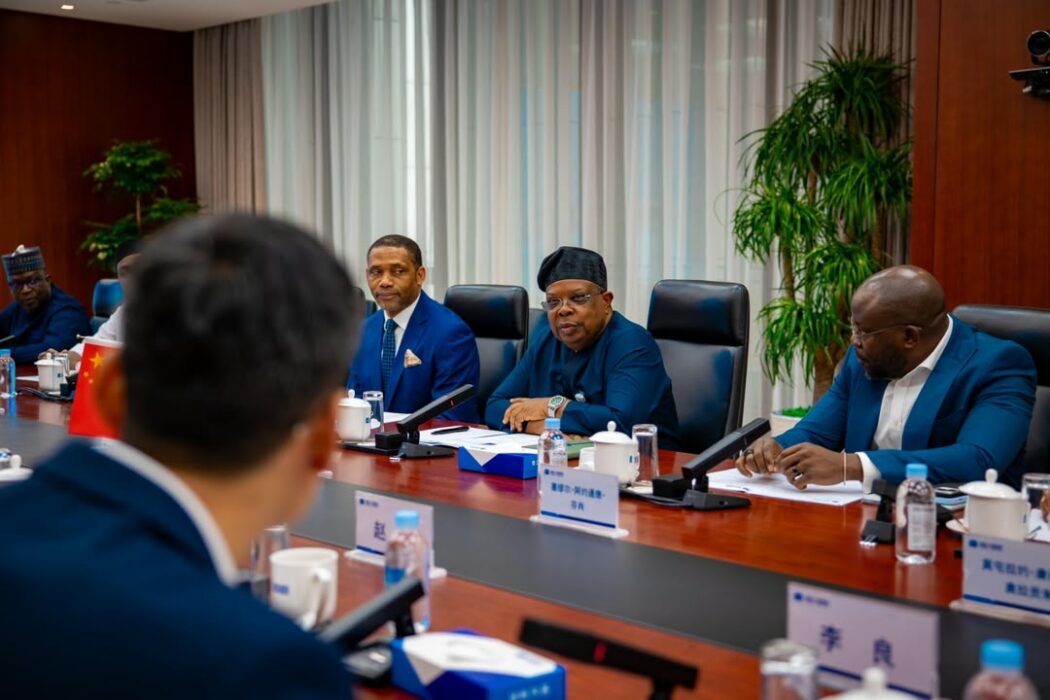
Tegbe made this known during a series of high-level engagements with leading Chinese power engineering companies and financial institutions in Beijing, as part of the ongoing Nigeria–China power sector mission.
The engagements focused on converting existing partnerships into bankable projects, financed investments and completed infrastructure capable of delivering measurable improvements in electricity supply.
“The test for every partnership is whether it can be converted into a bankable project, a financed investment and completed infrastructure that Nigerians can measure in megawatts delivered, kilometres of line energised and hours of reliable supply,” Tegbe said.
At meetings with Sinomach Group and China Machinery Engineering Corporation, two major contractors involved in Nigeria’s generation and transmission programmes, Tegbe pressed for firm and accelerated completion schedules for ongoing PPI projects.
He urged the companies to move beyond conventional engineering, procurement and construction contracts and adopt a broader partnership model involving co-investment in power infrastructure.
“We are looking for partnerships that go beyond construction. Chinese partners should bring capital, technology and technical expertise to Nigeria’s generation, transmission and hydropower projects,” he said.
Under the proposed arrangement, Chinese partners would contribute capital, technology and technical expertise to projects covering generation, transmission, hydropower and related industrial investments.
Building on CMEC’s existing presence in Nigeria, the minister said the expanded partnership should deliver faster project completion, additional wheeling capacity and blended financing structures for power infrastructure.
“Our expectation is that these partnerships will help us complete projects faster, expand wheeling capacity and develop financing structures that can support the delivery of critical infrastructure,” Tegbe said.
The minister also visited the China National Electric Engineering Corporation to advance cooperation on the expansion of Nigeria’s transmission network.
“Transmission is central to the success of the electricity sector because generation has little value if the network cannot evacuate and deliver the power to consumers,” he said.
Transmission constraints remain a major challenge to electricity supply, as limitations on the network can prevent available generation from reaching homes, offices and industrial users.
As part of the mission, the Nigerian delegation witnessed a factory acceptance test for high-voltage cables and other transmission materials at Hengfei Cable’s Changsha Industrial Park.
The test was conducted to confirm that equipment intended for Nigerian transmission projects meets the required technical standards before shipment.
“This process is important because it gives us assurance that the equipment meets the required standards before it leaves the factory. It will also help reduce delays during installation in Nigeria,” Tegbe said.
The Ministry of Power said the factory acceptance test would help shorten installation timelines and reduce the risk of technical problems after the equipment arrives in Nigeria.
The minister also invited Chinese companies to invest in sectors that are both major users of electricity and important drivers of economic growth.
The sectors include steel, automobile manufacturing, digital infrastructure, data centres, cold-chain logistics and sugar processing.
“We want to match new power generation and transmission capacity with productive industrial demand. Investment in these sectors will create jobs, strengthen the economy and improve the commercial sustainability of the power sector,” Tegbe said.
Tegbe proposed a structured Nigeria–China industrial cooperation platform to identify, assess and develop bankable projects aligned with Nigeria’s industrialisation priorities.
He said the proposed platform would provide a mechanism for originating, screening and developing projects that could attract financing and support long-term industrial growth.
According to him, linking new generation and transmission capacity to anchor industrial demand would help create jobs, attract investment and improve the commercial viability of the power sector.
The minister said the objective was to ensure that electricity-sector investments translated into measurable economic benefits.
“Power infrastructure must ultimately serve the economy. It should support factories, data centres, cold-chain logistics and other productive activities that create value and employment,” he said.
The engagements form part of the federal government’s strategy to use international partnerships to mobilise capital, expand electricity infrastructure and improve the reliability of power supply.
The Ministry of Power said the objective was to convert partnerships into funded projects, projects into completed infrastructure and infrastructure into reliable electricity and economic value for Nigerians.
We’ve got the edge. Get real-time reports, breaking scoops, and exclusive angles delivered straight to your phone. Don’t settle for stale news. Join LEADERSHIP NEWS on WhatsApp for 24/7 updates →
Join Our WhatsApp Channel