
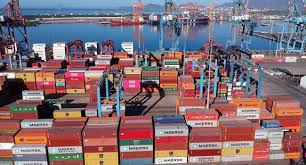
The Nigerian Ports Authority (NPA) has said that the ongoing port modernisation programme and the implementation of the national single window initiative could eliminate Nigeria’s estimated N1 trillion annual loss caused by the absence of full port automation and modern infrastructure.
The authority also disclosed that when fully operational, the National Single Window could boost customs revenue by 10 to 20 per cent annually, translating to an additional N600 billion to N1.2 trillion in government earnings.
Beyond revenue gains, the system is expected to significantly enhance trade efficiency by reducing cargo dwell time by between 35 and 45 per cent and cutting overall trade transaction costs by up to 25 per cent.
Speaking on the reforms, the managing director of the Nigerian Ports Authority, Abubakar Dantsoho, said addressing infrastructure and digital gaps in the maritime sector has become central to the reform agenda of the administration of Bola Ahmed Tinubu.
Dantsoho explained that the port modernisation programme aims to upgrade quay walls, deepen navigation channels, modernise cargo-handling equipment and expand terminal capacity to accommodate larger vessels and increased trade volumes.
He noted that a cornerstone of the reform programme is the large-scale reconstruction and modernisation of Nigeria’s major seaports.
According to him, the federal government has initiated an ambitious infrastructure renewal plan targeting key facilities including the Apapa, Tin Can Island, Port Harcourt, Warri and Calabar ports.
“The objective is to upgrade quay walls, deepen channels, modernise cargo-handling equipment and expand terminal capacity to accommodate larger vessels and increased trade volumes. The strategy reflects a recognition that efficient ports are indispensable to economic growth,” he said.
Dantsoho explained that modern ports reduce vessel turnaround time, lower freight costs and enhance supply chain efficiency factors that directly influence a country’s competitiveness in global trade.
He disclosed that early indicators already suggest progress, noting that Nigeria’s cargo throughput increased by 45.1 per cent to 103.3 million tonnes, while ship calls rose to more than 4,000 vessels across Nigerian ports.
Container traffic also climbed to 1.74 million Twenty-foot Equivalent Units (TEUs), reflecting growing trade activity and increased export shipments.
“These improvements highlight the economic potential that can be unlocked when infrastructure upgrades are combined with operational reforms,” he added.
Dantsoho noted that many of Nigeria’s major ports were constructed decades ago and have struggled to cope with the demands of modern shipping and cargo handling.
He said ageing quay walls, shallow drafts, obsolete equipment and limited cargo-handling capacity have contributed to congestion and prolonged vessel waiting times.
However, he explained that the ongoing modernisation programme involving infrastructure upgrades, channel deepening and the deployment of modern cargo-handling equipment will significantly reduce vessel turnaround time and cargo dwell time.
According to him, faster port operations will enable ships to berth more quickly and cargo to be cleared more efficiently, improving the overall logistics chain.
He added that inefficient ports often translate into higher logistics costs for importers, exporters and shipping companies, as delays in cargo clearance lead to additional charges such as demurrage, storage and handling fees, which are ultimately passed on to consumers.
Dantsoho said improving infrastructure and operational processes would lower these costs and make Nigerian ports more attractive to shipping lines and international investors.
He added that this could also reverse the long-standing trend of Nigerian-bound cargo being diverted to neighbouring ports in countries such as the Benin Republic, Togo and Ghana.
The NPA boss stressed that infrastructure upgrades alone cannot deliver a competitive port system without complementary digital reforms.
He said the National Single Window represents a critical digital component of the reform programme.
According to him, the NSW is an integrated electronic platform that allows traders to submit all import, export and transit documentation through a single portal, rather than interacting separately with multiple government agencies.
Under the current system, importers and exporters are required to process documentation with several regulatory bodies, including customs, port authorities and inspection agencies a fragmented process that often leads to duplication, delays and bureaucratic bottlenecks.
Dantsoho said the national single window will eliminate these inefficiencies by integrating all trade-related processes into a unified digital ecosystem.
“The result is faster cargo clearance, improved transparency and greater accountability in port operations,” he said.
He added that digital platforms reduce human intervention in administrative processes, thereby minimising opportunities for corruption and revenue leakages.
The NPA managing director noted that real-time information sharing among stakeholders would also enhance coordination and improve decision-making across the maritime value chain.
From a macroeconomic perspective, he said the reforms have the potential to significantly boost government revenue and stimulate economic growth.
Efficient ports, he noted, facilitate increased trade volumes, which in turn generate higher customs duties, port charges and maritime revenues.
Dantsoho also said improved logistics infrastructure would support export-oriented industries by enabling Nigerian products to reach international markets more efficiently.
He added that modern ports and digital trade systems could attract foreign direct investment (FDI) into sectors such as shipping, logistics, manufacturing and maritime services.
“Investors are typically drawn to economies with reliable infrastructure and efficient trade systems, and the ongoing reforms are expected to strengthen Nigeria’s competitiveness in the global trading environment,” he said.
Dantsoho noted that the combined impact of port modernisation and the National Single Window will extend beyond the maritime sector.
According to him, the reforms will improve trade facilitation, reduce logistics costs and enhance revenue generation, thereby supporting economic diversification and positioning Nigeria as a leading maritime hub in West and Central Africa.
We’ve got the edge. Get real-time reports, breaking scoops, and exclusive angles delivered straight to your phone. Don’t settle for stale news. Join LEADERSHIP NEWS on WhatsApp for 24/7 updates →
Join Our WhatsApp Channel