
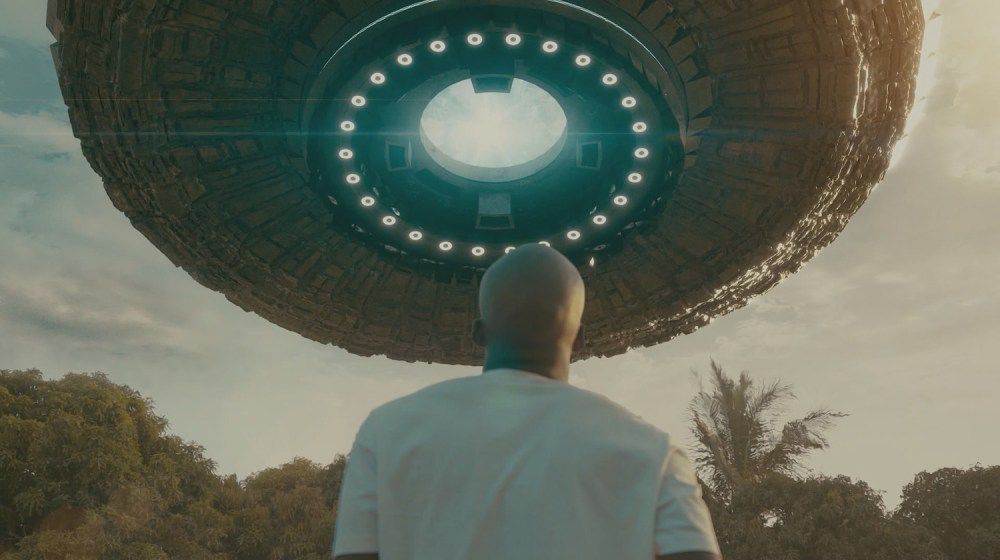
A Nigerian documentary ‘Crocodile’ chronicling the 13-year journey of a young, Kaduna-based filmmaking collective known as ‘The Critics’, from its rise to iPhone storytelling in the streets of Kaduna to the German art scene, was screened at the 76th Edition of the Berlin International Film Festival.
The documentary, a critic said, raises more questions than answers.
According to the review by The Hollywood Reporter film critic, Daniel Fienberg, the 1 hour 41 minutes documentary by The Critics and the filmmaker Pietra Brettykelly, makes clever use of scenes from The Critics’ movies, which are largely Sci-Fi-based, and shows how their actual lives inform the adventures in their Sci-Fi mini epic films. The videos, he said, grow increasingly assured over time, without losing their DIY aesthetic.
It also answers the collective’s debate on what is necessary to be a Nigerian filmmaker, said Fienberg. “‘Crocodile’ leaves no doubt that even if The Critics are making an unauthorised Star Wars sequel or paying tribute to The Joker, everything they do passes through a prism that’s unique and distinctive and Nigerian.”
Conversely, ‘Crocodile’ is lacking answers to some basic and deeply complicated questions, Fienberg said. Questions like – the names, ages, and relationships of all the collective’s nine members, by the time Brettykelly joins forces with them in 2019, much later in the collective’s 13-year journey in filmmaking.
Other questions include how and when the collective moved from a group of siblings and cousins making short films using their father’s cellphones to focusing on science fiction and superhero films, choosing its name, and then graduating to telling their stories via iPhone. Only four of the members’ names and roles are shown at the 100-minute mark in the film.
“I was also curious about technology,” said Feinberg, “In one scene, J.J. Abrams sends The Critics a fancy digital camera, and they are overjoyed, but by the time Brettykelly gets to them, they’d already upgraded from just an iPhone, but how far? What are they using for their effects? For all I know, they could use an AI program to assist with special effects. Plus, when it comes to knowledge, they have an excellent understanding of representations and their responsibilities, conversations that sound like they could happen in a college classroom. Are they entirely self-taught?
He continued, “I was really curious about money. Presumably, a YouTube Channel with its reach (50,000 subscribers at the start of the documentary and 113,000 to date) generates revenue. Presumably, much of their equipment comes from donations like the Abrams package. But at some point, they seem to rent a building as almost studio space, and while it isn’t a ‘studio space’ if Tyler Perry is your standard, it isn’t nothing. Heck, they have a business manager,” said Feinberg.
Feinberg, however, notes that, whatever frustrations he felt at being denied information or at the arbitrary, unexplained leaps through time, the strong message that “everything the collective does passes through a prism that’s unique and distinctive and Nigerian” is what makes the documentary so powerful.
We’ve got the edge. Get real-time reports, breaking scoops, and exclusive angles delivered straight to your phone. Don’t settle for stale news. Join LEADERSHIP NEWS on WhatsApp for 24/7 updates →
Join Our WhatsApp Channel